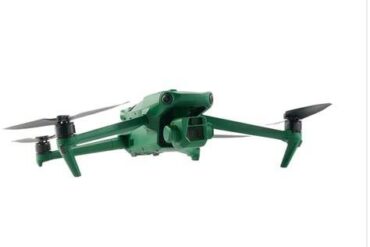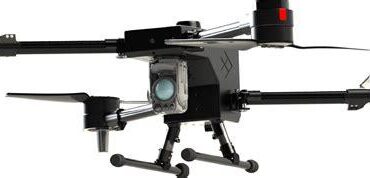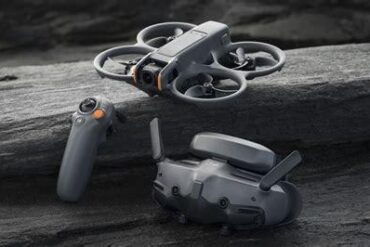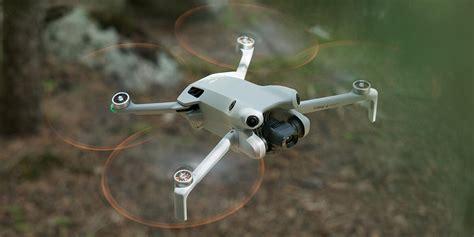
As federal and state procurement bans on DJI loom ever closer, the drone community faces a pivotal question: who can truly replace the beloved $1,500 Mavic 3‑class platforms for intelligence, surveillance, and reconnaissance (ISR) missions? The U.S. National Defense Authorization Act (NDAA) mandates have already driven the per‑unit cost of compliant avionics well above the $1,500 mark—before even factoring in a ground control station (GCS) or integrated display. Meanwhile, U.S.‑made FPV alternatives hover around $1,000, yet fail to deliver the mid‑sized ISR performance that public safety agencies and defense contractors rely on.
Against this backdrop of regulatory upheaval, public safety departments are sounding the alarm. One public safety operator, JHaughee, reports a $4,500 price tag for a fully‑kitted Mavic 3E bundle (four batteries, charger, ND filters, and controller)—already triple the MSRP of the original Mavic 3. SkyDio’s proposed X10 solution, complete with streaming and advanced autonomy, came in at $12,000 per unit, yet still cannot execute the critical task of scene scanning for evidence collection. Axon’s five‑year, two‑drone contract soared to $68,000, and still missed the mark on mission requirements. With DJI warranty support winding down and no clear replacement in sight, smaller agencies may find themselves priced out of essential aerial capabilities.
Industry veterans warn that the mid‑size ISR segment is being overshadowed by the FPV craze. Operators like moostachio4sho argue that chasing lightweight racing rigs distracts from filling the real operational gap. U.S. manufacturers demand 10–15× price premiums to ensure secure data processing—yet fail to provide compelling performance or reliability advantages over DJI’s proven hardware. This has left many end users questioning the logic of trading cost efficiency for uncertain cybersecurity gains.
The Promise and Pitfalls of Drone‑as‑First‑Responder (DFR)
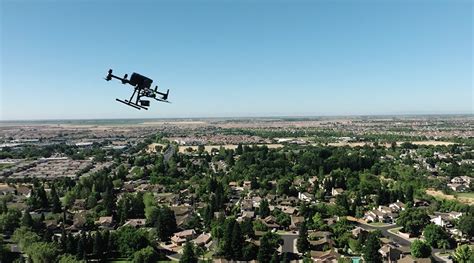
In an effort to innovate beyond traditional ISR roles, manufacturers have championed the concept of Drone‑as‑First‑Responder (DFR). By integrating drones directly with computer‑aided dispatch (CAD) systems, equipped fire departments and law enforcement agencies can dispatch unmanned aerial systems (UAS) faster than ground units can navigate traffic. Early adopters hail improved situational awareness for traffic accidents, suspicious suspects on the move, and fire scene size‑ups, often reducing risk to personnel and conserving manpower.
Yet DFR carries its own set of challenges. The specialized drones are expensive, and agencies must invest in dedicated operators to supervise automated missions, maintain equipment, and troubleshoot connectivity issues. Although DFR extends the ISR use case—allowing drones not only to observe but to direct firefighting or law enforcement responses—it does not drive down overall program costs. Instead, it layers on new training, staffing, and maintenance overhead, compounding the strain on already‑tight budgets.
Market Dynamics: Why U.S. OEMs Struggle to Compete
The void left by DJI’s impending exit from government procurement presents an unprecedented opportunity for U.S. original equipment manufacturers (OEMs). Yet, so far, the market has failed to capitalize. Scale remains elusive: small‑batch production drives costs skyward, and supply chains still depend on foreign‑sourced components for critical subsystems like thermal sensors or precision zoom optics. Meanwhile, government subsidies or tax breaks aimed at bolstering domestic drone manufacturing often come with strings attached, deterring private investment and slowing time‑to‑market.
Compounding the problem is the cautious stance of venture capital. Without a clear path to mass adoption, startups hesitate to pour resources into R&D for mid‑size ISR platforms. Larger defense contractors have likewise prioritized cost‑plus procurement models for specialized military systems, leaving the prosumer and public safety markets underserved. This misalignment means that despite pockets of funding, there is no coherent industrial strategy to deliver affordable, high‑performance drones at DJI‑competitive price points.
Defining the Gold Standard for ISR Platforms
Before evaluating potential replacements, it is crucial to outline the key performance requirements that the Mavic 3 class has come to embody for ISR users:
- Optical Zoom: Ability to resolve license plates at 300 ft altitude (equivalent to 1500 mm effective focal length).
- Thermal Capability: ≥640×512 resolution with radiometric output for scene‑scanning and search‑and‑rescue operations.
- Endurance: Minimum 20 minutes of flight time under load, including streaming to remote devices.
- Secure Data Streaming: Encrypted transmission compatible with third‑party command platforms (e.g., DroneSense, Pix4D).
- Portability: Foldable airframe, sub‑3 kg launch weight, and rapid deployment from vehicle docks or backpacks.
These specifications set a high bar for any potential DJI successor. They ensure operators can gather actionable imagery, maintain situational awareness, and integrate seamlessly with existing public safety or defense infrastructures.
Emerging Contenders: Strengths and Shortcomings
A host of companies have announced or demonstrated drone solutions aimed at filling the DJI gap. Yet none have fully matched the price‑performance ratio that propelled DJI to global dominance:
- Potensic: Markets budget‑friendly quadcopters under $400, but optical zoom and thermal functions remain limited.
- Hover Air: Offers the X1 Pro Max, an 8K pocket‑action‑camera drone with obstacle avoidance. Pros: Ultra‑compact form factor; Cons: Lacks mission‑critical zoom and thermal payloads.
- Skydio: Known for autonomous flight and obstacle avoidance; prices start around $1,000. Pros: AI‑driven autonomy; Cons: Payload options are restricted, and no integrated thermal/zoom hybrid exists yet.
- Autel EVO II: Provides interchangeable camera modules (8K, 6K with zoom, thermal). Pros: Versatility; Cons: Some federal agencies have preemptively banned non‑NDAA compliant units.
- Anzu Robotics: Licensed to produce UAS with modified firmware to address data concerns. Pros: Partial NDAA compliance; Cons: Still relies on Chinese‑sourced thermal sensors, limiting full compliance.
- North Wind Aerial and Parrot: European and U.S. ventures offering mid‑tier ISR drones, but pricing remains above $7,000, stretching agency budgets.
- Freefly and BRINC: High‑end cine and public safety platforms that excel in performance but cost 10× more than Mavic 3.
Despite these varied offerings, none deliver all of the essential ISR features at the sub‑$2,000 price point that made DJI’s Mavic series so irresistible to government and civilian users alike.
Charting a Path Forward for U.S. Drone Innovation
To avoid a prolonged procurement vacuum that drives costs upward and diminishes aerial capabilities for public safety and defense, stakeholders must collaborate on a multi‑pronged strategy:
- Public‑Private Partnerships: Establish consortiums that pool R&D funds from government agencies, private insurers, and technology firms to co‑develop mid‑size ISR drones.
- Modular Architecture: Encourage OEMs to adopt open payload standards, allowing end users to swap optical, thermal, or communications modules as mission needs evolve.
- Scaled Manufacturing: Incentivize domestic contract manufacturers to take on higher‑volume UAS production runs, reducing unit costs through economies of scale.
- Regulatory Sandboxes: Create expedited testing corridors where NDAA‑compliant prototypes can be validated in real‑world public safety and defense scenarios, shortening approval cycles.
- Training and Certification: Develop unified operator training programs that standardize workflows across platforms, ensuring pilots can transition seamlessly between DJI and emerging U.S. systems.
By aligning policy, procurement, and industrial capabilities, the U.S. drone sector can transform the current challenge into an innovation boon—one that not only replaces DJI, but sets a new global standard for affordable, secure ISR platforms.
Conclusion: Seizing the Opportunity Amidst Uncertainty
The impending departure of DJI from federal and state contracts has cast a spotlight on the fragility of the current mid‑size ISR ecosystem. While many U.S. and Western companies are racing to fill the void, none so far match DJI’s blend of performance, portability, and price. Public safety agencies face stark budgetary choices, and defense operators remain uneasy about paying 10–15× premiums for unproven domestic alternatives.
Yet within this crisis lies an unprecedented opportunity. By rallying around clear technical requirements—optical zoom, thermal imaging, endurance, secure streaming, and portability—stakeholders can drive a new generation of ISR drones that meet or exceed the capabilities of the Mavic 3 class. The path forward demands collaboration, modularity, and scale, underpinned by smart policy and industry incentives.
If the U.S. drone industry can rise to this challenge, it won’t merely replace DJI—it will chart a course toward unrivaled domestic leadership in the next era of unmanned systems.