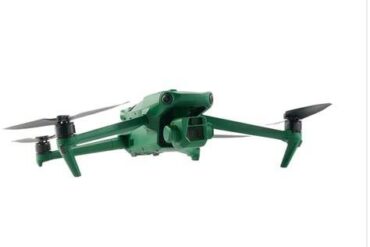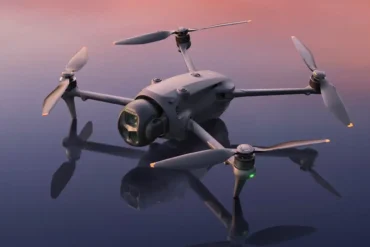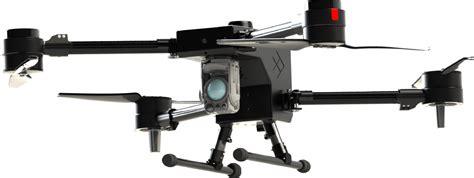
At the AUVSI XPONENTIAL 2025 conference in Denver, Colorado, Skyfish unveiled the Osprey, a next-generation, American-made drone engineered for commercial and governmental applications that demand precision, reliability, and compliance. This new unmanned aerial system (UAS), revealed on May 20 at Booth #3812, directly challenges the dominance of Chinese-manufactured drones like DJI’s M30 and M300 series. The Osprey is not merely an alternative—it represents a bold step toward reclaiming control over mission-critical drone technology with a platform built entirely in the United States.
The announcement marked a defining moment for the U.S. drone industry, which has been under increasing pressure to diversify away from foreign-sourced platforms due to national security concerns. Skyfish, headquartered in Montana, is asserting itself as a formidable player in this space with the Osprey, a drone designed from the ground up to be NDAA-compliant, DEVCOM-certified, and equipped with industry-leading payload options.
Precision Engineering Meets Portability: Designed for Field Efficiency
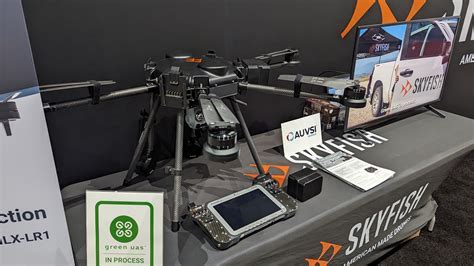
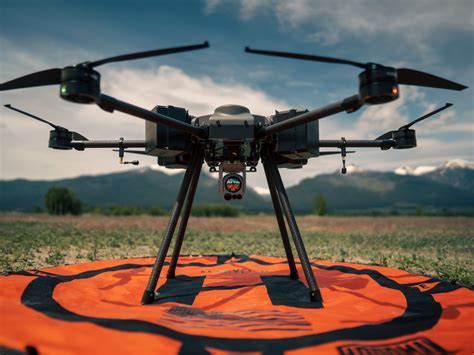
The Osprey stands out for its engineering finesse. It weighs approximately 13 pounds with its controller and can be packed into a single backpack, a design focus that emphasizes field deployability without compromising performance. The system delivers more than 50 minutes of flight time, and maintains a radio range of 3 to 5 miles, offering robust endurance and reach in varied operational environments.
But the lightweight architecture doesn’t sacrifice accuracy. Integrated RTK (Real-Time Kinematic) positioning enables centimeter-level geolocation precision, a crucial requirement for survey-grade mapping, geospatial data capture, and geotagging synchronized frame data in real-time. The Osprey isn’t just a flying camera—it’s a geospatial intelligence system.
Sensor Suite: Advanced Imaging for ISR and Infrastructure Inspection
The Osprey is designed with a modular sensor platform that supports some of the most advanced third-party payloads available today. Among its flagship integrations:
- Sony LR1 61MP Camera – For ultra-high resolution photogrammetry and inspection
- NextVision Raptor EO/IR – A dual electro-optical/infrared system offering X80 EO zoom and extensive thermal imaging capability
These capabilities allow the drone to transition seamlessly between roles—from performing detailed bridge inspections during the day to executing surveillance operations in low-light or night-time conditions for defense or public safety operations.
NDAA Compliance and Green UAS Certification: A True American Alternative
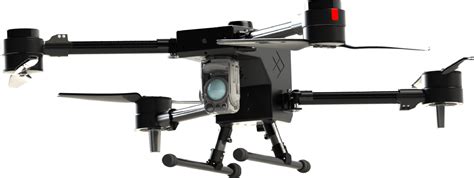
One of the Osprey’s most compelling attributes is its full domestic production. In a market where DJI has dominated despite growing concerns over data sovereignty and cybersecurity, Skyfish has created a 100% U.S.-made drone that adheres to the National Defense Authorization Act (NDAA). Furthermore, Osprey is actively pursuing Green UAS Certification, the voluntary validation program that ensures drones meet specific supply chain, cybersecurity, and operational standards.
The drone has already been awarded U.S. Army DEVCOM Airworthiness Level 3 certification, providing additional legitimacy for military and defense adoption. These certifications not only broaden its use in federal contracts but also establish a level of trust in critical infrastructure monitoring, emergency response, and border security applications.
Osprey’s Mission Versatility: From Towers to Turbines
Designed as a platform for professionals who need precise, measurable, and replicable results, the Osprey delivers engineering-grade digital models and digital twins accurate to 1/32 of an inch. This level of fidelity is rarely found in compact drone systems and is a direct result of Skyfish’s proprietary flight automation and payload integration stack.
Use cases span a broad spectrum:
- Telecommunications – Inspecting cellular towers for structural integrity and maintenance planning
- Transportation – Surveying bridges and highways for deformation, cracking, and corrosion
- Energy – Monitoring wind turbines, power lines, and substations to detect early signs of wear or failure
- Aviation Infrastructure – Mapping and inspecting airport grounds and runway conditions
- Public Safety and Defense – Performing real-time ISR tasks with thermal and optical clarity
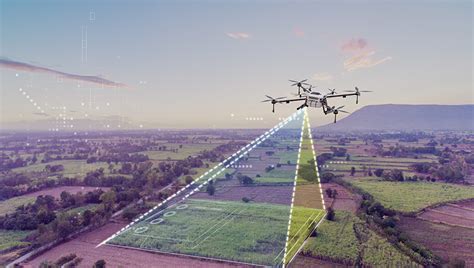
This broad capability set allows Osprey to service verticals from engineering consulting firms to federal law enforcement agencies, offering an American-built answer to the all-in-one drone needs of both sectors.
The CEO’s Vision: A Better Drone Than DJI
In public remarks during the unveiling, Dr. Orest Pilskalns, CEO of Skyfish, made it clear that Osprey wasn’t simply developed to match DJI—it was built to surpass it.
“To all those that say that there isn’t an American-made drone to compete against DJI – well there is now – it’s the American made, NDAA compliant, Skyfish Osprey drone.”
Originally envisioned as a replacement for DJI’s M30 and M300 systems, the Osprey ultimately outperformed expectations, delivering superior payload integration, flight duration, and data accuracy. Pilskalns emphasized that Skyfish has engineered a drone to excel where DJI often compromises—particularly in open software architecture, government compliance, and sensor modularity.
Skyfish’s Technological Ecosystem: More Than Just a Drone
What elevates Osprey from a hardware-only product to a comprehensive aerial data platform is Skyfish’s in-house software stack. It features:
- Flight automation workflows
- Cloud-based post-processing of data sets
- Secure storage and transfer protocols
- Third-party software interoperability for CAD, GIS, and BIM tools
This ecosystem enables professionals to streamline their workflows—from data capture to analysis—within a secure, vertically integrated framework. It’s a direct answer to the fragmentation seen in systems that depend on multiple software vendors, and positions Osprey as a turnkey solution for enterprise operations.
Conclusion: An American Drone With Global Ambitions
The Skyfish Osprey marks a watershed moment for U.S.-based drone innovation. It is a product born not just from engineering precision but from a national imperative to secure technological sovereignty in a domain increasingly central to infrastructure, defense, and data intelligence. With unmatched imaging capabilities, sensor flexibility, and compliance standards, the Osprey represents a next-generation drone ready to take on—and surpass—the global competition.
As government agencies, private sector enterprises, and engineering firms continue to seek alternatives to foreign-manufactured drones, the Skyfish Osprey offers not only a competitive solution—it delivers a superior one.
For more detailed information on capabilities and technical specifications, visit Skyfish.ai.