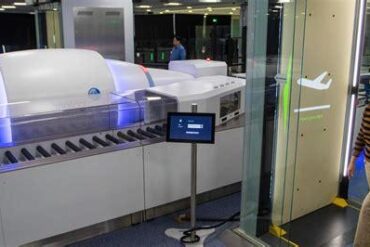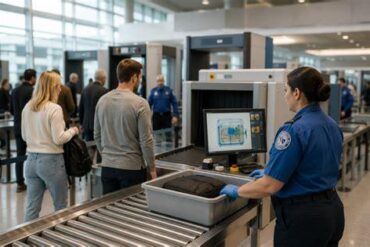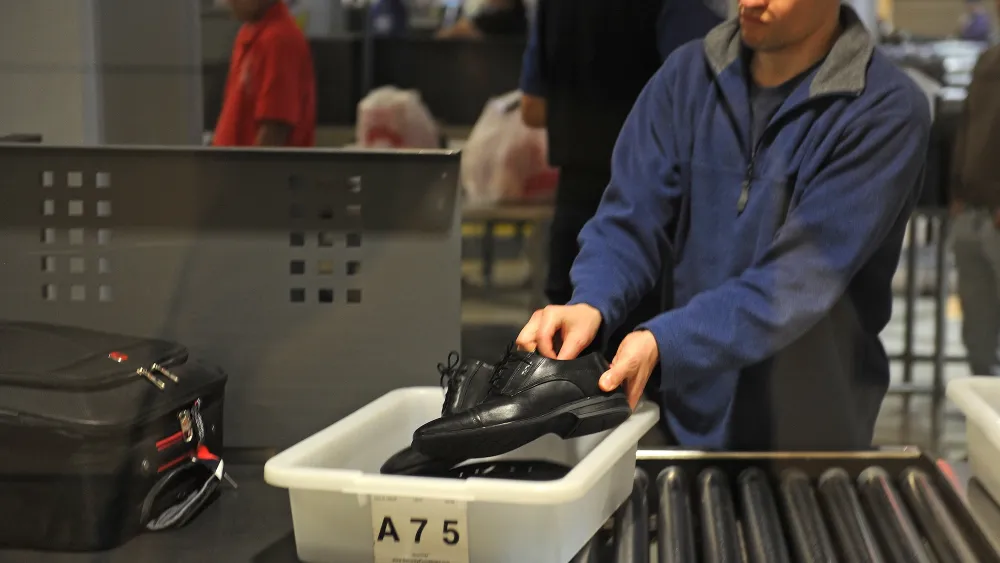
The Transportation Security Administration is confronting a growing wave of scrutiny after its 2025 decision to allow passengers to keep their shoes on during airport screening. What began as a traveler-friendly efficiency upgrade has rapidly evolved into a high-stakes debate over whether aviation security standards were compromised in pursuit of convenience. At the center of the controversy is a classified watchdog report suggesting that current scanning technology may not be capable of detecting threats concealed in footwear.
The issue gained national momentum when Senator Tammy Duckworth publicly called for the immediate reversal of the policy. Her argument is grounded in findings from a Department of Homeland Security Inspector General audit, reportedly indicating that certain Advanced Imaging Technology scanners cannot effectively screen shoes. That revelation, if accurate, introduces a critical vulnerability into one of the most fundamental layers of airport security.
Policy Shift Now Under Political and Security Fire
The shoes-on policy, introduced on July 8, 2025, was initially framed as a modernization effort designed to reduce checkpoint congestion and improve passenger experience. However, critics now argue that the rollout may have bypassed essential validation steps. Duckworth’s letter to Acting TSA Administrator Nguyen McNeill underscores a deeper concern: that the decision was implemented without sufficient consultation or rigorous real-world testing.
Her criticism is not merely procedural—it carries implications of systemic oversight failure. According to her statement, the Inspector General conducted covert testing and identified a significant detection gap. Even more concerning is the allegation that the TSA did not respond within the legally mandated 90-day window to outline corrective measures, escalating the issue from a technical flaw into a matter of accountability and governance.
Why Footwear Screening Still Matters in Modern Aviation Security
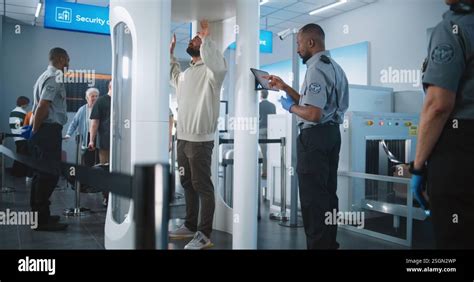
The importance of footwear screening is not theoretical. Aviation security protocols were permanently reshaped after past incidents involving explosives concealed in shoes, making this category of screening a long-standing pillar of threat prevention. The current debate hinges on whether technology can fully replace that layer of defense—or whether removing it introduces unacceptable risk.
Security systems are built on redundancy. When one layer is weakened, others must compensate. In this case, if scanners cannot reliably detect threats in shoes, then the system effectively accepts a blind spot at a critical checkpoint stage. That is precisely what alarms critics, who argue that modernization should enhance, not erode, layered security principles.
Duckworth’s reference to a rare “Seven-Day Letter” from the watchdog further amplifies the urgency. Such notices are typically reserved for serious, time-sensitive vulnerabilities, signaling that the concern is not hypothetical but immediate and actionable.
Operational Strain Compounds the Risk Landscape
The controversy arrives at a particularly fragile moment for the TSA. The agency has been navigating significant internal challenges, including staffing shortages, pay disruptions, and declining morale. A recent funding standoff reportedly left approximately 50,000 officers without pay for weeks, triggering increased absenteeism and a noticeable uptick in resignations.
Operational data paints a stark picture. Absences have climbed above 12%, while some major airports have experienced security wait times exceeding four hours. In such an environment, even well-designed systems can falter. Introducing a policy that may rely heavily on flawless technological performance adds another layer of complexity to an already strained operation.
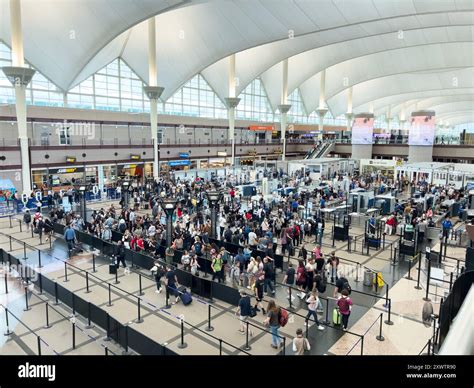
The interplay between workforce instability and procedural changes cannot be ignored. Security effectiveness depends not only on equipment but also on the consistency and alertness of frontline personnel. When staffing levels fluctuate and morale dips, the margin for error narrows considerably.
Convenience vs. Security: A Familiar but Critical Trade-Off
At its core, this debate reflects a recurring tension in aviation policy: how to balance efficiency and safety without compromising either. The shoes-on initiative was clearly designed with passenger convenience in mind, aiming to streamline throughput at increasingly congested airports. Yet the emerging concerns suggest that the trade-off may not have been fully justified.
Critics are not rejecting innovation outright. Rather, they are questioning whether this particular change was prematurely implemented without sufficient safeguards. The distinction matters. Effective modernization should be invisible in its risks and obvious in its benefits. When the opposite occurs, public trust becomes fragile.
The TSA now faces a pivotal decision. Reinstating the shoes-off requirement could restore confidence but may also reintroduce the very inefficiencies the agency sought to eliminate. Maintaining the current policy, on the other hand, risks prolonged political pressure and potential exposure to security gaps.
A Defining Moment for TSA Leadership and Credibility
This situation has evolved beyond a technical dispute into a broader test of institutional credibility. How the TSA responds will signal whether it prioritizes adaptability, transparency, and accountability in the face of emerging risks. The agency must navigate not only the technical realities of screening technology but also the public perception of safety in an era where aviation threats continue to evolve.
Ultimately, the outcome will shape more than just checkpoint procedures. It will influence how future policies are evaluated, how quickly vulnerabilities are addressed, and whether security-first principles remain firmly intact in the face of operational pressures.