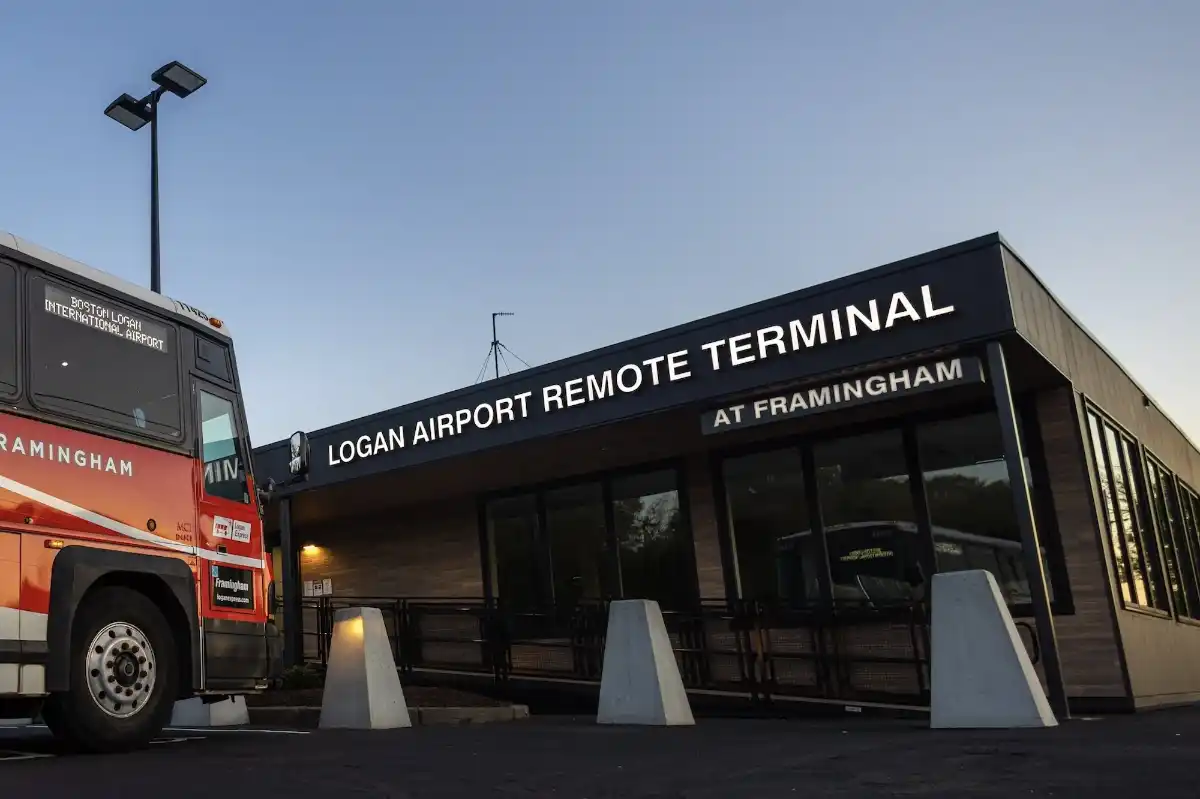
Boston Logan International Airport is preparing to reshape how passengers move through airports in the United States with the launch of the country’s first offsite TSA screening program. The new initiative allows eligible travelers to complete security screening at a remote terminal in Framingham, Massachusetts, before boarding a secure shuttle directly to the airport’s post-security area.
The pilot program, officially called the Logan Airport Remote Terminal, is being introduced by Massport in partnership with the Transportation Security Administration and transportation company Landline. Designed to reduce congestion at Boston Logan while improving the passenger experience for travelers living west of the city, the service represents one of the most ambitious changes to airport ground operations in recent years.
Instead of battling Boston traffic, parking garages, terminal crowds, and long TSA lines, travelers departing from MetroWest can now begin their airport journey from a suburban location and arrive at Logan effectively “airside,” already cleared through security.
For an industry constantly searching for ways to modernize airport flow, the project could become a blueprint for major hubs across the United States.
Boston Logan’s Remote TSA Screening Pilot Explained
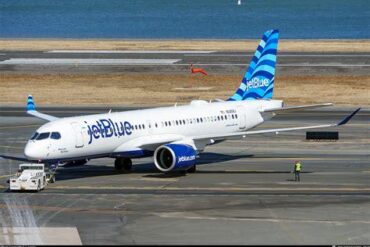
The Framingham-based remote terminal allows passengers flying with JetBlue and Delta Air Lines to check in, process luggage, and complete TSA security screening before ever reaching Boston Logan Airport.
Once screened, travelers board a dedicated secure coach operated by Landline. The shuttle then travels directly to Logan Airport and enters a secure area beyond the standard TSA checkpoints. Passengers disembark and proceed straight to their gates without needing to pass through airport security again.
The concept is common in parts of Asia and Europe through downtown check-in systems, but the inclusion of full TSA screening before airport arrival makes Boston Logan’s program the first of its kind in the United States.
At launch, the service is available daily for passengers with departing flights between 5:30 AM and 4:00 PM. Travelers can reserve seats from up to 90 days before departure until 90 minutes prior to flight time. Pricing has been set at $9 each way, making the option competitive compared with airport parking costs, rideshare fares, and fuel expenses.
Massport says passengers using the service should arrive at Logan approximately 45 minutes before departure, a dramatic reduction compared with the two-hour arrival buffer many domestic travelers currently build into their schedules.
Why Boston Logan Is Testing Offsite Airport Security
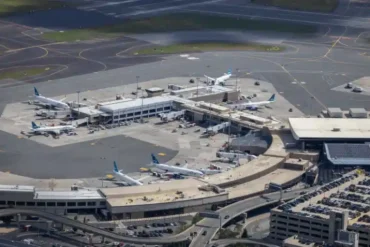
Boston Logan is one of the busiest airports in the northeastern United States, handling tens of millions of passengers annually while facing persistent challenges involving terminal congestion, curbside traffic, and TSA bottlenecks.
Massport CEO Rich Davey described the pilot as part of a broader effort to simplify airport travel and reduce passenger stress.
According to Davey, the long-term vision involves transforming the airport experience into something far more streamlined, where travelers can complete much of the traditionally stressful airport process away from crowded terminals.
The Framingham location was selected strategically. MetroWest communities generate substantial passenger traffic to Logan, yet travelers from those areas often face some of the region’s most frustrating road congestion during airport journeys. By moving part of the airport process closer to suburban population centers, Massport hopes to reduce both roadway pressure and terminal crowding simultaneously.
The initiative could also help airports better distribute infrastructure demands without requiring expensive terminal expansions.
Landline’s Expanding Role in Airport Connectivity
The service is being operated in partnership with The Landline Company, a transportation provider already working with several US airlines to integrate premium motor coach connections into airline itineraries.
Landline has gained attention in recent years for offering airline-branded bus connections in states including Pennsylvania and Illinois. Those programs allowed passengers to book bus segments directly alongside flights, effectively extending airline networks beyond airports.
However, Boston Logan’s new pilot goes much further.
Unlike traditional landside bus transfers, the Framingham service introduces secure post-screening transportation. This means the shuttle effectively becomes an extension of the airport itself rather than merely ground transportation.
The distinction is operationally significant because TSA security protocols must remain intact throughout the entire journey between the remote terminal and Logan Airport.
If successful, the model could inspire similar suburban satellite terminals near congested airports such as Chicago O’Hare, Los Angeles International Airport, Atlanta Hartsfield-Jackson, and New York JFK.
How the New Service Could Change US Air Travel
For decades, airport design in the United States has focused almost entirely on centralized terminals. Travelers were expected to arrive at the airport first and complete every step of the journey there.
Boston Logan’s remote TSA pilot introduces a fundamentally different approach.
Instead of concentrating all passenger processing inside crowded terminals, airports may eventually distribute security, baggage handling, and check-in operations across regional satellite hubs connected by secure transportation corridors.
This decentralization model could provide several major benefits:
- Reduced TSA checkpoint congestion
- Lower terminal crowding during peak hours
- Faster passenger processing times
- Improved suburban airport access
- Reduced demand for airport parking infrastructure
- Better traffic management around major hubs
The idea also aligns with broader aviation trends emphasizing seamless passenger mobility rather than traditional airport-centric operations.
Airlines increasingly view the travel journey as extending far beyond the terminal itself, especially as customer expectations evolve around convenience and time savings.
Global Airports Already Use Similar Downtown Check-In Systems
Although Boston Logan’s TSA screening element is unique in America, several major international airports already operate successful downtown or remote check-in facilities.
Hong Kong International Airport allows passengers to check in at Hong Kong and Kowloon stations before boarding the Airport Express train. Seoul Incheon offers similar services through Seoul Station’s City Airport Terminal, while Kuala Lumpur International Airport operates downtown check-in at KL Sentral.
Vienna, Taipei, Abu Dhabi, and Fiji’s Nadi Airport also provide variations of remote baggage and check-in processing designed to simplify airport arrivals.
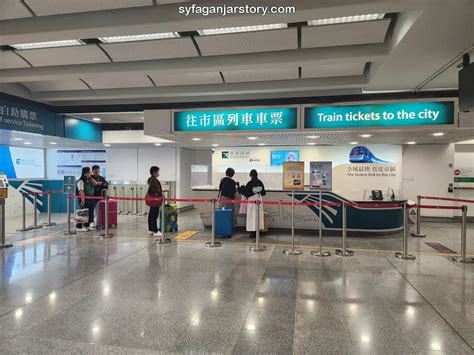
What separates Boston Logan from these systems is the inclusion of actual TSA security clearance before passengers reach the airport. That added layer transforms the Framingham facility from a simple convenience center into a functioning extension of airport security operations.
If the pilot proves reliable and popular, it may mark the beginning of a broader transformation in how Americans experience airport travel — one where the airport no longer truly begins at the airport itself.