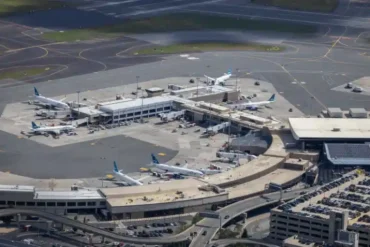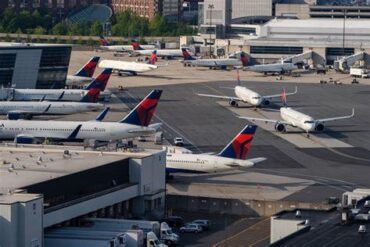
Boston Logan International Airport experienced significant operational disruptions after the arrival of Sail Boston 2026’s tall ship fleet forced air traffic controllers to reduce landing capacity. More than 340 flights were delayed, and 18 flights were canceled after authorities determined that some of the vessels’ towering masts could potentially interfere with aircraft approaching the airport.
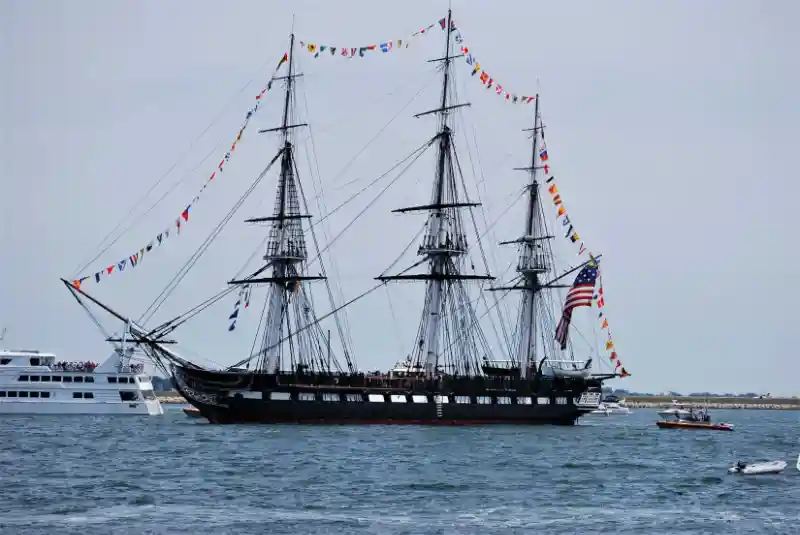
The unusual aviation disruption occurred as dozens of historic sailing ships traveled through Boston Harbor, including the legendary USS Constitution, also known as “Old Ironsides.” The event brought together approximately 60 vessels representing around 20 nations, creating a spectacular maritime celebration but also presenting an unexpected challenge for airport operations.
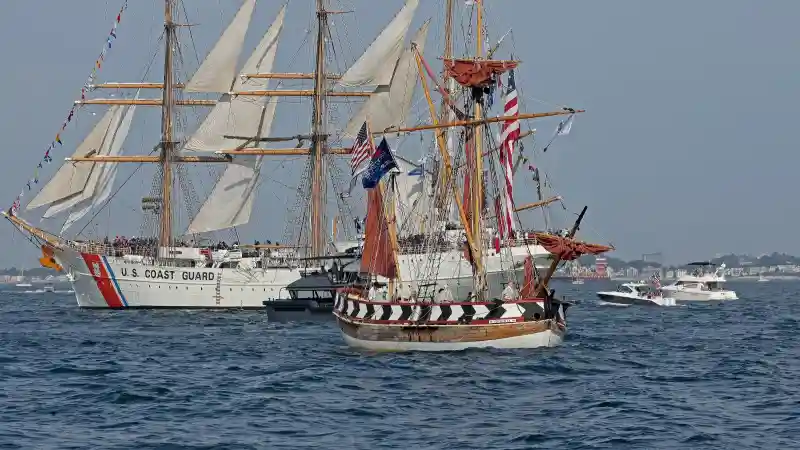
Tall Ships Create Challenges for Boston Logan Approach Operations
The main concern was not the ships themselves but the height of their masts relative to aircraft approach paths. Several vessels passed beneath the glide slope used by arriving aircraft, requiring air traffic controllers to adjust normal procedures as a precaution.
According to Massport, the organization responsible for operating Boston Logan International Airport, aircraft were not prevented from landing entirely. Instead, controllers moved arrivals into an alternative traffic configuration that could safely handle fewer aircraft per hour. This reduced the airport’s normal capacity and created a growing backlog of delayed flights.
The decision reflected aviation safety standards designed to prevent any possible conflict between aircraft and maritime structures. Although the likelihood of an actual collision was extremely low, the height of certain ship masts created a situation where additional separation measures were considered necessary.
The parade of tall ships took place from approximately 10:00 AM to 3:00 PM on Saturday. By around 4:30 PM, air traffic operations had returned to a more normal pattern after controllers ended the modified arrival procedures.
Flight Delays Increased as Other Boston Logan Problems Emerged
While the tall ships were responsible for a major portion of Saturday’s disruptions, they were not the only factor affecting Boston Logan’s operations. A separate airport fuel supply issue developed around the same period, adding further pressure to an already strained system.
Flight tracking data showed more than 450 total delays at Boston Logan on Saturday, although not every disruption was connected to the maritime event. The fuel problem continued into the following days, causing additional delays on Sunday and Monday.
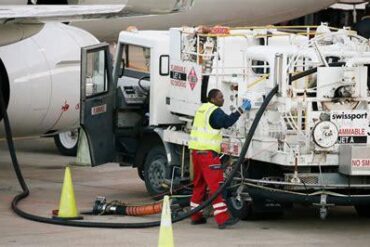
The airport’s fuel network experienced a mechanical issue that reduced the ability to refill aircraft fuel supplies through the underground pipeline system connecting Logan to external fuel reserves. The reduced refill rate limited the amount of fuel available for aircraft operations and forced airlines to adjust schedules.
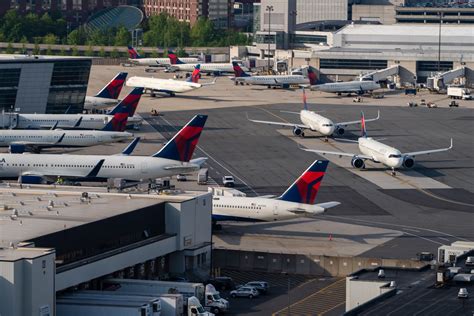
The combination of restricted runway capacity and fuel limitations created a chain reaction throughout the airport. Aircraft remained parked longer than expected, some flights departed late, and crews reached their legally permitted working limits before flights could continue.
Crew Duty Limits Add More Pressure to Delayed Flights
A major consequence of the disruptions involved airline crew availability. Under FAA Part 117 flight duty regulations, pilots and flight attendants must operate within strict working-hour limits designed to reduce fatigue risks.
Crew duty periods begin when employees report for work, not when an aircraft takes off. This means a flight delayed for several hours can consume a crew’s available operating time even if the aircraft itself remains fully functional.
During the fuel-related disruptions, some crews spent extended periods waiting at gates or on the ground. When pilots or cabin crew reached their maximum allowable duty time, airlines were legally required to remove them from service and arrange replacements before flights could continue.
This created a difficult situation for airlines. Some aircraft were ready to operate, but flights could not depart because qualified crew members were no longer available. Even one crew member reaching the legal limit could prevent an entire aircraft from leaving the gate.
Boston Logan Works Through Multiple Operational Challenges
The tall ship delays marked one of the more unusual disruptions in Boston Logan’s recent history. The situation was different from traditional weather-related delays because the cause came from a carefully planned public event intersecting with aviation safety requirements.
The incident also brought back memories of a previous maritime challenge in 2012, when a sailboat drifted near the end of a Logan runway and ran aground. However, unlike that event, the 2026 tall ship parade did not result in a runway closure.
As Sail Boston 2026 continues through July 16, airport officials have continued monitoring operations while airlines work to recover from the accumulated delays. No further reports have indicated that the participating sailing vessels interfered with flight operations after Saturday’s parade.
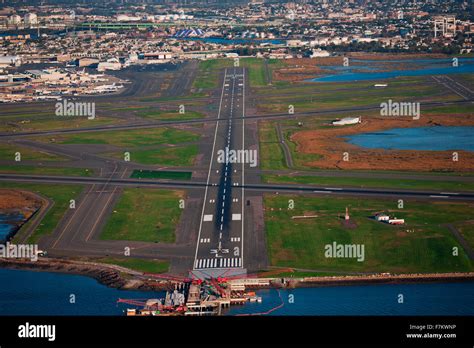
The event demonstrated the complex coordination required between aviation authorities, maritime organizers, and airport operators. Boston Logan successfully maintained flight operations, but the combination of tall ship safety restrictions, fuel system problems, and crew scheduling limits showed how quickly multiple challenges can combine to affect thousands of travelers.
For passengers, the disruption served as a reminder that airport operations depend on many interconnected systems. A historic celebration on the water, a technical fuel issue, and strict aviation regulations together created an unexpected sequence of delays across one of the busiest airports in the United States.