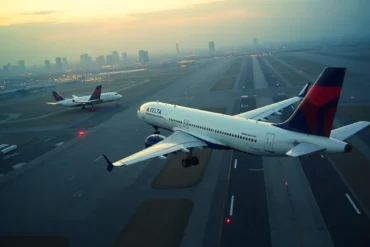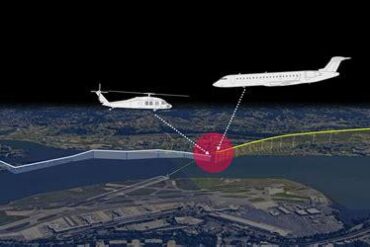
The National Transportation Safety Board (NTSB) has released its preliminary findings into a serious runway conflict at Boston Logan International Airport on June 20, revealing that an air traffic controller mistakenly forgot that an American Airlines Boeing 737-800 had already been cleared for takeoff while a Delta Air Lines Airbus A319 was approaching the same area. The incident, which could have resulted in a catastrophic collision, was avoided only after the Delta flight crew recognized the developing danger and executed a timely go-around.
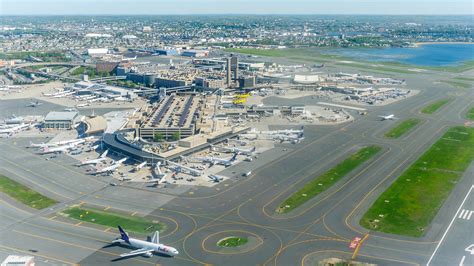
The close call occurred as Delta Air Lines Flight 2351 was arriving from Dallas/Fort Worth International Airport while American Airlines Flight 3161 was preparing to depart for Charlotte Douglas International Airport. According to the NTSB report, the Delta Airbus A319 was cleared to land on Runway 33L, while the American Boeing 737-800 received takeoff clearance from an intersecting runway, Runway 27. The two aircraft were operating on paths that created a serious conflict if both movements continued.
The American Airlines aircraft, registered as N316PF, was cleared for takeoff at approximately 11:33:43 AM local time. However, shortly after beginning its departure sequence, the aircraft experienced a false cockpit warning that caused the crew to temporarily stop the takeoff roll. After resolving the warning, the Boeing 737 resumed acceleration, unaware that the approaching Delta aircraft was now on a collision path.
The Delta Airbus A319, registered as N328NB, was carrying 131 passengers and five crew members when the pilots noticed the American aircraft beginning its takeoff roll across the intersecting runway environment. Recognizing that the runway would not be clear before landing, the Delta crew immediately informed air traffic control and initiated a go-around maneuver. The NTSB estimated that the two aircraft came within approximately 670 feet (204 meters) of each other during the incident.
Controller Lost Situational Awareness During Complex Runway Operations
The NTSB investigation identified a breakdown in controller situational awareness as a major factor in the near-miss. Interviews with air traffic controllers revealed that there were no unusual distractions, technical problems, or significant anomalies inside the control tower during the event. Controllers described the traffic workload as moderate to low, suggesting that the error was not caused by overwhelming congestion.
According to the preliminary report, the controller believed the American Airlines aircraft would continue its takeoff roll after receiving clearance. When the aircraft unexpectedly paused because of the cockpit warning, the controller shifted attention toward other traffic, including Tradewind Air Flight GPD82, which needed to be managed to ensure proper runway separation for the arriving Delta flight.
The situation became more complicated as multiple taxi instructions were issued around the same time. The controller apparently failed to maintain awareness that the American Boeing 737 remained active on the runway movement sequence. When the Delta pilots announced they would perform a go-around, the controller then realized that a potential runway incursion was developing.
A key moment in the incident was captured through air traffic control audio recordings. When the controller noticed the American aircraft’s movement, he asked, “American 3161, where you going?” The flight crew responded, “You cleared us for takeoff.” The exchange highlighted the communication gap between the aircraft and the tower, as both sides were operating under different assumptions about the aircraft’s status.
Delta and American Aircraft Details From the Boston Near-Miss
The two aircraft involved were narrowbody passenger jets commonly used for domestic operations in the United States. The arriving aircraft was a Delta Air Lines Airbus A319-114, while the departing aircraft was an American Airlines Boeing 737-823.
The Delta A319, delivered in 2001 and originally operated by Northwest Airlines before joining Delta’s fleet, had accumulated more than two decades of service. The aircraft was operating with registration N328NB and was carrying passengers from Texas to Massachusetts.
The American Airlines Boeing 737-800, registered as N316PF, was significantly newer, having entered service in 2017. It was scheduled to operate the short domestic route from Boston to Charlotte with 176 passengers and six crew members onboard.
Despite the severity of the situation, no passengers or crew members were injured. The Delta flight landed safely after completing the go-around procedure, although the maneuver caused a minor delay to the flight schedule.
Boston Logan Incident Highlights Growing Concerns Over Runway Safety
The Boston near-miss adds to wider concerns about runway safety and air traffic management challenges across the United States. In recent years, several runway incursions and close calls have increased scrutiny of controller workload, airport procedures, and communication practices.
The incident demonstrates how aviation safety depends not only on technology but also on continuous awareness among pilots and controllers. Modern aircraft systems can provide warnings and safeguards, but human decision-making remains a critical final layer of protection.
The Delta pilots’ quick recognition of the conflict prevented what could have become a devastating accident. Their decision to abandon the approach and execute a go-around showed the importance of maintaining vigilance even when receiving normal operational clearances.
The NTSB investigation remains ongoing, and additional findings are expected as investigators examine controller actions, communication procedures, airport operations, and potential recommendations to prevent similar events. The agency’s final report may provide further insight into how a cleared aircraft was overlooked and what improvements could strengthen runway safety at major airports like Boston Logan.