The Federal Aviation Administration failed to act on repeated warnings about dangerous flight path conflicts around Ronald Reagan Washington National Airport more than a decade before a fatal midair collision in January 2025, according to newly released findings from the National Transportation Safety Board. The investigation reveals that a helicopter route passing directly beneath a commercial runway approach had been flagged as a serious safety hazard as early as 2013, yet remained unchanged until disaster forced action.
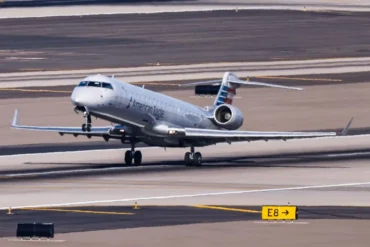
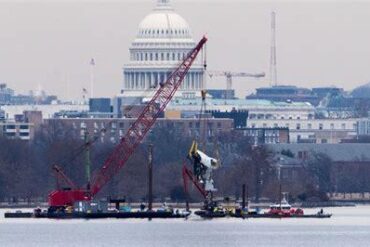
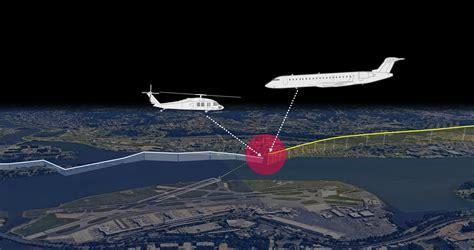
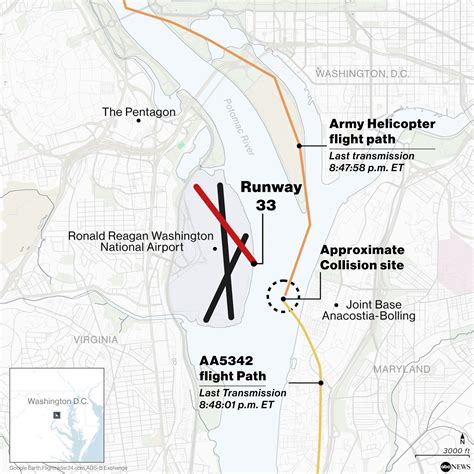
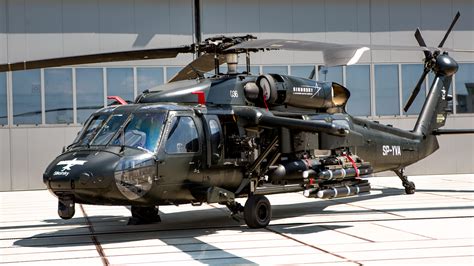
On January 29, 2025, a PSA Airlines Bombardier CRJ700 operating as American Eagle Flight 5342 was on final approach to Runway 33 at Reagan National. At the same time, a US Army Sikorsky Black Hawk helicopter, callsign PAT25, was transiting the Potomac River corridor via Helicopter Route 4. The helicopter was flying at approximately 278 feet, exceeding the route’s published maximum altitude of 200 feet, while the regional jet descended through the same airspace. The two aircraft collided midair, killing everyone on board both aircraft.
The tragedy shocked the aviation community, but the NTSB’s latest disclosures suggest the risk was neither unforeseen nor unavoidable. Instead, it was the culmination of unresolved structural flaws in one of the most complex airspace environments in the world.
Long-Ignored Safety Concerns Dating Back to 2013
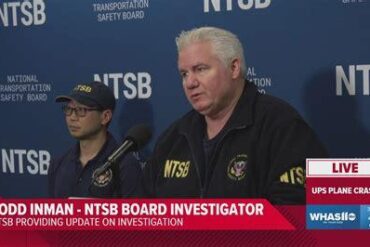
In its update, the NTSB confirmed that it had previously investigated a near miss between a commercial airliner and a helicopter in the same location in 2013. That incident prompted internal concern and formal communication with the FAA, warning that the placement of Helicopter Route 4 directly beneath the final approach to Runway 33 created an unacceptably small margin for error. At the time, both air traffic controllers at Reagan National and local helicopter operators echoed those concerns and proposed changes.
Despite these warnings, the FAA chose not to relocate, redesign, or eliminate the route. No additional visual warnings were added to navigation charts, and no operational restrictions were imposed when Runway 33 was active. According to the NTSB, this inaction directly contributed to the 2025 collision. The agency stated that the probable cause of the accident was the FAA’s placement of a helicopter route in close proximity to a runway approach path, despite known risks.
Why Helicopter Route 4 Was a Known Hazard
Helicopter Route 4 was designed to funnel military and law enforcement helicopters along the Potomac River at low altitude, keeping them clear of fixed-wing traffic. In practice, the vertical separation between helicopters on Route 4 and airliners landing on Runway 33 was often less than 75 feet. In aviation safety terms, that margin is razor-thin, especially in congested airspace with frequent traffic and high workload.
Compounding the danger, traffic collision avoidance system alerts are inhibited at low altitudes to prevent nuisance warnings during normal landing operations. This meant that crews had limited automated protection, relying instead on visual separation and controller instructions. Over time, controllers reportedly became desensitized to traffic advisories in the area, treating them as routine rather than urgent indicators of risk.
Systemic Failures Across Multiple Layers
The NTSB’s findings paint a picture of systemic failure rather than a single error. The helicopter crew’s failure to maintain visual separation and their deviation above the published altitude were contributing factors, but not the root cause. High controller workload due to staffing shortages, an aggressive arrival rate at Reagan National, and inadequate charting of known conflict points all played roles.
The investigation also highlighted training gaps within the US Army, noting that pilots were not sufficiently briefed on how small altimeter errors could translate into dangerous altitude deviations in tightly constrained airspace. Each of these factors alone might have been survivable. Together, they formed what investigators described as an accident waiting to happen.
Changes Implemented Only After Tragedy
Following the collision, the FAA finally closed Helicopter Route 4 when Runways 15 and 33 are in use, a step safety experts say should have been taken years earlier. The NTSB has now issued multiple safety recommendations aimed at preventing a recurrence, including reexamining all helicopter routes near major airports, improving chart depictions of conflict zones, and reducing reliance on visual separation in high-density environments.
Reagan National’s airspace will always be complex, constrained by geography, security restrictions, and traffic demand. Complexity, however, does not excuse complacency. The 2025 collision stands as a stark reminder that known risks left unaddressed do not fade with time; they accumulate, quietly, until the margin finally disappears.