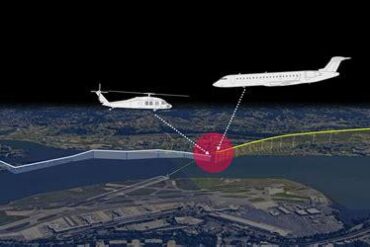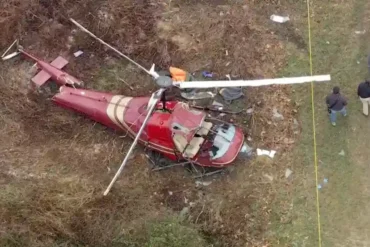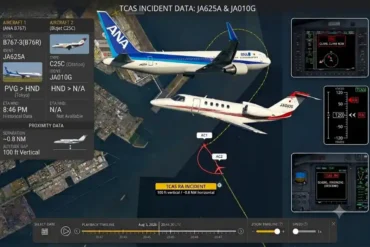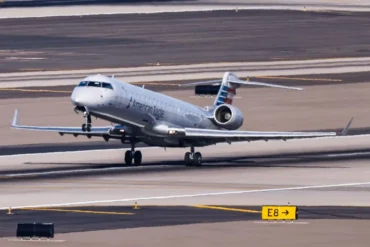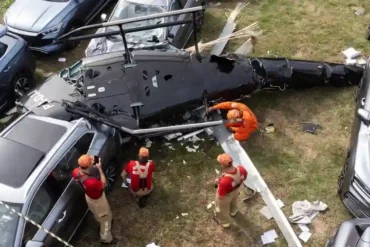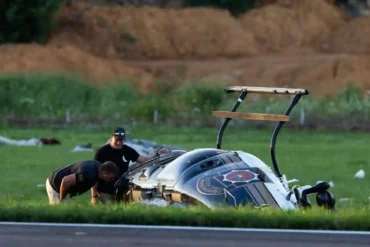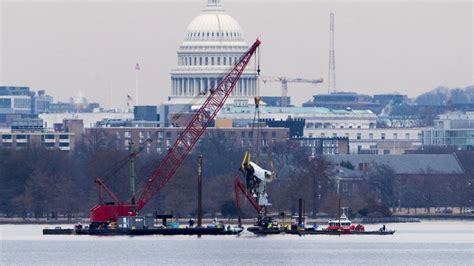
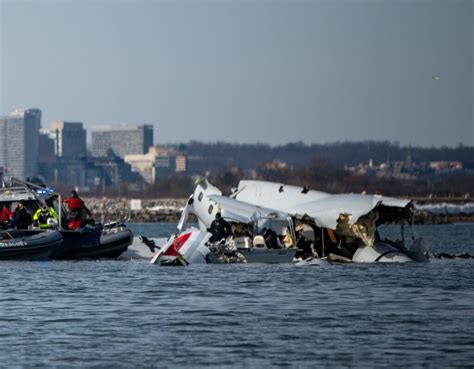
On January 29, 2025, an incident unfolded in the skies over Washington, D.C., that would go down in aviation history as a catastrophic failure of coordination and oversight. A US Army Sikorsky UH-60 Black Hawk helicopter collided midair with a PSA Airlines CRJ700, operating as American Eagle flight AA5342, near Ronald Reagan Washington National Airport (DCA). The collision resulted in the deaths of all 67 people on board, shaking public confidence in air traffic safety and sparking federal litigation.
Government Admits Legal Responsibility in Fatal Crash
In a rare and significant development, the US Department of Justice acknowledged partial fault in the tragedy. A court filing obtained by NBC News confirmed that the government breached its duty of care, directly contributing to the collision. The filing explicitly states: “admits that it owed a duty of care to Plaintiffs, which it breached, thereby proximately causing the tragic accident.”
This admission represents a pivotal moment, as the government rarely accepts such legal liability, especially in aviation cases involving military and civilian aircraft.
DCA’s Infamous Airspace and Chronic Safety Risks
The airspace around DCA is notorious among pilots and controllers. Tightly packed, visually complex, and dangerously close to civilian and government infrastructure, it is widely recognized as one of the busiest and most challenging approach corridors in the United States. The National Transportation Safety Board (NTSB) has, for years, flagged this corridor for review, citing past near-miss incidents and warning of the looming potential for catastrophe.
The January collision has now become the grimmest realization of those warnings. It is what attorneys and safety experts have called “an accident waiting to happen.” According to court records, both the Black Hawk crew and the CRJ700 flight team failed to maintain proper visual awareness, violating basic separation protocols. Compounding the disaster, an FAA air traffic controller failed to adhere to an existing FAA directive that could have prevented the collision.
While the government has not accepted exclusive responsibility, it has conceded its role in a chain of missteps that culminated in the loss of 67 lives.
Inside the Collision: Timeline and Devastation
The events of January 29, 2025, were as rapid as they were devastating. The Black Hawk, call sign PAT25, was conducting a routine operational flight over the capital region. Simultaneously, American Eagle flight AA5342 was on its final approach to DCA, carrying 60 passengers, 2 pilots, and 2 flight attendants.
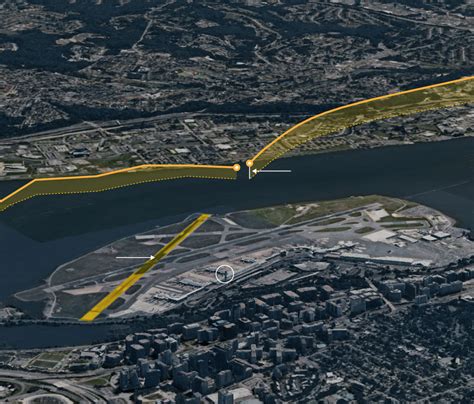
Roughly half a mile southeast of the airport, the two aircraft intersected at a critical point. The altitude differential—intended to act as a buffer—proved insufficient. Witnesses described the crash as a “flash in the sky” followed by the harrowing plunge of both aircraft into the Potomac River. The crash not only destroyed both machines but ignited a fireball visible from the riverbanks.
Who’s to Blame? Divided Responsibility in Courtroom Battle
The legal aftermath has been fierce. Families of the victims have filed lawsuits against the US Government, American Airlines, and its regional carrier, PSA Airlines. The lawsuits frame the collision as a “wholly avoidable tragedy”, demanding accountability and compensation for the failure of procedures, training, and oversight.
While the DOJ’s admission marked a turning point, American Airlines and PSA Airlines have pushed back, arguing that their operations were in full compliance with federal aviation rules. Their defense hinges on the premise that aviation safety oversight is a federal responsibility—a nuance that may shift significant legal burden back onto the government.
Attorney Robert Clifford, representing one of the families, emphasized that the government’s acknowledgment of failure, while critical, does not absolve the airlines entirely. “They had a role,” he stated, “but this is about a cascading series of errors that led to unimaginable loss.”
Urgent Safety Reforms Triggered by the Collision
In the weeks following the crash, the NTSB issued an emergency directive urging the Federal Aviation Administration to take swift action. Among the agency’s urgent safety recommendations were:
- A permanent prohibition of helicopter operations near DCA’s immediate airspace.
- An outright ban on helicopters operating during usage of runways 15 and 33, which intersect closely with visual approach corridors.
- Development of a dedicated, alternative helicopter route to eliminate overlap with commercial traffic.
The NTSB also noted that helicopters flying along Route 4, even at the maximum allowed altitude of 200 feet, might only be separated from jet aircraft on final approach by as little as 75 feet vertically. This razor-thin margin, exacerbated by altitude fluctuations and shoreline proximity, has now been labeled “unacceptable” by aviation safety boards.
Why the FAA Directive Was Ignored
Perhaps the most troubling revelation in the DOJ’s filing was the failure of an FAA air traffic controller to follow a specific directive designed to prevent precisely this type of conflict. While the court filing stops short of attributing full blame to Air Traffic Control (ATC), the government concedes that the controller’s lapse was a proximate cause in the collision chain.
The underlying directive, reportedly tied to minimum separation standards and visual flight rules coordination, has not been publicly detailed in full. However, the DOJ’s acknowledgement underscores a long-standing issue: the lack of consistent enforcement of safety policies, particularly in complex mixed-use airspaces involving military and civilian aircraft.
Decades of Warnings Ignored
Aviation experts and veteran pilots have long warned of systemic vulnerabilities in US airspace—especially in mixed-use corridors like the one over Washington, D.C. The DCA zone represents a rare convergence of high-density commercial traffic, frequent military overflights, and stringent security restrictions, all compressed into one of the smallest commercial airspaces in the country.
What’s now clear is that warning signs existed for years. Previous NTSB reports highlighted close calls, miscommunications, and near-miss incidents involving both helicopters and jets. Yet, little was done to restructure flight paths, improve training, or enforce altitude buffers.
The January 29 disaster, while shocking, was not unpredictable. It was the violent realization of what aviation professionals had long feared.
Impact on Families and the Aviation Industry
For the families of the 67 victims, legal accountability is only part of the struggle. Grief has been compounded by the knowledge that the accident could have—and should have—been avoided. Many have now formed a coalition, pushing for reforms that go beyond lawsuits and into permanent policy change.
Meanwhile, the crash has sent ripples through the aviation industry. Regional airlines, already under scrutiny for pilot staffing, training standards, and route density, now face renewed calls for stricter oversight. Simultaneously, the US military’s integration into civilian air corridors is being reexamined, with proposals surfacing for exclusive flight zones or dedicated coordination protocols between ATC and defense operations.
The Path Forward: Rebuilding Trust Through Reform
The tragic events of January 29 are now a turning point. They underscore the urgent need to rebuild public trust—not just through compensation, but through visible, systemic change in how the nation manages airspace.
The NTSB continues its investigation and is expected to release a full final report in early 2026. That report will likely include a comprehensive breakdown of flight data, cockpit audio, and ATC logs, as well as final recommendations to the FAA, Department of Defense, and commercial carriers.
But action need not wait. Already, the FAA has begun reviewing flight corridor geometry, training requirements, and ATC directives. If these early changes become permanent, they may yet prevent future tragedies of a similar nature.
In the words of aviation analyst Dr. Helena Farrow: “We are past the point of warnings. This was a tragedy foretold—and one that must never be repeated.”