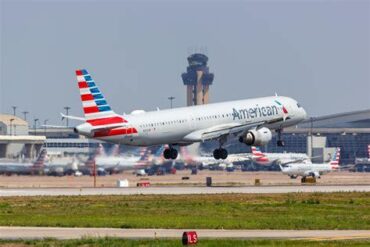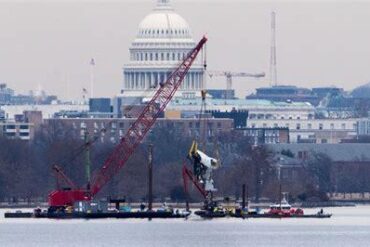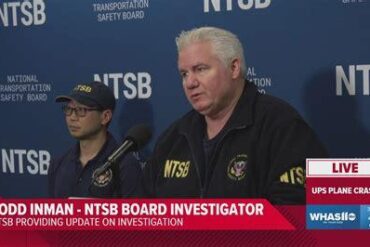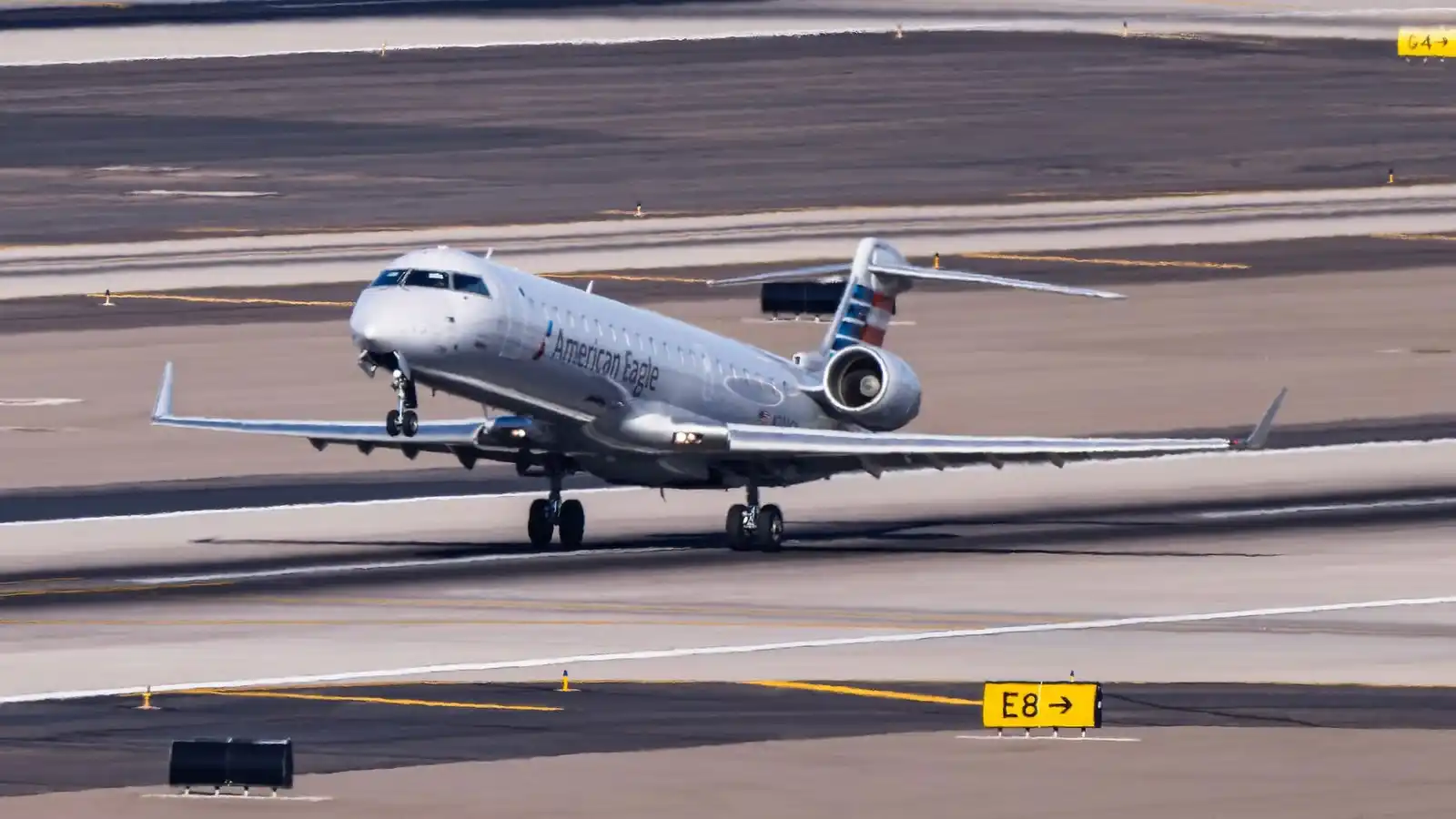
The final report from the National Transportation Safety Board delivers a sobering verdict on the January 29, 2025 midair collision over the Potomac River corridor near Ronald Reagan Washington National Airport. The crash involved an American Airlines regional flight, operated by PSA Airlines with a Bombardier CRJ700 under the American Eagle banner, and a U.S. Army Sikorsky UH-60 Black Hawk helicopter. All 67 people aboard both aircraft were killed. After more than a year of technical reconstruction, operational analysis, and institutional review, the investigation concludes that the most decisive failure did not originate in the cockpit, but in the way airspace itself was designed and governed.
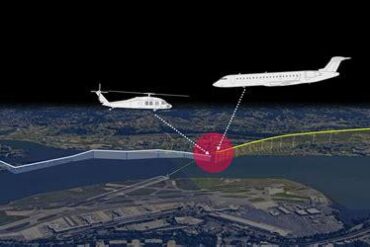
The NTSB identifies the Federal Aviation Administration’s placement of a helicopter route in dangerously close proximity to a runway approach path at DCA as the probable cause of the collision. The report describes a system in which routine proximity between high-speed commercial arrivals and military rotorcraft was normalized, despite long-standing warnings that the geometry of the routes left little margin for error. The physical layout of the airspace effectively stacked risk into a narrow vertical and lateral corridor, transforming minor deviations into catastrophic possibilities. This was not a single lapse but a structural design choice that persisted across years of operations.
Investigators emphasize that the FAA failed to regularly review helicopter routes using updated traffic density data, operational complexity, and evolving risk models. The report notes that previous recommendations calling for route adjustments and separation buffers were not implemented, allowing a known hazard to remain embedded in daily operations. Over time, efficiency became the organizing principle of the airspace, while resilience quietly eroded. The result was a fragile system that could function only as long as every actor performed perfectly, every time.
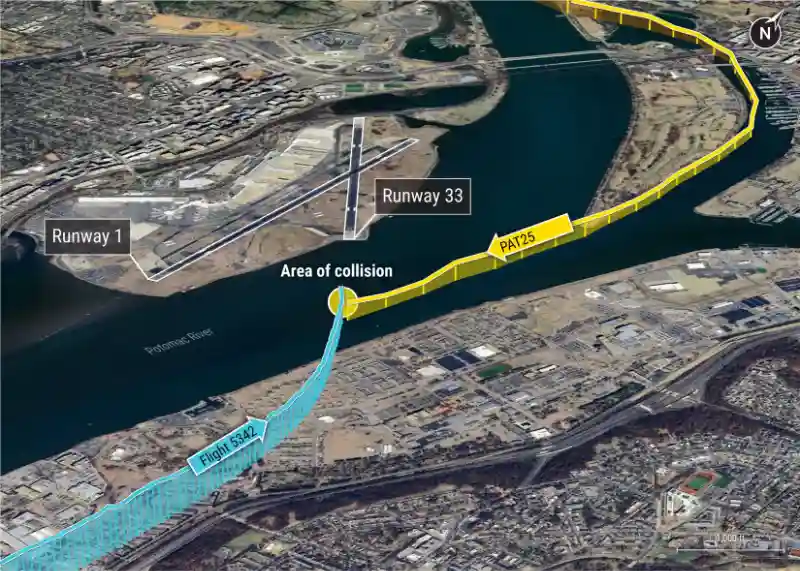
The collision unfolded during the CRJ700’s final approach to Reagan National, one of the most constrained and politically sensitive airports in the United States. The Black Hawk helicopter was operating on a designated route that intersected the approach environment, creating a layered conflict zone between rotary-wing military traffic and commercial jets descending at high speed. The NTSB’s reconstruction shows how narrow tolerances in altitude and lateral separation collapsed in seconds, leaving neither crew enough time or information to resolve the conflict once visual contact became unreliable.
Operational culture amplified these design flaws. The report critiques the air traffic system’s reliance on visual separation to maintain traffic flow in complex terminal airspace. Visual separation depends on pilots seeing and correctly interpreting other aircraft, then maneuvering safely to avoid them. In this case, the NTSB found that the limitations of human perception, cockpit workload, and environmental conditions rendered the “see-and-avoid” concept brittle. The helicopter crew did not apply effective visual separation, and the system placed them in a position where visual detection alone carried too much of the safety burden.
Air traffic control conditions at the time of the crash further degraded the safety net. The NTSB documents how the tower team was operating under a combined helicopter and local control configuration, increasing cognitive load and reducing margin for error. High workload contributed to a loss of situation awareness, delayed advisories, and the absence of timely safety alerts to both flight crews. The report situates this within a broader national shortage of controllers, where staffing gaps and overtime have become normalized features of daily operations rather than temporary stressors.
The helicopter’s altitude error compounded the danger created by route placement. According to the final report, the UH-60 was flying above the maximum permitted altitude for the route it was assigned, shrinking the already narrow vertical separation from arriving jet traffic. The NTSB traces this deviation to a failure by the U.S. Army to adequately train pilots on the operational effects of barometric altimeter error tolerances. In dense terminal airspace, small altitude inaccuracies can translate into large collision risks, and the investigation underscores how institutional training gaps can propagate into frontline hazards.
Technology that might have served as a last line of defense did not perform as hoped. Limitations in the Traffic Collision Avoidance System on both aircraft prevented timely, effective warnings that could have altered the outcome. The report frames this not as a single equipment malfunction, but as a systemic issue in how collision avoidance logic is tuned for mixed-performance environments where fast jets and slower helicopters share airspace. In parallel, the NTSB links an unsustainable arrival rate at DCA and airline scheduling practices to a gradual degradation of safety margins, where operational tempo outpaced the capacity of human and technical safeguards.
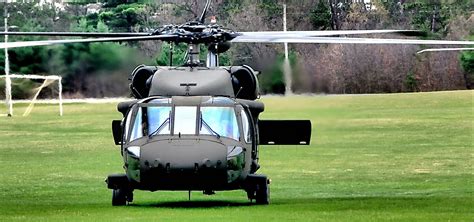
The final section of the report pivots from diagnosis to prescription. The NTSB issues a broad set of recommendations aimed at reshaping how risk is managed in congested terminal airspace. For the FAA, the recommendations call for redesigned helicopter routes with greater separation from runway approach paths, formalized risk assessment processes to detect real-time operational hazards, revised controller duty limits, and changes to visual separation training that acknowledge human perceptual limits. The report also presses the agency to act on prior safety recommendations rather than allowing them to linger as unresolved advisories.
For the U.S. Army, the NTSB urges revisions to helicopter pilot training in the Washington, DC region, with particular emphasis on altitude management, barometric error awareness, and operations in dense civil airspace. The recommendations extend to interagency coordination, arguing that military and civilian aviation authorities must treat shared airspace as a single safety ecosystem rather than parallel domains with loosely aligned rules. The underlying message is blunt: safety improves when design, staffing, training, and technology are aligned toward resilience instead of mere throughput.
The report closes with a reminder that aviation safety evolves through painful lessons written into policy and practice. The Potomac River collision exposes how invisible design choices, compounded by staffing strain and procedural shortcuts, can converge into irreversible tragedy. The corrective path laid out by the NTSB is not about blaming individual crews but about reshaping the architecture of airspace management so that ordinary human error no longer carries extraordinary consequences.