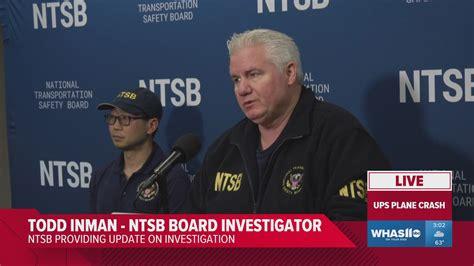
The sudden dismissal of a senior aviation investigator rarely happens quietly. When it does, it tends to ripple through the aviation safety community with the force of a shockwave. That is precisely what occurred when the White House abruptly removed National Transportation Safety Board (NTSB) member Todd Inman, an official deeply involved in two of the most devastating aviation disasters in recent American history. The termination came without explanation, without a public statement detailing cause, and without the procedural clarity normally expected when removing a sitting member of one of the United States’ most trusted investigative agencies.
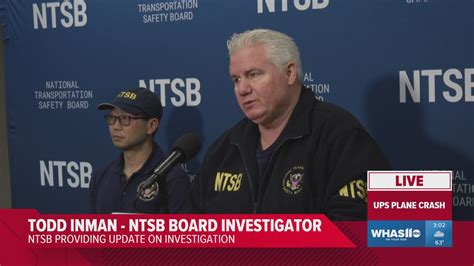
Todd Inman had served on the NTSB board since 2024, quickly becoming a central figure in major accident investigations. During his tenure he oversaw on-scene investigative operations that demanded both technical expertise and sensitive coordination with grieving families, federal regulators, and military authorities. His work brought him to the forefront of aviation safety debates following catastrophic incidents in 2025, including the fatal mid-air collision near Washington, D.C., and a deadly cargo crash in Kentucky. By the time the White House terminated his appointment, the investigative groundwork for both cases had been laid, but the final conclusions were still pending.
The timing of the dismissal raised eyebrows across Washington and within the aviation sector. Just as investigators were preparing the final analytical stages of these inquiries—where responsibility, procedural failures, and regulatory gaps are formally determined—the administration installed a replacement. The Senate confirmation of John DeLeeuw occurred almost simultaneously with Inman’s termination, giving the transition an unusual sense of urgency that critics argue lacked transparency.
The Investigator Behind Two Major Aviation Tragedies
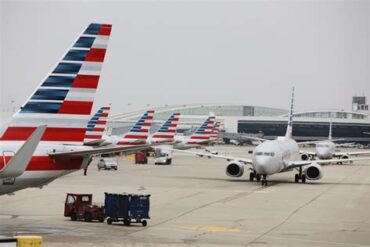
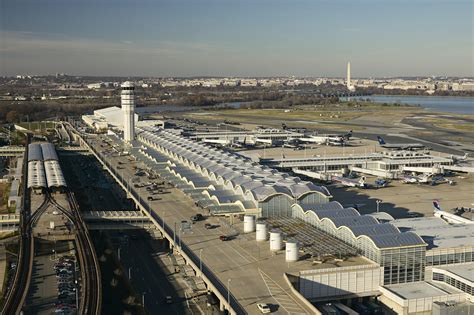
Inman’s role in the 2025 Potomac River mid-air collision investigation placed him at the center of one of the deadliest aviation accidents in modern U.S. history. The disaster involved PSA Airlines Flight 5342—operating under the American Airlines regional network—and a U.S. Army UH-60 Black Hawk helicopter near Ronald Reagan Washington National Airport. The crash claimed 67 lives and triggered an immediate national safety investigation.
As the lead NTSB board member on scene, Inman supervised the recovery of three crucial flight data recorders, commonly known as black boxes. These devices store cockpit audio and flight performance data, providing investigators with the minute-by-minute technical record needed to reconstruct an accident. Recovering them from the Potomac River was essential to understanding the collision sequence and the altitude, navigation, and communication conditions at the time of impact.
Inman also raised pointed questions about operational procedures surrounding the capital’s crowded airspace. During early investigative briefings, he openly examined the reliability of barometric altimeters used in military helicopters and scrutinized how the Federal Aviation Administration manages the complex traffic patterns near Reagan National Airport. His willingness to probe regulatory assumptions signaled a rigorous investigative approach, one that placed systemic accountability above political comfort.
A Career Built Outside Aviation’s Corporate Circles
Unlike many figures in aviation oversight, Inman did not rise through airline management or aircraft manufacturing. His professional path began in insurance investigations, where he spent two decades as a Special Investigator at State Farm, specializing in fraud analysis and complex accident reviews. The experience sharpened his reputation for methodical evidence gathering and independent evaluation.
He later entered public service, becoming Secretary of State for Florida, before moving into federal transportation leadership. As Chief of Staff at the U.S. Department of Transportation, Inman helped oversee an agency responsible for an $89 billion budget and more than 55,000 employees. That administrative background, paired with investigative experience, made him a distinctive choice when President Joe Biden appointed him to the NTSB board.
Supporters argue that this outsider perspective was precisely what made Inman valuable during high-stakes accident investigations. Without long-standing ties to airline executives or aviation manufacturers, he approached the job with fewer industry entanglements. Independence, in accident investigations, is not a philosophical preference—it is a structural necessity. The credibility of safety findings depends heavily on the perception that investigators operate without pressure from corporate or political stakeholders.
The Sudden Rise of John DeLeeuw
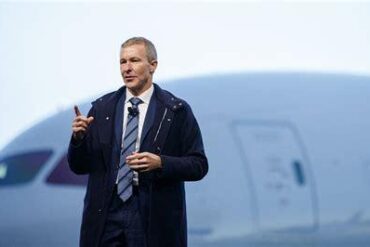
Inman’s successor, John DeLeeuw, brings a dramatically different professional background. Before joining the NTSB, DeLeeuw served as Managing Director of Safety and Efficiency at American Airlines, one of the world’s largest carriers. Prior to that role, he accumulated approximately 19,000 accident-free flight hours as a Boeing 787 Dreamliner captain and earlier flew C-130 transport aircraft in the U.S. Air Force, including missions during Operation Desert Storm.
On paper, DeLeeuw’s aviation credentials are formidable. Few safety officials possess both military and commercial cockpit experience at that level. Yet his appointment has drawn scrutiny precisely because of those industry connections. American Airlines remains indirectly tied to the Potomac River collision through its regional subsidiary PSA Airlines, raising questions about whether a former executive of the airline could face conflicts of interest while the investigation remains unresolved.
Critics argue that even if DeLeeuw conducts his duties impartially, the appearance of industry influence could weaken public confidence in the NTSB’s conclusions. Aviation accident investigations rely not only on technical accuracy but also on institutional trust. If the public suspects that findings are softened to protect commercial interests, the authority of the final report can erode.
Political Turbulence Around Safety Agencies
The dismissal also occurred within a broader pattern of administrative turnover. Todd Inman was originally appointed during the Biden administration and still had three years remaining in his five-year term. Removing him after only two years has fueled speculation that the move reflects a broader effort by the current White House to replace officials selected by its predecessor.
Senator Maria Cantwell, a prominent voice on transportation policy, has previously warned that dismissing independent agency members without clear cause risks undermining the structural independence of safety institutions. Agencies such as the NTSB were designed to function outside partisan influence, allowing investigators to analyze accidents purely through evidence and engineering analysis rather than political priorities.
When leadership changes coincide with active investigations, the stakes become even higher. Final reports from the Potomac River collision and the UPS MD-11 cargo aircraft crash in Louisville, which killed 15 people, could influence future aviation regulations, military flight procedures, and commercial airline safety protocols.
The Stakes for Aviation Safety
At the center of the controversy lies a simple but consequential question: how independent should aviation safety investigations be from political authority? The NTSB was created specifically to ensure that accident analysis remains grounded in engineering evidence, human-factors research, and operational data, rather than political expediency.
Inman himself responded to the dismissal with restrained professionalism, stating that serving families affected by aviation tragedies had been an honor. His comment underscored the mission that defines the NTSB—learning from catastrophe so that future passengers never face the same risk.
The investigations he helped launch are still unfolding. Their final conclusions will determine whether the deadly Potomac River collision was caused by airspace design flaws, communication breakdowns, equipment limitations, or human error. The answers will shape aviation policy for years to come.
In aviation, every crash becomes a classroom. The question now is whether the institution responsible for interpreting those lessons can maintain the independence required to tell the full story.