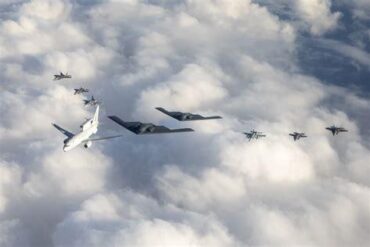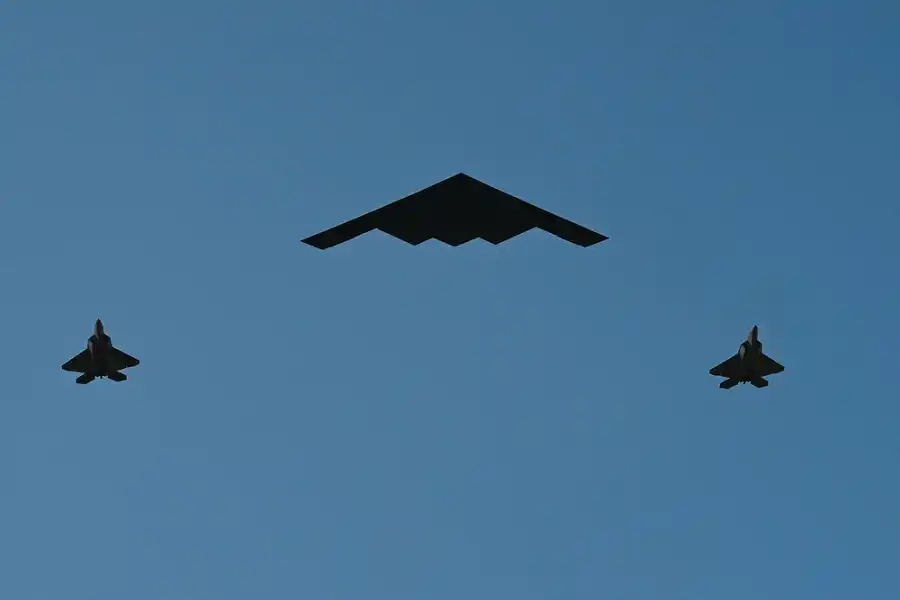
On July 4th, 2025, the skies above Washington D.C. thundered with a display of raw American air power as the stealth trifecta of the B-2 Spirit, F-22 Raptor, and F-35 Lightning II roared above the White House. This formidable flyover did not just mark Independence Day celebrations — it served as a resounding message of strategic dominance following the success of Operation Midnight Hammer, a precision U.S. Air Force bombing campaign against Iranian nuclear targets.
A Flyover With Weighty Symbolism
As crowds filled the National Mall, and fireworks awaited ignition, the awe-inspiring sight of the stealth aircraft trio gripped the nation. President Donald Trump and First Lady Melania Trump looked on from the White House balcony as the B-2 Spirit from Whiteman Air Force Base, Missouri, glided over the capital, flanked by the F-22 and F-35 fighters in a rare and deliberate show of unity.
The symbolism was unmistakable. Just weeks before, the very B-2s on display had executed a 36-hour combat mission that penetrated Iranian airspace to strike at the heart of its nuclear ambitions. The flyover, therefore, was not merely ceremonial — it was an open-air affirmation of the aircraft’s continued relevance, lethality, and operational reach.
B-2 Spirit: The Undisputed Titan of Strategic Stealth
Despite entering service in 1997, the B-2 Spirit continues to be the jewel in America’s long-range strike crown. Its radar-evading design — a bat-winged shape coated with radar-absorbent material — allows it to pierce into defended airspace without detection. Operation Midnight Hammer proved once again why the B-2 remains the Pentagon’s weapon of choice for penetrating heavily defended targets.
In the mission targeting Iran’s nuclear infrastructure, seven B-2 bombers were dispatched eastward, avoiding detection by creating a diversion with a separate western-bound group. The operation required flying across both the Atlantic and Mediterranean, navigating Russian-monitored airspace equipped with Voronezh and Container over-the-horizon (OTH) radars, which theoretically can track stealth aircraft. Yet, the B-2s moved undetected.
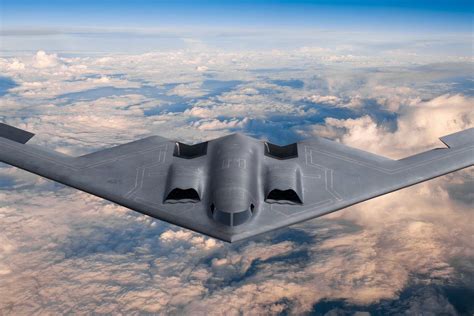
Upon arrival in Iranian airspace, the Spirits dropped the massive GBU-57 Massive Ordnance Penetrator (MOP) — a 30,000-pound bunker buster designed to annihilate fortified underground facilities. Within hours, news agencies confirmed that Iran’s nuclear sites had been struck with no aircraft lost. The aircraft returned to Whiteman AFB, completing the longest USAF bombing mission since 2001.
The B-2’s performance further underscores its value in a new era of multi-domain conflict. Although the B-21 Raider is set to eventually replace it, this mission reaffirmed that the Spirit still holds unparalleled strategic value.
F-35 Lightning II: Stealth, Versatility & Upgrades Amid Budget Cuts
Flying alongside the Spirit was the F-35 Lightning II, a platform central to the USAF’s next-generation multirole operations. The F-35’s sensor fusion, low observability, and networked warfare capabilities make it an ideal partner for the B-2 in high-threat environments. During the Iranian operation, F-35s played a crucial supporting role in Suppression of Enemy Air Defenses (SEAD) and intelligence gathering.
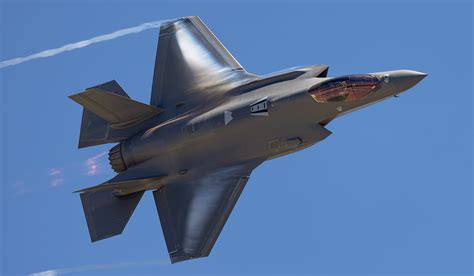
With over 1,000 units delivered by 2025, the F-35 continues to dominate the modern fighter landscape. However, despite its capabilities, the FY26 budget saw the Pentagon reduce its procurement request from 48 to just 24 aircraft, citing the need to redirect funds toward the F-47 development — the USAF’s next-generation air dominance program.
This reduction comes even as Lockheed Martin pushes forward with a “Ferrari upgrade” to evolve the F-35 into a “fifth-generation plus” fighter. Leveraging technology from the Next Generation Air Dominance (NGAD) program, the upgraded variant promises improvements in AI integration, electronic warfare, sensor range, and survivability.
Nonetheless, the aircraft remains a hot topic in geopolitical defense circles. The F-35 has seen widespread usage by Israel, particularly in its confrontations with Iran, and is at the center of ongoing disputes, such as Turkey’s blocked acquisition.
F-22 Raptor: Silent Guardian, Proven Sentinel
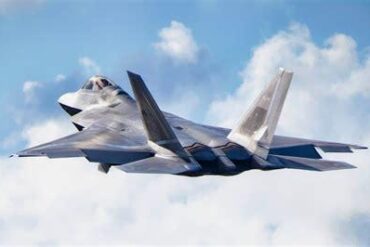
The F-22 Raptor adds yet another layer of air superiority to this elite trio. Although its production was halted in 2011, the aircraft’s unmatched supercruise, thrust vectoring, and low radar cross-section continue to give it an edge in air-to-air combat and escort operations. In the recent operation, F-22s likely acted as silent escorts, prepared to eliminate any aerial threats.
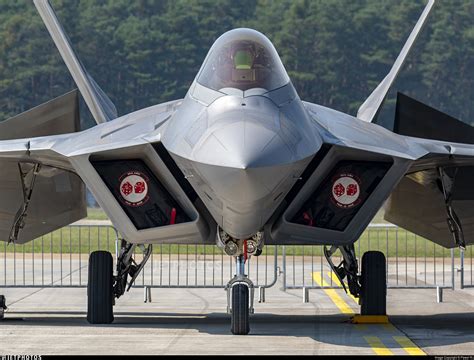
During the flyover, the F-22’s presence was not just symbolic — it was strategic. As the USAF transitions toward autonomous systems, the Raptor will be among the first platforms to control Collaborative Combat Aircraft (CCA) drones, beginning next fiscal year. These aircraft will work in tandem with unmanned units in contested environments.
To extend its lifespan and relevance, the USAF allocated $90.34 million in FY26 to upgrade the Raptor. Improvements include:
- Enhanced stealth features
- Upgraded radar systems
- New electronic warfare suite
- Infrared Defensive System (IRDS)
- IRST sensor pods
- Stealthy external fuel tanks
Though less networked than the F-35, the Raptor’s tactical superiority remains unparalleled in close-in engagements. Its ability to provide real-time data links to the B-2 further cements its role in joint missions.
Operation Midnight Hammer: Precision, Power, and Deception
The bombing campaign that led to this patriotic display was a joint strike effort necessitated by Israeli shortcomings. After Tel Aviv failed to neutralize Iran’s dispersed nuclear infrastructure during a 12-day conflict, Washington authorized Operation Midnight Hammer. It was a rare instance of kinetic action postured explicitly as a preemptive strategic deterrent.
The deception tactics employed — launching B-2s in different directions — reflect a return to Cold War-era strategic cunning. That level of misdirection was vital to bypass Iranian defenses and Russian radar pickets. This mission reaffirmed the value of traditional manned platforms in an age where AI, drones, and cyber warfare dominate headlines.
Strategic Messaging From The White House
Beyond military might, the flyover was political theater. President Trump used the occasion to sign a sweeping tax and spending bill, marking a continuation of his economic agenda initiated in 2017. This law aims to permanently enshrine tax cuts, fund the ongoing immigration crackdown, and ramp up defense spending, especially in stealth and deterrence capabilities.
According to Press Secretary Karoline Leavitt, the pilots involved in the Iranian strike were personally invited to the White House as part of the Fourth of July celebrations. Their attendance, paired with the flyover, became a potent narrative vehicle — one that blended combat success, technological superiority, and national pride.
Legacy and Future of America’s Stealth Trifecta
This convergence of past, present, and future stealth technologies over Washington underscores the strategic continuity of American airpower. The B-2 Spirit, despite nearing the end of its lifecycle, remains an unstoppable force for precision global strike. The F-22 Raptor, while aging, is adapting into a pivotal airborne battle manager. The F-35, controversial but essential, continues to expand its role in multi-domain operations.
As the Pentagon balances development of sixth-generation aircraft and unmanned systems, the lessons from Operation Midnight Hammer are clear: stealth, surprise, and synergy remain irreplaceable components of effective warfare.
The Fourth of July flyover wasn’t just about spectacle — it was a moment of unapologetic strength projection. The roar of afterburners over the White House sent a message not just to America’s allies and adversaries, but to history itself: the United States still owns the skies.