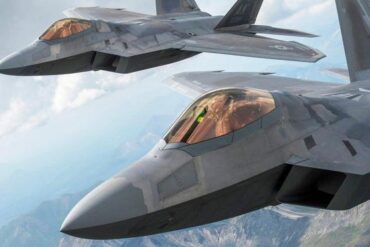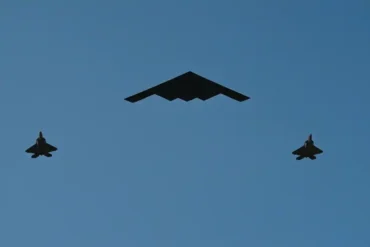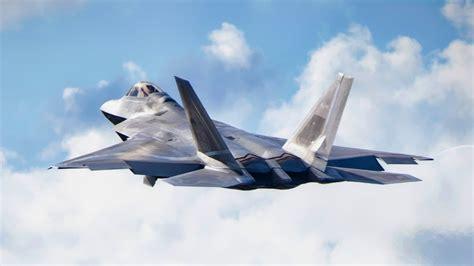
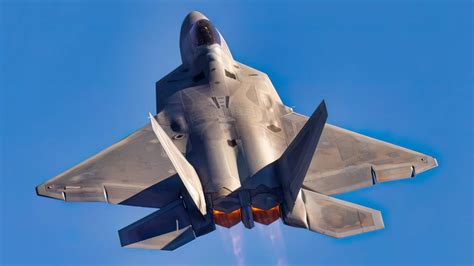
The United States is set to significantly bolster its air superiority capabilities as the FY2026 defense budget proposal allocates $90 million for vital upgrades to the Lockheed Martin F-22 Raptor, the nation’s premier stealth air superiority fighter. This ambitious investment reflects Washington’s resolve to extend the operational relevance of the F-22 well into the next decade, ensuring continued dominance amid rising technological threats from near-peer adversaries such as China and Russia.
First introduced in 2005, the F-22 Raptor was a trailblazer in stealth design, sensor fusion, and air combat agility. Its unmatched “first look, first shot, first kill” capability has been the backbone of U.S. air superiority doctrine. However, with only 185 units produced—of which approximately 143 remain combat-coded—the platform’s long-term viability has been under scrutiny. Despite the arrival of sixth-generation fighter concepts, the F-22 remains an irreplaceable component in America’s defense architecture.
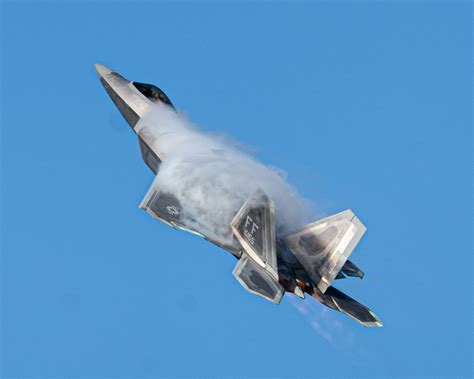
Budget Secures F-22 Viability Amid Rising Global Threats
The $90.34 million requested in the FY2026 budget marks a crucial step toward safeguarding the F-22’s dominance. Central to this proposal is a comprehensive viability upgrade package designed to enhance survivability, lethality, and stealth against evolving enemy capabilities. These improvements aim to bridge the technological gap until the anticipated arrival of the Next Generation Air Dominance (NGAD) platforms later this decade.
The F-22 upgrade roadmap underscores specific priorities:
- Infrared Defensive System (IRDS): A new system enhancing missile launch detection while preserving the jet’s stealth profile.
- Synthetic Aperture Radar (SAR) Enhancements: Boosting radar resolution and target tracking in highly contested environments.
- Electronic Warfare (EW) Suite Improvements: Strengthening defensive measures against advanced jamming and cyber warfare threats.
- Stealth Signature Refinements: Further reducing radar cross-section to maintain the Raptor’s low observability advantage.
- Helmet-Mounted Display (HMD) Integration: Empowering pilots with faster situational awareness and targeting capabilities.
- Podded Tactical Infrared Search and Track (TacIRST): Offering passive detection of stealth adversaries like China’s J-20 or Russia’s Su-57 without compromising position.
These targeted enhancements mirror successful technologies found in the F-35 Lightning II’s Distributed Aperture System, but are optimized to suit the F-22’s unique fifth-generation stealth design.
Stealth Versus Near-Peer Threats: China and Russia in Focus
The decision to prioritize F-22 upgrades stems from mounting concerns over rapidly advancing Chinese and Russian air combat technologies. Beijing’s fielding of the Chengdu J-20 Mighty Dragon, equipped with modern infrared sensors and long-range PL-15 missiles, poses a direct challenge to U.S. air superiority in the Indo-Pacific. Likewise, Moscow’s Sukhoi Su-57 Felon, while not produced at scale, incorporates stealth shaping and cutting-edge EW capabilities.
By integrating the IRDS and TacIRST systems, U.S. F-22 pilots will gain a critical edge in detecting stealth adversaries passively, minimizing exposure while maximizing situational awareness. Enhanced EW capabilities will shield the fleet against next-generation jamming and sensor disruption tactics, preserving their advantage in high-stakes engagements.
The strategic implications are clear: Maintaining a credible, survivable F-22 force is pivotal to deterring aggression and protecting U.S. interests in contested regions such as the South China Sea, Taiwan Strait, and Eastern Europe.
Industrial and Technological Partners Drive Raptor Modernization
The F-22’s upgrade program continues to benefit from robust collaboration across the U.S. defense industrial base. Prime contractor Lockheed Martin, headquartered in Fort Worth, Texas, remains at the forefront of Raptor sustainment and modernization efforts. The company’s extensive expertise in stealth, avionics, and airframe integration ensures the F-22 evolves alongside emerging threats.
Key contributors include:
- Thales Group: Providing advanced pilot interface solutions to improve ergonomics and mission execution.
- LIFT Airborne Technologies: Developing the Next Generation Fixed Wing Helmet, awarded under a 2022 contract to improve pilot situational awareness and comfort.
Together, these firms support the intricate supply chains and technical requirements unique to the F-22 platform. Despite the production line’s closure in 2011, ongoing sustainment contracts and upgrade programs keep the Raptor fleet operational and technologically relevant.
Bridging to Sixth-Generation Air Dominance
While the F-22 remains the pinnacle of fifth-generation air superiority, the U.S. Air Force is actively progressing toward the fielding of sixth-generation NGAD platforms, expected to redefine aerial combat. These highly classified systems promise unmatched sensor fusion, autonomous capabilities, and stealth, designed to operate seamlessly alongside manned and unmanned assets.
However, the NGAD program, currently in advanced development phases, is not anticipated to achieve full operational capability before the early 2030s. Thus, the F-22’s role as the cornerstone of U.S. air dominance is set to continue for at least another decade, making the FY2026 upgrades an indispensable interim measure.
Defense officials emphasize that investing in the Raptor now buys vital time, ensuring the U.S. maintains credible air superiority while NGAD capabilities mature. Failure to do so risks creating capability gaps exploitable by adversaries with increasingly sophisticated fighter fleets and missile systems.
Sustained Air Dominance: Strategic Imperatives and Future Outlook
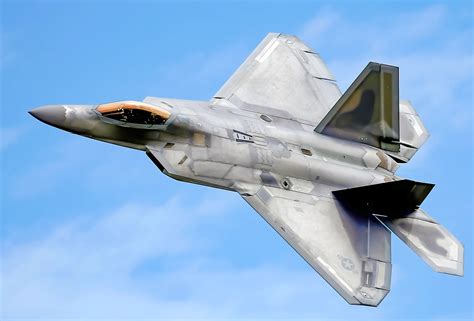
From a strategic perspective, preserving the F-22’s operational relevance serves multiple national defense objectives. First, it reinforces deterrence postures in key theaters, particularly the Indo-Pacific, where China’s military modernization poses the greatest long-term challenge. Second, it assures allies and partners, including NATO, of America’s commitment to maintaining unmatched air superiority capabilities.
Additionally, the F-22’s continued presence complements broader multi-domain operations, integrating seamlessly with platforms like the F-35, B-21 Raider, and emerging unmanned systems. Its ability to penetrate contested environments, engage high-value targets, and evade detection remains critical to joint force lethality.
As global airpower competitions intensify, ensuring the F-22 fleet remains technologically superior is no longer optional—it’s a strategic necessity. The FY2026 viability upgrade initiative signals unwavering commitment to that objective, delivering capabilities that allow U.S. pilots to dominate the skies, deter adversaries, and protect national interests well into the 2030s.
With defense planners fully aware of the stakes, the F-22 Raptor’s evolution under this budget proposal represents more than just hardware upgrades—it’s a declaration of intent that America’s air dominance edge will not be relinquished.