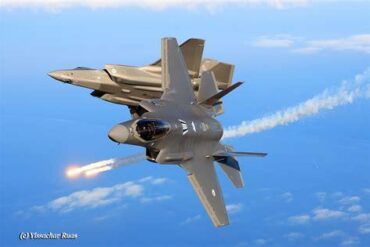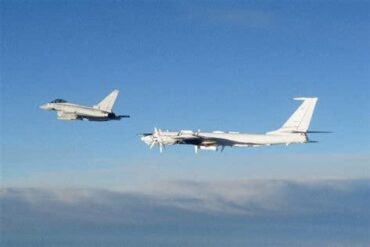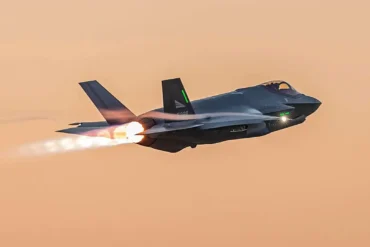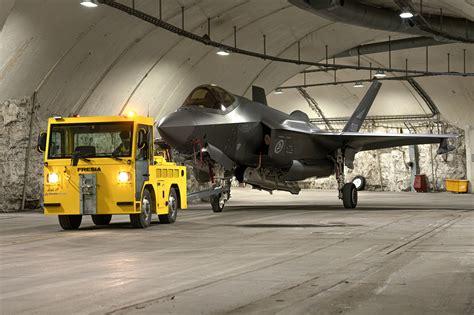
Norway has made a decisive move to reinforce NATO’s eastern flank by announcing the deployment of its F-35 Lightning II multirole fighter jets to Poland in the autumn of 2025. The initiative, which centers on the protection of Rzeszów Airport, a pivotal logistical node for military and humanitarian aid flowing into Ukraine, underscores a broader shift in NATO’s posture in response to the evolving threats emanating from Russia’s ongoing war of aggression.
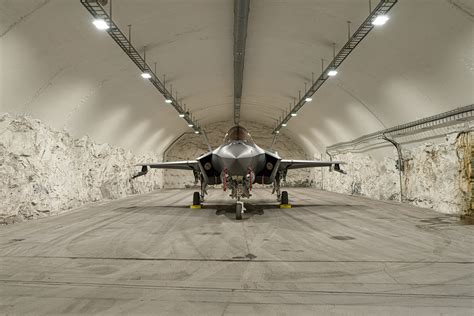
Norway’s F-35 Deployment: A Calculated Deterrence Strategy
At the core of this deployment is Norway’s unwavering commitment to NATO and to the collective security of Europe. The country’s Defence Minister, Tore O. Sandvik, emphasized that the move is not only a gesture of solidarity with Poland and Ukraine, but also a calculated contribution to the Integrated Air and Missile Defence (IAMD) system under NATO. By stationing its fifth-generation fighters at a forward location in Poland, Norway seeks to enhance surveillance, deterrence, and rapid response capabilities near one of the most volatile regions in Europe.
“Norway has decided to send a new contribution to protect the most important hub in Poland for support to Ukraine and Polish airspace,” Sandvik said in a public statement. The decision reflects the strategic necessity of shielding logistics corridors—especially Rzeszów Airport, located just 100 kilometers from the Ukrainian border—which has become a lifeline for Ukraine’s ongoing resistance.
Rzeszów Airport: The Artery Feeding Ukraine’s Defense
The choice of Rzeszów–Jasionka Airport as a focal point of protection is both symbolic and practical. Since early 2022, the airport has served as a key logistical and military gateway for supplies, weapons, and humanitarian aid from Western allies into Ukraine. Its proximity to Lviv and the central transport arteries in western Ukraine has made it an indispensable asset for NATO’s coordination efforts.
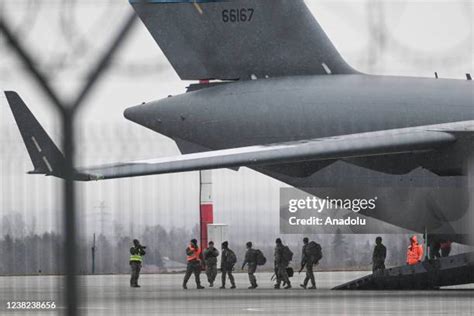
In military terms, the deployment of F-35s to safeguard this location signals a step-up in proactive defense measures. These stealth fighters, equipped with advanced radar and sensor fusion systems, will provide continuous air patrols, threat detection, and early warning to intercept hostile drones, missiles, or aircraft that could target critical infrastructure in eastern Poland.
Lessons from Ukraine’s Airspace: The Tactical Imperative
The Norwegian decision draws heavily from hard lessons learned on the battlefields of Ukraine. Russia’s persistent use of cruise missiles, ballistic missiles, and drones against Ukrainian energy grids, supply depots, and urban centers has highlighted the indispensable role of advanced air defense in modern conflict. Minister Sandvik noted: “The Russian warfare in Ukraine has shown the value of air defence, and the commitment to a new Norwegian contribution to Poland is highly appreciated.”
With Ukrainian cities facing relentless aerial assaults, NATO allies have recalibrated their defense strategies to include layered air and missile defense systems. Norway’s F-35s are a critical layer in this architecture, offering stealth, speed, and precision engagement capability. Operating alongside Polish and allied aircraft, these jets will contribute to maintaining air superiority and ensuring safe passage for logistics missions.
F-35 Lightning II: NATO’s Technological Edge in the East
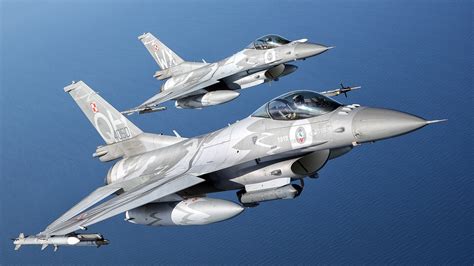
Norway’s fleet of F-35As represents one of the most advanced air combat platforms in Europe. Designed by Lockheed Martin, the F-35 is equipped with cutting-edge sensor fusion, radar evasion, and electronic warfare capabilities. These features make it uniquely suited for defensive patrols, air interdiction, and intelligence gathering missions in contested airspace.
The Norwegian Air Force currently operates its F-35s from Ørland Main Air Station, and the jets are fully integrated into NATO’s defense network. Their forward deployment to Poland reflects the maturation of Norway’s operational readiness and interoperability with allied forces. Notably, the F-35’s seamless integration with NATO’s command-and-control architecture will enable real-time data sharing across air, land, and sea domains.
Balancing Homeland Defense with Global Commitments
Critically, Norwegian defense officials have emphasized that this deployment does not compromise national security at home. “We do this primarily for Ukraine and Poland, but it also shows that we stand by our commitments in NATO,” Sandvik stressed. This balancing act underscores Norway’s dual responsibility: defending national airspace while actively supporting regional and alliance-wide security.
Norway’s contribution also comes amid broader NATO efforts to rotate and reinforce air policing units along its eastern borders. The alliance has established a “plug-and-play” model for rapid fighter deployments, ensuring that any nation can reinforce another within days, if not hours. This agility forms a central pillar of NATO’s Enhanced Air Policing operations in Eastern Europe.
Strengthening NATO’s Deterrence Posture on the Eastern Flank
With tensions persisting on NATO’s frontier with Russia, the alliance continues to recalibrate its deterrence strategy. The deployment of Norway’s F-35s to Poland is emblematic of a new era of burden sharing among European allies. Rather than relying solely on U.S. airpower, NATO is witnessing a surge in intra-European defense cooperation, with nations like Norway, Germany, and the Netherlands stepping up in visible and impactful ways.
Poland, already a major defense hub, has welcomed the move as part of a broader effort to transform itself into the “arsenal of Europe.” Over the past two years, Warsaw has embarked on a rapid military buildup, purchasing U.S.-made F-35s, Abrams tanks, and South Korean K2 Black Panther tanks. Norway’s deployment complements this transformation by adding high-tech aerial firepower to the Polish airspace.

Implications for Ukraine’s Long-Term Security
While Norwegian jets will not directly operate over Ukrainian airspace, their presence in Poland will have a deterrent ripple effect. The protection of Rzeszów Airport ensures the continuity of Western military aid—which remains Ukraine’s lifeline as it fights a grinding war of attrition. This logistical stability allows Ukrainian forces to plan longer campaigns with greater confidence in their supply lines.
Additionally, the increased air presence in eastern Poland may free up other NATO assets for missions closer to the Black Sea or the Baltics, effectively multiplying the alliance’s reach. By enabling a secure rear base for operations, Norway contributes to a strategic depth that is crucial for sustained Ukrainian resistance and potential counteroffensives.
The Bigger Picture: Norway’s Emerging Role in European Security
This deployment is only the latest in a series of moves positioning Norway as a serious security contributor in Northern and Eastern Europe. The country, while not sharing a border with Ukraine, understands that geopolitical stability in Central Europe is vital for its own maritime and energy security. Norway’s defense doctrine now emphasizes forward presence, expeditionary support, and multinational coordination, a marked evolution from its Cold War-era policy of neutrality and territorial defense.
Moreover, Norway’s investment in next-generation platforms such as the F-35 is part of a broader push to modernize its armed forces, enhance Arctic surveillance, and improve its interoperability with NATO’s command structure. These enhancements make it a natural candidate for joint deterrence missions, especially in regions where advanced technology and rapid response capability are paramount.
Looking Ahead: Strategic Continuity or a Tactical Pivot?
As NATO prepares for its next summit, Norway’s deployment of F-35s to Poland could set a precedent for semi-permanent fighter rotations across the eastern flank. This model could extend to the Baltic states, Romania, and even Bulgaria, where local air forces benefit from allied support. The longer the war in Ukraine continues, the more important such arrangements will become.
In the coming months, operational details such as the number of jets, length of deployment, and rules of engagement will determine the mission’s effectiveness. But strategically, the message is unmistakable: Norway stands firm with Ukraine, with Poland, and with NATO. It is a clear response to Russian aggression and a robust demonstration of alliance unity.
Conclusion: Reinforcing the Shield of Europe
Norway’s announcement to deploy F-35s to Poland marks a significant inflection point in NATO’s air defense strategy. It is not merely a logistical gesture but a political signal—of solidarity, deterrence, and preparedness. By guarding a lifeline into Ukraine, Norway is reinforcing the shield that protects Europe’s democratic values and territorial integrity.
As the geopolitical chessboard shifts, the deployment of fifth-generation fighters in Poland serves as a strategic anchor for NATO’s eastern posture. It reflects a growing realization among European states that the burden of defense is shared, and that security begins not at the border, but wherever allies are willing to stand together.