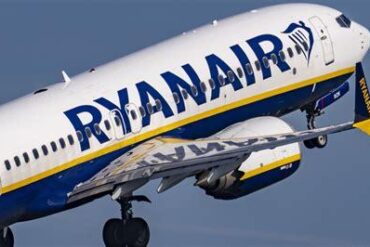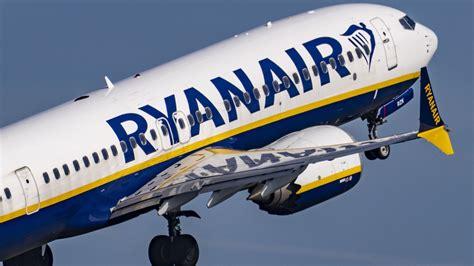
In a decisive effort to reclaim control of in-flight conduct and protect its brand integrity, Ryanair has implemented a £500 penalty for disruptive passengers, a move that is sparking broad discussions across Europe’s aviation industry. This newly introduced fine represents more than just a disciplinary mechanism; it signals a strategic recalibration of how low-cost airlines maintain operational discipline while preserving customer experience.
The rise in air travel post-pandemic has been accompanied by an alarming increase in disruptive passenger incidents. Many attribute this surge to a mix of pent-up demand, lower fares, and alcohol-fueled misbehavior, particularly on flights bound for popular holiday destinations like the Canary Islands. Ryanair, as Europe’s largest budget airline by passenger volume, has found itself at the epicenter of this turbulence.
The £500 Fine: A Tactical Deterrent to Protect Operations
The £500 ($676 or €587.50) fine, which applies to any passenger who is offloaded from a flight due to misconduct, is a direct and aggressive response to the rising cost of flight diversions and public backlash over in-flight disturbances. The penalty also opens the door to further civil liability for damages caused by passenger behavior.
Ryanair’s official statement made clear the intent: to ensure a comfortable and stress-free environment for both passengers and crew. While the airline is known for its cost-saving operations and profit-oriented add-ons, this fee is unlike any other—it’s a non-negotiable punishment, not a product or optional service. This distinction underscores how serious Ryanair is about restoring order in its cabins.
A Troubling Trend: From Cabin Chaos to Full Diversions
Ryanair’s move did not occur in a vacuum. The policy follows a string of high-profile disruptive events that have severely impacted flights, inconvenienced passengers, and drawn heavy media attention.
One such instance occurred in April 2024, when flight FR7124 from Dublin to Lanzarote was forced to divert to Porto, Portugal, due to an onboard disturbance. The cost was not just financial—160 passengers were stranded overnight, losing valuable holiday time. Ryanair later filed a lawsuit seeking over €15,000 in damages from the responsible individual, signaling a turning point in how the airline addresses such issues.
In another shocking case in November 2024, a Ryanair flight from East Midlands to Tenerife South made headlines after a passenger urinated in the aisle. Although the flight wasn’t diverted, law enforcement had to intervene upon landing. Such incidents are far from isolated; they are becoming part of a disturbing pattern that jeopardizes safety, delays schedules, and damages the airline’s image.
The Alcohol Factor: A Persistent Agitator
Ryanair has long identified alcohol consumption as a major contributor to disruptive behavior. This issue is particularly prevalent on flights to sunny holiday destinations, where passengers often begin drinking early at the airport. In response, Ryanair has publicly advocated for a two-drink limit at airport bars and has recommended the use of boarding pass scanning to control alcohol purchases.
This proposal aligns with similar duty-free regulations and is aimed at creating a consistent pre-boarding environment, where alcohol intake is tracked and limited. Ryanair’s position is that such a policy would lead to safer skies and fewer incidents, a position that has found some support among other European carriers and aviation safety advocates.
Strategic Significance: Defending Brand Reputation in a Cutthroat Market
Though the fine may seem punitive on the surface, it plays a crucial role in Ryanair’s broader reputation management strategy. In the highly competitive world of European low-cost carriers, brand perception is everything. Ryanair already contends with criticism over its no-frills service model, strict baggage rules, and aggressive upselling. By drawing a hard line against bad behavior, the airline is attempting to assert a standard of civility, setting itself apart as a safe and orderly budget carrier.
In the current landscape, where public reviews, social media posts, and onboard videos can go viral in minutes, Ryanair’s proactive stance could yield long-term image gains. The policy sends a clear message: disruptive passengers are not just embarrassing outliers—they are financial liabilities and enemies of the travel experience.
Industry Impact: Could Other Airlines Follow?
The implications of Ryanair’s £500 fine extend beyond the company itself. Other budget carriers, such as EasyJet, Wizz Air, and Vueling, are watching closely. If Ryanair’s model proves effective in deterring disruptive passengers and improving flight punctuality, it may set a precedent for similar penalties across the industry.
While some airlines already have internal protocols for handling rowdy travelers, formalizing the punishment into a fixed fine system represents a step-change. It adds transparency, enforces accountability, and provides a tangible consequence for in-flight misconduct. Moreover, by aligning the fine with public safety goals, Ryanair shifts the narrative away from corporate greed and toward passenger protection and crew welfare.
Legal Questions and Passenger Rights
Despite its strategic appeal, the £500 fine raises legal and regulatory questions. Air passengers in the European Union are protected under EU Regulation 261/2004, which governs compensation and rights in the event of delays, cancellations, and denied boarding. Legal experts are now examining whether Ryanair’s fine policy could be challenged as a form of unilateral penalty without judicial process.
However, Ryanair appears to have anticipated these concerns by framing the penalty as a response to criminal or civil misconduct, not a standard fare add-on or arbitrary surcharge. When paired with documented cases—like urinating in the aisle or causing emergency diversions—the policy seems aimed at clear-cut, verifiable infractions.
Nonetheless, how this fine interacts with national laws in countries where Ryanair operates remains to be seen. There may be differences in enforcement, particularly in jurisdictions with stronger consumer protection frameworks or more skeptical courts.
Public Reaction: Divided but Engaged
Unsurprisingly, public reaction to Ryanair’s £500 fine has been divided. Supporters view it as a necessary crackdown that will help restore dignity to air travel. Critics argue that the policy could be misused or inconsistently applied, especially in grey-area scenarios where passenger behavior is disruptive but not clearly illegal.
Frequent travelers and airline employees, however, have expressed broad support. Cabin crew unions have long called for stronger safeguards against abuse, citing both physical threats and psychological stress caused by unruly passengers. The policy, therefore, is seen not only as a customer relations tool, but also as a form of workplace protection for aviation professionals.
Conclusion: A Calculated Gamble with High Stakes
Ryanair’s decision to impose a £500 fine on disruptive passengers is more than a bold experiment—it is a calculated move to protect operational efficiency, crew safety, and brand value. In an era when viral videos can undo years of brand-building in seconds, and when safety is paramount, the cost of inaction is simply too high.
While questions remain around the legal mechanics and cross-border enforceability of the fine, the message is loud and clear: disruption will no longer be tolerated as an unavoidable part of budget travel. With Europe’s aviation sector under increasing pressure to modernize, maintain order, and uphold standards, Ryanair may have just set a new benchmark for how discipline meets commerce in the skies.