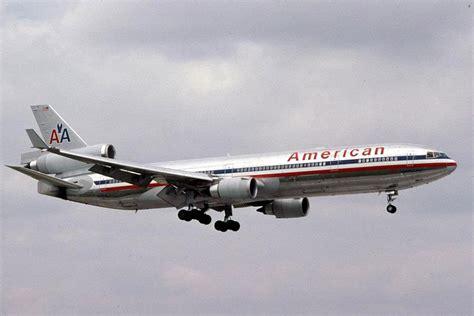
The McDonnell Douglas MD-11 was supposed to be the aircraft that secured the future of its manufacturer in the long-haul market. Instead, it became one of the most controversial widebody jets ever built in the United States. Developed as an advanced successor to the DC-10, the MD-11 promised greater efficiency, improved range, digital avionics, and lower operating costs. Airlines expected a refined tri-jet designed for the modern era. What they received was an aircraft that developed a troubling reputation for difficult handling, unforgiving landings, and a safety record that still sparks debate decades later.
When the MD-11 entered commercial service in 1990, aviation was already moving into a new generation of safer aircraft designs. Airbus was introducing highly automated fly-by-wire systems. Boeing was preparing the revolutionary 777. Safety standards were tightening across the industry. Against that backdrop, the MD-11’s accident history stood out for all the wrong reasons.
Out of only 200 aircraft produced before production ended in 2000, the MD-11 suffered 11 hull-loss accidents, amounting to approximately 5% of the total fleet. For a modern-era widebody jet, that figure remains unusually high. While some accidents resulted from weather, pilot error, or maintenance failures, the aircraft itself repeatedly appeared at the center of operational concerns.
The MD-11 was not a death trap in the simplistic sense often portrayed online. Thousands of flights were completed safely over decades of operation. Yet the aircraft consistently demonstrated narrower margins for error compared to rival aircraft from Boeing and Airbus. That distinction ultimately shaped its legacy.
The MD-11 Was Born From The DC-10’s Complicated Legacy
To understand why the MD-11 struggled, it is necessary to look back at the DC-10, the aircraft from which it evolved. The DC-10 itself carried a damaged reputation after several catastrophic accidents in the 1970s, including the infamous crash of American Airlines Flight 191 in Chicago. Although many of those disasters were linked to maintenance procedures or design flaws later corrected, the DC-10 name never fully recovered.
McDonnell Douglas attempted to reinvent the platform during the 1980s. The company sought to modernize the aging tri-jet while avoiding the enormous costs associated with designing an entirely new aircraft from scratch. The result became the MD-11.
Externally, the aircraft looked similar to the DC-10, but underneath the skin it incorporated major aerodynamic and technological modifications. Engineers added winglets, upgraded avionics, reduced crew workload with a two-person cockpit, increased fuel efficiency, and extended range capability for ultra-long-haul routes.
However, one particular design decision would become central to the aircraft’s future problems.
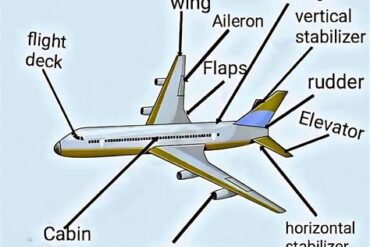
McDonnell Douglas reduced the size of the horizontal stabilizer while simultaneously shifting the center of gravity further aft during cruise operations. These changes improved fuel efficiency and reduced drag, helping airlines save money on long international sectors. But the tradeoff was reduced longitudinal stability.
In simple terms, the aircraft became less naturally forgiving in pitch control, especially during landing phases.
That might sound like a minor engineering compromise, but in commercial aviation, tiny aerodynamic differences can produce massive operational consequences.
Why The MD-11 Was Notoriously Difficult To Land
Pilots who flew the MD-11 often described it as an aircraft that demanded absolute precision. Unlike some jets that tolerated imperfect landings gracefully, the MD-11 punished even small mistakes.
Its landing characteristics became legendary within aviation circles.
Approach speeds frequently ranged between 150 and 170 knots, noticeably faster than many comparable widebody aircraft. Under heavy load conditions or gusty weather, touchdown speeds could exceed 180 knots. Those high speeds meant pilots had less time to react during flare and touchdown.
At the same time, the aircraft’s reduced pitch stability created a narrow operational window. If pilots flared too aggressively, the aircraft could balloon upward. If they corrected too quickly, the nose could slam downward. Hard landings, bounced touchdowns, and runway excursions became recurring themes throughout the aircraft’s service life.
The MD-11 also had a tendency to react sharply during pitch corrections because of its aerodynamic configuration. In turbulent crosswinds, those characteristics became especially challenging.
Some pilots respected the aircraft deeply and argued that proper training solved most problems. Others openly criticized it, calling it one of the least forgiving airliners of its generation.
The truth likely sits somewhere between those views. The MD-11 was flyable and safe under disciplined operation, but it demanded significantly more precision than rival aircraft entering service during the same era.
Swissair Flight 111 Became The Aircraft’s Darkest Moment
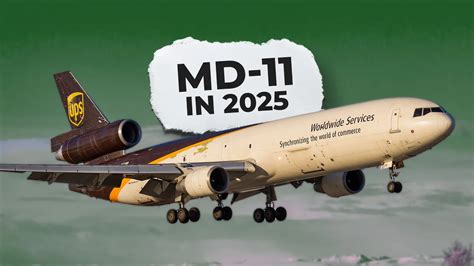
No discussion of the MD-11’s safety history can avoid Swissair Flight 111, the deadliest accident involving the type.
On September 2, 1998, the aircraft departed New York for Geneva with 229 people onboard. Less than an hour later, the crew reported smoke in the cockpit while flying over the Atlantic near Nova Scotia.
What followed became one of the most chilling aviation disasters of the late twentieth century.
Investigators later determined that faulty wiring associated with the aircraft’s in-flight entertainment system ignited flammable insulation material above the cockpit ceiling. The fire spread rapidly through hidden areas of the aircraft, overwhelming critical systems.
Pilots attempted to divert to Halifax, but the aircraft lost control and crashed into the Atlantic Ocean, killing everyone onboard.
The disaster profoundly affected aviation safety regulations worldwide. Investigators discovered that certain insulation materials used in commercial aircraft could spread fire far more aggressively than previously understood. As a result, major changes were introduced regarding flammability standards and onboard electrical system certification.
Although the crash was not caused by the MD-11’s handling characteristics, it permanently tied the aircraft’s name to one of aviation’s most tragic modern accidents.
1999 Exposed The MD-11’s Operational Weaknesses
If Swissair Flight 111 damaged the aircraft’s reputation, the year 1999 nearly destroyed it.
Within a single year, the MD-11 suffered multiple hull-loss accidents that highlighted recurring operational difficulties.
Korean Air Cargo Flight 6316 crashed shortly after takeoff from Shanghai after pilot error during altitude control. The aircraft slammed into an industrial area, killing crew members and people on the ground. Investigators cited communication confusion and improper pilot inputs, but discussions about the MD-11’s sensitive pitch response resurfaced once again.
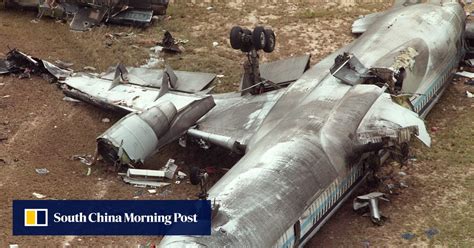
Only months later, China Airlines Flight 642 crashed while attempting to land in Hong Kong during severe crosswinds generated by a typhoon. The aircraft struck the runway hard, flipped over, and burst into flames.
The visuals from that crash shocked the aviation world. Video footage showed the MD-11 rolling violently before overturning entirely on the runway. While crosswind conditions were undeniably extreme, critics pointed to the aircraft’s unforgiving landing behavior as a contributing factor.
That same year, FedEx Flight 87 crashed in the Philippines after the crew mishandled erroneous airspeed indications during approach. The aircraft overran the runway and plunged into Manila Bay.
By the end of 1999, the MD-11’s reputation had deteriorated dramatically. Airlines increasingly viewed it as a difficult aircraft requiring exceptional pilot proficiency, particularly during landing operations.
Cargo Operators Became The MD-11’s Final Refuge
Passenger airlines gradually lost interest in the MD-11 throughout the 2000s. Many carriers retired the type earlier than expected, replacing it with more efficient twin-engine aircraft like the Boeing 777 and Airbus A330.
But the aircraft found a second life in cargo service.
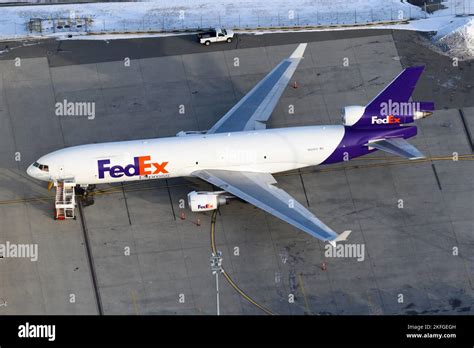
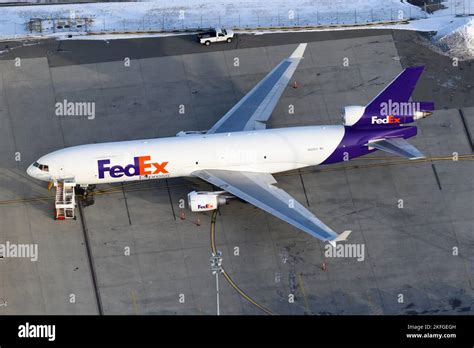
Freight operators appreciated the MD-11’s enormous payload capability, long range, and relatively low acquisition cost. FedEx and UPS became the world’s largest operators, transforming the aircraft into a familiar sight at cargo hubs worldwide.
Ironically, cargo service extended the life of an aircraft many passenger airlines were eager to abandon.
Yet accidents continued.
In 2009, FedEx Flight 80 crashed during landing at Tokyo Narita Airport. Strong winds and a bounced landing caused the aircraft to slam nose-first into the runway before flipping upside down in a fiery explosion.
The crash investigation highlighted several recurring MD-11 concerns, including sensitivity during flare and bounce recovery procedures. Investigators noted that recovery from bounced landings on the MD-11 required exceptionally precise handling.
That same year, Avient Aviation Flight 324 crashed during takeoff from Shanghai.
Later accidents involving Lufthansa Cargo, Centurion Cargo, and UPS reinforced the perception that the aircraft remained less forgiving than modern competitors.
The Numbers Paint An Uncomfortable Picture
Statistically, the MD-11 compares poorly against other modern widebody aircraft.
The Boeing 777 entered service in 1995 and quickly became one of the safest commercial aircraft ever built. The Airbus A330 and A340 also achieved far stronger safety records despite operating globally under demanding conditions.
Meanwhile, the MD-11 accumulated hull losses at a noticeably higher rate.
Context matters, of course. Some older aircraft experienced even worse records. The early de Havilland Comet suffered catastrophic structural failures during the dawn of the jet age. The Boeing 377 Stratocruiser lost nearly a quarter of its fleet.
But those aircraft belonged to earlier eras when commercial aviation safety standards were still developing.
The MD-11 entered service during a period when airlines already expected dramatically improved safety performance. Against its contemporaries, it underperformed.
That reality followed the aircraft throughout its operational life.
Why Pilots Had Mixed Feelings About Flying The MD-11
Among pilots, the MD-11 inspired unusual levels of debate.
Some aviators genuinely loved the aircraft. They admired its power, long-range capability, and advanced cockpit systems. Experienced crews often described it as rewarding when flown correctly.
Others considered it exhausting.
Landing the aircraft smoothly required precision that exceeded many other widebody types. Pilots transitioning from the DC-10 sometimes struggled because the MD-11 behaved differently despite its familiar appearance.
Training programs evolved significantly as airlines gained more operational experience. Procedures for bounced landings, crosswind approaches, and flare techniques were revised repeatedly.
FedEx, in particular, became highly experienced operating the type safely after years of intensive cargo operations. By the later stages of its career, accident rates had improved substantially compared to the aircraft’s earlier decades.
Still, the MD-11 never fully escaped its reputation.
The 2025 UPS Crash Marked The Beginning Of The End
The MD-11’s twilight years took another dramatic turn in 2025.
UPS Flight 2976 crashed shortly after takeoff after the aircraft’s left engine and pylon detached from the wing structure. The accident shocked the cargo aviation sector and triggered immediate grounding actions across remaining MD-11 fleets.
Unlike earlier crashes associated with handling characteristics, this accident involved catastrophic structural failure.
Following the incident, remaining aircraft were temporarily grounded pending investigation and safety reviews. UPS subsequently announced the permanent retirement of its MD-11 fleet.
FedEx chose a different path.
After Boeing and regulators approved corrective measures, FedEx gradually began returning portions of its MD-11 fleet to service during 2026. Even so, the writing is clearly on the wall. The remaining aircraft are expected to disappear completely by approximately 2032.
Only a small fraction of the original fleet still survives in operational condition today.
The MD-11 Represents A Transitional Era In Aviation
In many ways, the MD-11 symbolizes a transitional moment in commercial aviation history.
It was born during the final years before highly computerized fly-by-wire systems transformed aircraft handling philosophy. It attempted to stretch older tri-jet architecture into a new era dominated by fuel efficiency and advanced automation.
Unfortunately, the compromises required to achieve those goals produced an aircraft with reduced tolerance margins.
Modern airliners increasingly emphasize stability, automation support, and forgiving flight characteristics designed to reduce pilot workload during abnormal situations. The MD-11 came from an earlier design philosophy that still relied heavily on pilot precision.
That difference became increasingly apparent as aviation technology advanced.
Today’s aircraft such as the Airbus A350 and Boeing 787 demonstrate extraordinary safety performance despite operating far larger global fleets. Compared to them, the MD-11 feels like a machine from a different age.
Yet despite its flaws, the aircraft still carved out an important place in aviation history. It carried millions of passengers, transported enormous volumes of global cargo, and served some of the world’s largest airlines for decades.
Its story is neither purely failure nor complete success.
The MD-11 ultimately became an aircraft remembered as much for its challenges as its capabilities. It arrived with enormous expectations, delivered impressive performance in certain roles, but never fully overcame the aerodynamic compromises and operational complexities built into its design.
As the final examples disappear from the skies over the coming years, the MD-11 will likely remain one of aviation’s most fascinating cautionary tales — a technologically ambitious aircraft whose pursuit of efficiency came at the cost of forgiveness.