Aviation is built on procedures, precision, and relentless training, but beneath every checklist and standard operating procedure lies something far more human: trust. Pilots trust their training, they trust their crews, and above all, they trust the aircraft carrying them through thunderstorms, crosswinds, turbulence, and twelve-hour night crossings over empty oceans. In an industry where mistakes are measured in milliseconds and reliability can determine the outcome of an emergency, certain aircraft rise above the rest and earn a reputation that spreads quietly through cockpits worldwide.
That reputation is never built through marketing brochures or flashy launch events. Pilots judge aircraft differently from passengers. They care about how an airplane behaves during a gusty landing after a fourteen-hour duty day. They notice whether systems remain intuitive when alarms begin stacking up. They remember which aircraft feel stable in rough weather and which ones reduce workload when fatigue starts creeping in at 3 a.m. over the Pacific.
Across flight schools, regional carriers, and international airlines, the same aircraft names appear repeatedly in conversations between experienced crews. Some airplanes earned pilot loyalty through decades of dependable operation. Others gained respect because they combine advanced technology with practical, predictable handling. What unites them all is a simple reality: these aircraft consistently make pilots feel confident when conditions become difficult.
By the time an aircraft earns universal respect among professional aviators, it has survived millions of flight hours, thousands of abnormal situations, and the brutally honest opinions of generations of pilots.
The following five aircraft have done exactly that.
Cessna 172 Skyhawk: The Aircraft That Created Generations of Pilots
The Cessna 172 Skyhawk is not glamorous. It does not cross oceans, carry hundreds of passengers, or break speed records. Yet few aircraft in aviation history have earned more genuine trust from pilots. For countless aviators, the Skyhawk was the first airplane they ever controlled alone, the first aircraft they landed without an instructor, and the machine that taught them how aviation truly works.
Its reputation begins with forgiveness. Student pilots make mistakes constantly during training. Landings bounce. Approaches become unstable. Airspeed fluctuates wildly during early lessons. The genius of the Cessna 172 is that it tolerates those mistakes without punishing inexperienced pilots immediately. That characteristic alone has made it one of the safest and most trusted training aircraft ever produced.
The aircraft’s high-wing configuration gives excellent downward visibility while also contributing to stable handling characteristics. During stalls, the Skyhawk behaves predictably and gently, providing students with time to recognize developing problems and recover safely. In crosswind landings, the airplane remains manageable instead of aggressive, helping new pilots build confidence rather than fear.
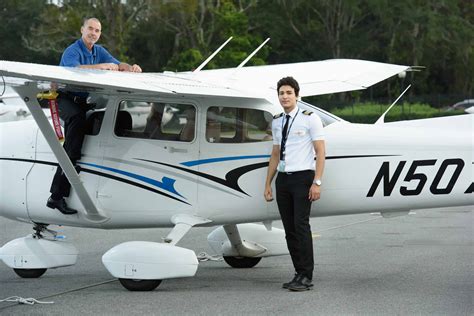
Its durability has also become legendary within aviation circles. Flight schools operate these aircraft relentlessly, often performing repeated takeoffs and landings throughout entire days. Despite enduring hard student landings and constant utilization, the Skyhawk continues proving remarkably resilient. That ruggedness creates trust not only among instructors but also among maintenance technicians and private owners.
Safety statistics reinforce the aircraft’s reputation. The Cessna 172 maintains an impressively low fatal accident rate compared to broader general aviation averages, a reflection of both its forgiving nature and straightforward engineering. Mechanical simplicity plays a massive role in that reliability. Unlike highly complex modern aircraft, the Skyhawk’s systems remain relatively easy to inspect, repair, and maintain properly.
Modern variants equipped with the Garmin G1000 avionics suite introduced digital glass-cockpit technology to a new generation of pilots. Students training in these aircraft gain early familiarity with integrated navigation systems, moving maps, and electronic flight displays similar to those found in sophisticated commercial jets. Despite these technological upgrades, the airplane retained the core qualities that made pilots trust it decades ago: predictability, stability, and simplicity.
The Skyhawk does not intimidate pilots. It teaches them.
That distinction matters enormously in aviation.
Boeing 787 Dreamliner: Advanced Technology That Reduced Pilot Workload
When the Boeing 787 Dreamliner entered service, it represented far more than another long-haul airliner. It fundamentally changed how many onboard systems operated, introducing a level of electrical integration that dramatically reduced complexity compared to previous widebody aircraft.
Pilots quickly recognized the practical benefits.
Traditional airliners relied heavily on bleed air systems that diverted compressed air from engines for cabin pressurization and other functions. The 787 replaced much of that architecture with electrically powered systems, eliminating large portions of pneumatic plumbing and reducing overall aircraft weight. Fewer mechanical dependencies translated directly into fewer potential failure points.
For flight crews, this meant cleaner system management and improved operational reliability.
The Dreamliner’s dispatch performance rapidly became one of its strongest selling points among pilots and airlines alike. Long-haul operations depend heavily on consistency because delays can cascade across international schedules and crew duty limitations. Pilots trust aircraft that start reliably, operate predictably, and minimize technical disruptions during demanding operations.
The 787 excels in exactly those areas.
Beyond pure reliability, the Dreamliner earned enormous praise for reducing pilot fatigue. Its lower cabin altitude and higher humidity levels noticeably improve physical comfort during ultra-long-haul flights. While passengers appreciate those enhancements, pilots arguably benefit even more because they remain responsible for operating the aircraft safely after spending twelve or more hours inside the cockpit.
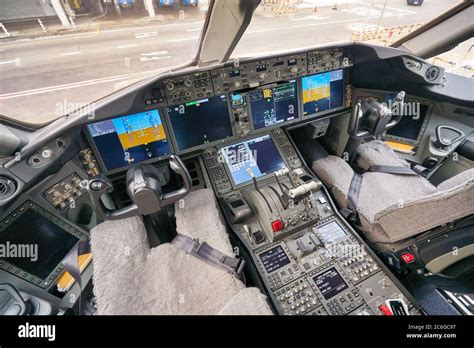
The aircraft’s flight deck also strikes a careful balance between automation and pilot authority. Boeing intentionally designed the 787 so pilots transitioning from older Boeing aircraft would still recognize familiar handling characteristics. That philosophy helped crews adapt quickly without feeling disconnected from the airplane.
One particularly respected feature is the Dreamliner’s autothrottle system, which can remain engaged all the way through touchdown during manual landings. This significantly reduces workload during low-visibility approaches or challenging weather conditions by allowing pilots to focus more attention on aircraft control and runway alignment.
The Head-Up Display (HUD) further enhances situational awareness by projecting critical flight information directly into the pilot’s forward field of vision. During poor weather, turbulence, or nighttime operations, that added clarity becomes enormously valuable.
Pilots also frequently praise the aircraft’s turbulence damping systems and refined fly-by-wire controls. Despite being a large widebody jet, the 787 often feels exceptionally smooth and stable in rough air. That composure builds confidence during long international routes where crews regularly encounter changing weather systems across continents and oceans.
The Dreamliner may be technologically advanced, but what truly earned pilot trust is that its technology feels practical rather than overwhelming.
Airbus A340: The Four-Engine Giant Pilots Still Admire
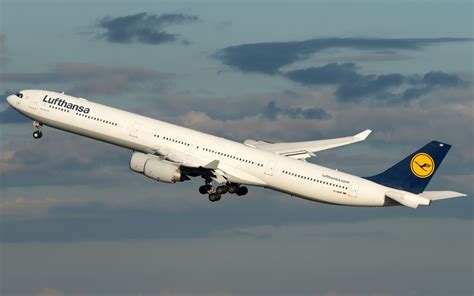
The Airbus A340 arrived during an era when four-engine aircraft still dominated ultra-long-haul travel. Although modern twin-engine airliners eventually reduced the economic need for quadjets, pilots never stopped respecting the A340’s calm, dependable personality.
In many ways, the aircraft became synonymous with stability.
Long-haul flying creates unique operational pressures. Fatigue builds slowly during overnight sectors, weather systems evolve constantly over oceans, and diversion airports may remain thousands of miles apart. The A340 addressed those challenges with a design philosophy centered around redundancy, predictability, and smooth handling.
Its four-engine configuration eliminated ETOPS restrictions entirely, giving pilots unmatched operational flexibility across remote regions. Even as twin-engine reliability improved dramatically over time, many crews still valued the psychological reassurance provided by four independent engines during transoceanic flights.
That confidence mattered.
The aircraft’s fly-by-wire flight controls further enhanced pilot trust by creating remarkably stable handling characteristics. Airbus designed the A340 to feel supportive rather than aggressive, especially during cruise flight. Many pilots describe the aircraft as exceptionally calm, with smooth responses that reduce workload during long overnight operations.
The Electronic Centralized Aircraft Monitor (ECAM) system became another defining strength. Airbus engineered the ECAM to simplify abnormal situations by presenting clear alerts, system diagrams, and procedural guidance directly to crews. During emergencies or technical irregularities, pilots could diagnose problems more quickly and efficiently instead of sorting through multiple disconnected warning systems.
That clarity proved invaluable.
The aircraft’s CFM56-5C engines also contributed heavily to its strong reputation. Known for reliability and durability, these powerplants delivered dependable performance even during extremely long cruise segments over isolated regions. Combined with mature maintenance programs developed over decades of service, the A340 earned widespread respect for mechanical consistency.
Although airlines gradually retired many A340 fleets due to fuel economics, pilots often continued praising the aircraft long after its commercial popularity declined. Few airplanes generated such widespread appreciation for their ride quality and operational predictability.
The A340 never tried to feel exciting.
It felt trustworthy instead.
Airbus A320 Family: The Gold Standard of Narrowbody Consistency
Few commercial aircraft have influenced modern aviation more profoundly than the Airbus A320 family. Since entering service in the late 1980s, the A320 transformed narrowbody cockpit design and became one of the most trusted aircraft families ever built.
Pilots value consistency more than almost anything else, and the A320 delivers it relentlessly.
The aircraft introduced advanced fly-by-wire technology to short and medium-haul commercial operations, incorporating flight envelope protections designed to prevent crews from unintentionally exceeding safe operating limits. Over time, those protections became one of Airbus’s defining characteristics.
Rather than fighting pilots, the system quietly supports them.
Operational reliability became another cornerstone of the aircraft’s reputation. Modern A320neo variants achieve extraordinary dispatch reliability rates, helping airlines maintain demanding schedules with minimal technical interruptions. For pilots operating several sectors daily, dependable aircraft performance dramatically reduces stress during busy duty periods.
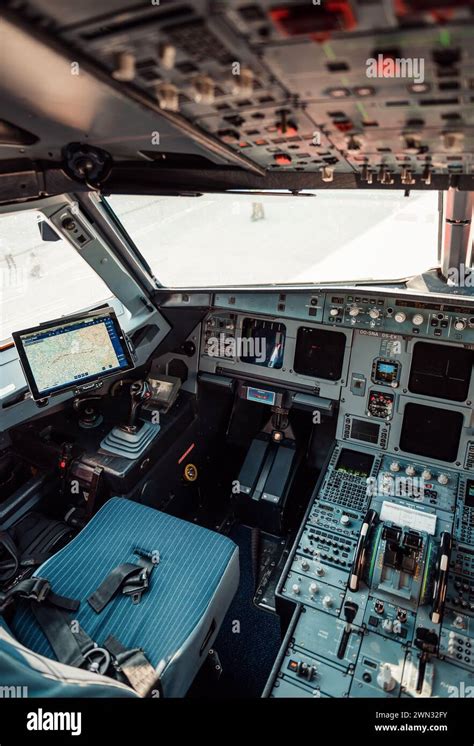
The cockpit itself also helped revolutionize pilot ergonomics. Unlike traditional Boeing narrowbody aircraft that retained a central control yoke, the A320 introduced side-stick controls that opened cockpit space considerably. The result was a cleaner, less physically restrictive flight deck environment.
Pilots transitioning between different A320 family variants benefit from extensive cockpit commonality as well. Whether flying an A319, A320, or A321, crews encounter highly standardized procedures and layouts. That consistency simplifies training and allows airlines to deploy pilots across multiple variants efficiently.
Automation within the aircraft is also widely respected because it remains logical and structured. Pilots frequently praise the aircraft for behaving predictably during both normal and abnormal operations. When workload increases, the airplane often helps reduce cognitive overload rather than adding to it.
Importantly, the A320 family earned trust not only from experienced captains but also from younger pilots entering airline operations for the first time. Many aviators spend the majority of their careers flying some version of the A320 because of its sheer global dominance.
That long-term familiarity reinforces confidence across the industry.
The aircraft became more than successful.
It became dependable in a way pilots deeply value.
Boeing 777: The Widebody Many Pilots Consider the Perfect Airliner
Among professional pilots, the Boeing 777 holds an almost legendary reputation. While newer aircraft introduced more advanced technology, many crews still consider the “Triple Seven” the finest balance ever achieved between power, simplicity, handling, and reliability.
Pilots trust the 777 because it feels intuitive.
Unlike some highly automated aircraft where technology occasionally creates distance between pilots and airplane behavior, the 777 maintains a strong sense of direct control. Its systems are sophisticated without becoming unnecessarily complicated. During high-workload situations or turbulence, that practicality becomes enormously valuable.
Many pilots specifically praise the aircraft’s large physical controls and highly readable displays. In turbulent conditions, tactile interfaces often prove easier to manage than touch-sensitive systems or heavily menu-driven controls. The 777’s cockpit design reflects Boeing’s traditional philosophy of prioritizing straightforward pilot interaction.
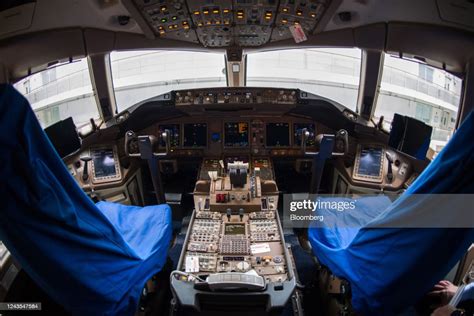
The aircraft’s reliability record remains extraordinary. The 777-300ER in particular developed one of the strongest dispatch reliability reputations in commercial aviation history. Airlines value that consistency financially, but pilots value it operationally because dependable systems reduce uncertainty before every departure.
The aircraft’s massive GE90 engines further reinforce pilot confidence. Producing immense thrust while maintaining exceptional reliability, these engines transformed long-haul twin-engine operations. Even during extended flights over remote oceans or polar regions, crews consistently trusted the aircraft’s performance capabilities.
Despite its enormous size, pilots often describe the 777 as surprisingly responsive during manual flying. That handling quality creates a rare combination: the stability expected from a heavy widebody paired with handling precision that feels remarkably natural.
The aircraft also performs exceptionally well across a broad range of operational environments. From hot-weather departures at high-altitude airports to turbulent winter approaches into major international hubs, the 777 developed a reputation for maintaining composure under demanding conditions.
What truly separates the Triple Seven from many competitors is how balanced it feels. It combines modern avionics with traditional cockpit practicality, immense power with smooth handling, and sophisticated automation with strong pilot authority.
That balance is why so many aviators continue viewing it as the benchmark widebody airliner.
In aviation, trust is earned slowly and lost instantly. Aircraft that gain lasting respect among pilots accomplish something rare: they consistently perform exactly as crews expect them to, even in difficult circumstances. Whether training new students in a Cessna 172, crossing oceans in a Boeing 787, flying polar routes in an Airbus A340, operating short-haul schedules in an A320, or commanding a Boeing 777 through severe weather, pilots remember the aircraft that make their jobs feel safer, calmer, and more predictable.
These airplanes did more than transport passengers.
They earned the confidence of the people sitting at the controls.