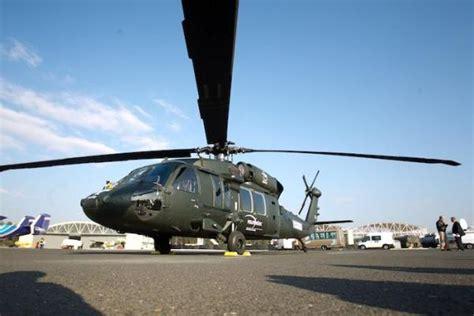
Poland has announced a significant shift in its military aviation priorities, placing a heightened focus on acquiring training helicopters, maritime anti-submarine warfare (ASW) aircraft, and heavy transport helicopters, while freezing previously planned purchases of U.S.-made S-70 Black Hawks. This reorientation reflects both evolving defense needs and broader strategic calculations influenced by Russia’s war in Ukraine and advances in aviation technology.
The announcement was delivered by Gen. Wiesław Kukuła, Chief of the General Staff of the Polish Armed Forces, during a high-profile press conference detailing the updated Development Program for 2025–2039. According to Kukuła, this reconfiguration stems from a series of analytical reviews and reflects Poland’s need to reshape its military posture in the face of dynamic regional threats.
Strategic Pivot Towards Pilot Training Capabilities
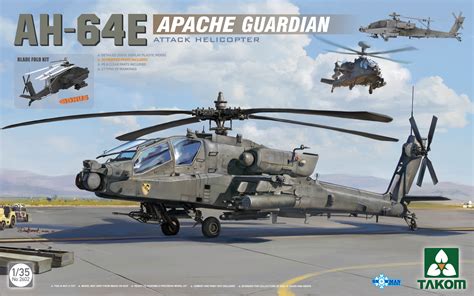
Maj. Gen. Cezary Wiśniewski, Deputy General Commander of the Polish Armed Forces, outlined the rationale behind prioritizing training helicopters. He emphasized the urgency of scaling up pilot readiness, particularly as Poland moves forward with its acquisition of modern multi-role helicopters like the AW149, AW101, and AH-64 Apache platforms.
“The SW-4 helicopters and the partially phased-out Mi-2 Hoplites currently used for basic training are inadequate for transitioning pilots into more advanced systems,” Wiśniewski noted. He stressed the immediate necessity of integrating new training helicopters that can provide both basic instruction and combat readiness, forming a bridge between foundational training and operational deployment.
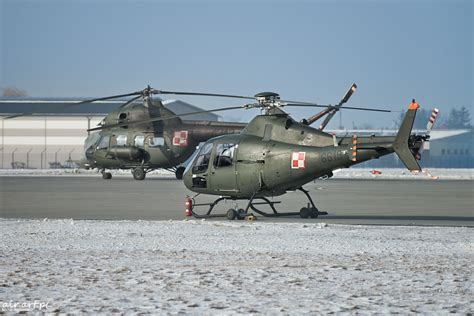
As part of this shift, Poland intends to procure 24 new training and combat helicopters. The Air Force Military Academy in Dęblin has already expanded its helicopter pilot intake from 30-40 to 50 this academic year, an incremental move towards meeting future operational requirements, especially in light of the nearly 400 pilots needed for the AH-64 fleet alone.
Industry Races to Supply Poland’s Trainer Helicopters
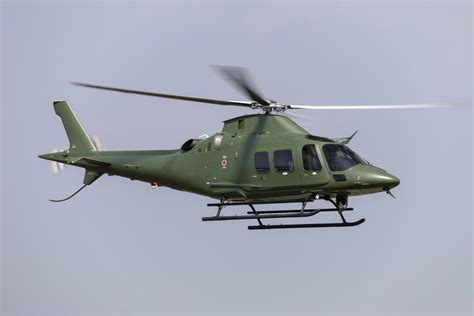
Two frontrunners have emerged in the race to supply these trainer platforms: the Airbus H145M and the Leonardo AW109M Trekker. Both models promise advanced capabilities suitable for multi-role training environments.
Notably, Babcock International has signed a Memorandum of Understanding (MoU) with Airbus and CAE, pledging a comprehensive training solution. Under this MoU:
- Airbus will lead platform design and manufacturing
- Babcock will oversee the training framework
- CAE will deliver simulation systems for aircrews and maintenance personnel
This partnership seeks to deliver a full-spectrum training ecosystem tailored for the Polish Air Force’s growing needs.
On the Leonardo front, the company’s Polish subsidiary, PZL Świdnik, offers a significant industrial advantage. Already producing complete AW109 airframes, PZL Świdnik is equipped to carry out final assembly within Poland, enhancing local industrial capacity. Leonardo also proposes to supply a range of mission-specific simulators to support end-to-end pilot training.
Naval Helicopters: A Critical Maritime Need
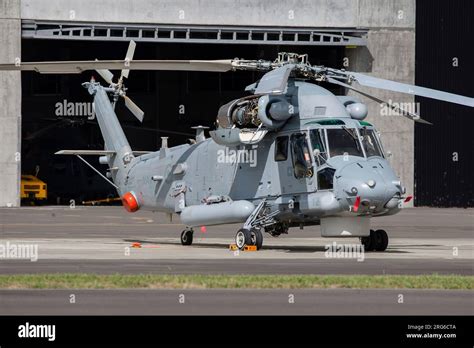
The second major focus area in Poland’s restructured priorities is the acquisition of maritime ASW helicopters, prompted largely by the incompatibility of current SH-2G(PL) Super Seasprites with the new Miecznik-class multi-role frigates. These outdated helicopters are no longer viable for protecting Poland’s strategic maritime interests, especially given the heightened threat environment in the Baltic Sea.
Maj. Gen. Wiśniewski articulated the necessity of this procurement, stating the new helicopters must be able to “protect critical infrastructure, and track surface and underwater objects.” Early suggestions point to a procurement range of four to eight ASW helicopters, with potential integration of both modern sensors and weapons to counter sub-surface threats.
These aircraft are expected to feature advanced sonar systems, torpedoes, and electronic warfare suites—capabilities crucial for safeguarding maritime sovereignty and supporting Poland’s NATO commitments.
Heavy Transport Helicopters to Bridge Operational Gaps
While less publicized, Poland’s updated roadmap includes the urgent procurement of heavy transport helicopters. As military operations grow more complex and widespread, especially under the shadow of NATO logistics coordination, mobility and rapid deployment are critical. The AW101 platform, already slated for acquisition, plays into this strategy by offering superior range, payload capacity, and versatility for troop transport, search-and-rescue, and medevac missions.
Heavy-lift capability also enhances Poland’s ability to respond to hybrid threats and natural disasters, offering multi-theater utility far beyond the battlefield. The procurement of these aircraft is expected to strengthen Poland’s tactical flexibility and reduce overreliance on allied lift assets.
Suspension of Black Hawk Acquisition Reflects Broader Reassessment
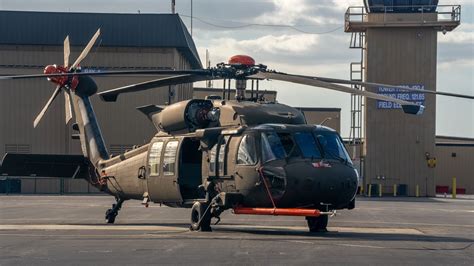
One of the most conspicuous casualties of this new strategy is the previously anticipated purchase of S-70 Black Hawk helicopters from Lockheed Martin. Though widely respected in NATO circles, the Black Hawk appears to have been deprioritized—likely due to overlapping capabilities with the already planned AW149 and AW101 fleets and the need to allocate resources towards more urgent needs.
While Lockheed Martin maintains that the Black Hawk remains “the ideal platform” for Polish security, Warsaw’s pivot suggests a calculated shift towards platforms offering better integration with existing infrastructure and greater opportunities for domestic industrial participation.
Training Pipeline Must Match Strategic Ambition
The challenge ahead is not merely acquiring platforms but ensuring the military has the human capital and support systems to fully operationalize them. The Polish Armed Forces must scale its training apparatus significantly, both in terms of throughput and sophistication. Simulation technology, standardized courseware, and joint NATO exercises will play a pivotal role in closing the skills gap.
If successful, this will position Poland not only as a regional leader in rotary-wing aviation, but also as a central contributor to NATO’s eastern flank. The emphasis on full-spectrum training, maritime domain awareness, and heavy-lift logistics reflects a force structure engineered for modern multi-domain conflict.
A Calculated Shift Towards Capability Overlap Minimization
Poland’s decision to revise its helicopter procurement priorities signals a strategic maturity—favoring interoperability, mission readiness, and industrial self-reliance over brand loyalty or political alignment. This recalibration strengthens Warsaw’s defense posture while offering a realistic pathway to meet NATO commitments, reduce redundancy, and empower national defense industries.
From Dęblin’s classrooms to the Baltic’s contested waters, the impact of these decisions will reverberate for decades. As geopolitical tensions persist, Poland’s ability to adapt its military procurement to emerging realities could serve as a model for others on NATO’s eastern flank.
In reshaping its priorities, Poland is not stepping back from modernization—but leaning into it with clearer intent and focused urgency. The coming years will test not just Poland’s procurement agility, but also its ability to sustain and scale operational excellence across its air and maritime domains.