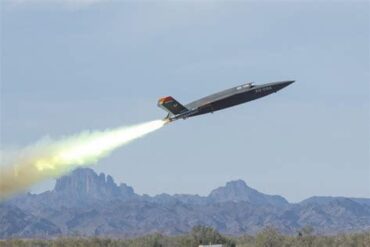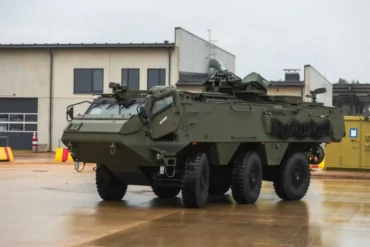
President Donald Trump’s $892.6 billion defense budget request for fiscal year 2026 marks a dramatic realignment of U.S. military spending, shifting away from traditional high-cost weapons systems like the F-35 stealth fighter jet and large naval fleets. Instead, the administration is betting big on unmanned systems, long-range missiles, and troop welfare, reshaping Pentagon priorities to confront modern threats and fiscal constraints.
The proposed budget, which remains flat compared to the current year, underscores a strategic pivot that de-emphasizes quantity in favor of high-tech, cost-efficient force multipliers, drawing on hard lessons from global conflicts such as the war in Ukraine.
Trump’s Military Vision: Technology Over Tradition
At the heart of Trump’s defense budget is a clear signal of strategic intent. The emphasis is squarely on high-tech missiles, autonomous systems, and drone warfare — assets that the Pentagon considers vital in countering adversaries like China and Russia, especially across the Indo-Pacific theater. This doctrine of “smart warfighting” involves fewer, more capable systems that can strike faster and further without risking American lives.

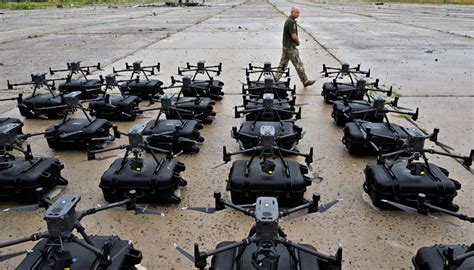
Trump’s Pentagon is asking for a significant investment in unmanned aerial systems (UAS), reflecting battlefield realities where low-cost drones have outmatched billion-dollar tanks and aircraft in conflicts abroad. The proposed budget boosts funding for small drones, citing their performance in Ukraine, where they have become integral to both reconnaissance and precision strikes.
Missiles Take Center Stage in Long-Range Strike Strategy
Another marquee feature of the proposal is the robust funding for advanced missile programs. Trump’s budget champions the Joint Air-to-Surface Standoff Missile – Extended Range (JASSM-ER) and the Long Range Anti-Ship Missile (LRASM), both produced by Lockheed Martin. These systems offer longer ranges and precision-guided capabilities — indispensable in a potential Indo-Pacific conflict where standoff reach is critical.
Conversely, the proposal dramatically scales back the Precision Strike Missile (PrSM) program. Despite its role as a successor to the Army Tactical Missile Systems (ATACMS) — used effectively in Ukraine — the reduction suggests a reprioritization of long-range over short-to-mid-range ground systems.
The F-35 Program Hit with Major Cuts
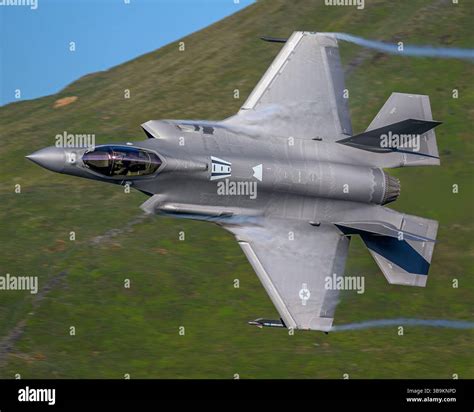
One of the most controversial aspects of the budget is the cutback in F-35 procurement. Trump’s fiscal 2026 request includes only 47 F-35s, a stark reduction from the 68 jets requested by President Biden in fiscal 2025. Lockheed Martin, the defense contractor behind the jet, faces mounting political pressure as Capitol Hill voices bipartisan concern over the impact on jobs and capability.
The House Appropriations Committee has already countered the administration’s move, proposing 69 F-35s in its version of the defense bill — one more than Biden’s prior request. This sets the stage for a legislative showdown over America’s most expensive weapons program, often criticized for cost overruns, maintenance issues, and uneven combat performance.
Slimmer Navy, Leaner Workforce
The U.S. Navy is also being asked to tighten its belt. Trump’s budget calls for the purchase of just three new warships in this cycle, far below previous procurement levels. A single Virginia-class submarine and other ships may be added later under a separate appropriation, but the overall trend is clear: the Navy’s expansion is on hold.
Simultaneously, the proposal eliminates 7,286 civilian Navy jobs, part of a broader effort to streamline operations and cut recurring costs. Older ships and aircraft that are expensive to operate are also being retired, further reducing overhead.
This move reflects the administration’s belief that quantity must give way to quality and efficiency, especially in a post-COVID economic landscape where inflation and debt ceilings continue to loom.
Troop Pay, Homeland Security, and the Golden Dome
Despite the spending cuts in hardware, Trump’s budget delivers a 3.8% pay raise for active-duty service members, reaffirming his administration’s political commitment to troop welfare. In an election year, this increase could play well with a military base that has long been a cornerstone of Trump’s support.

The proposal also expands funding for homeland security and nuclear deterrence, with the latter managed in part by the Department of Energy. A notable omission from this particular budget request is the Golden Dome missile defense shield, Trump’s high-profile strategic defense initiative. Instead, funding for this system is included in a separate budget stream and is also supported by the “One Big Beautiful Bill Act”, a sweeping $150 billion defense package passed in the House that allocates $25 billion specifically for the Golden Dome.
Political Clashes and the Road Ahead
Capitol Hill has responded with intense scrutiny. Republicans and Democrats alike are questioning the reductions in traditional platforms such as the F-35 and Navy fleet. Meanwhile, Trump allies argue that the shift is necessary to meet the challenges of 21st-century warfare, especially in light of China’s rapid military modernization.
“This budget reflects a modern approach to modern problems,” said one senior Pentagon official involved in the planning. “Drones, AI, hypersonics — these are the tools of tomorrow. Not bloated programs with outdated metrics.”
Still, critics say the plan is short-sighted, risking readiness and industrial base continuity. The defense industrial complex, including major players like General Dynamics and Huntington Ingalls Industries, could face procurement volatility. Delays or fluctuations in shipbuilding orders affect not just corporate bottom lines but also skilled labor forces in key manufacturing states.
Lessons from Ukraine Inform U.S. Doctrine
Trump’s drone-heavy, missile-centric approach is strongly influenced by lessons drawn from the ongoing Russia-Ukraine war, where low-cost drones and precision missiles have leveled traditional force imbalances. Ukrainian forces have employed consumer drones retrofitted with explosives to devastating effect, while Russia’s use of long-range missiles has stressed the importance of early detection and flexible response systems.
This has prompted the Pentagon to rethink how wars are fought and won, prioritizing distributed lethality, where power is dispersed across smaller, more agile units rather than massive fleets or battalion-heavy operations.
Industrial Base and Strategic Deterrence
Beyond immediate procurement changes, the budget signals a renewed focus on revitalizing the defense industrial base. Trump’s team argues that building up domestic missile and drone production will reduce dependency on volatile supply chains and enhance national resilience.
This aligns with a broader strategy to counter Chinese aggression without triggering an arms race. The Pentagon believes missile deterrence, supported by layered drone surveillance, can be more cost-effective and strategically advantageous than escalating fleet deployments or investing in fragile air superiority platforms.
Conclusion: A Strategic Recalibration
Trump’s 2026 defense budget is more than just a ledger of costs and figures. It’s a strategic recalibration of American military doctrine, one that favors flexibility, automation, and precision over traditional brute-force approaches. Whether this vision will be fully realized remains uncertain, as congressional negotiations intensify and industry stakeholders push back.
Still, the shift reflects an emerging consensus in defense circles: future warfare will not be won with the tools of the past. As adversaries become smarter and faster, so too must the United States. And in Trump’s Pentagon, that means more drones in the sky, missiles in the tubes, and fewer jets on the tarmac.