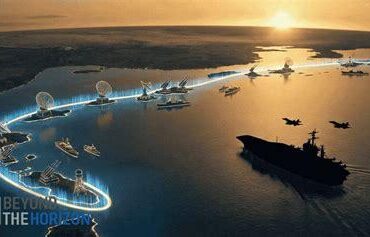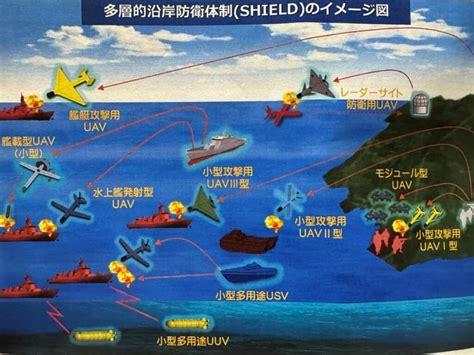
Japan’s FY2026 defense budget represents a transformative moment in military planning, formally elevating the SHIELD (Synchronized, Hybrid, Integrated, and Enhanced Littoral Defense) system as a central pillar of operational doctrine. Far from being a singular drone program, SHIELD embodies a networked combat architecture integrating aerial, maritime, and underwater unmanned platforms into a unified, adaptive response grid. This ambitious integration marks Tokyo’s clearest embrace of massed unmanned warfare as the primary mechanism to deter and defeat incursions into its southwestern maritime domain.
SHIELD: A Multidomain Web of Unmanned Defense
SHIELD’s elevation underscores a paradigm shift in Japan’s approach to defense and deterrence. Historically centered on maintaining high-end manned assets, Japan now pivots toward scalable, disposable, and rapidly replaceable systems. At the tactical level, SHIELD deploys an innovative suite of Ground Self-Defense Force (GSDF) attack drones segmented into three key variants:
- Type I: Compact, loitering munitions tailored for vehicle, personnel, and exposed equipment strikes.
- Type II: Extended-range drones with heavier payloads for attacking hardened positions and amphibious craft.
- Type III: Long-range precision strike assets capable of engaging targets up to 100 km away, functioning as affordable alternatives to traditional missile systems.
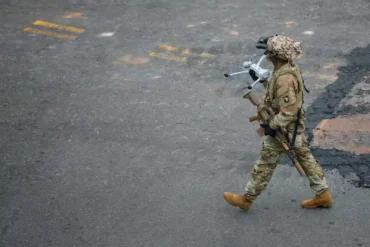
Each UAV type is integrated with reconnaissance drones and quadcopters for real-time targeting, battle damage assessment, and fire correction. Japan is also fielding interceptor drones to safeguard radar installations and air defense positions, replacing reliance on costly surface-to-air missiles for short-range defense against loitering munitions.
Maritime Autonomy and Littoral Supremacy
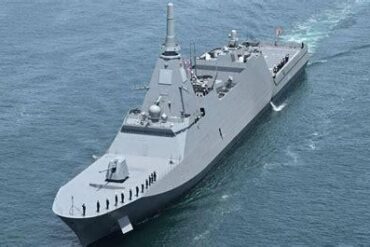
The Maritime Self-Defense Force (MSDF) plays a critical role within SHIELD’s layered design. Ship-launched UAVs extend the surveillance and strike envelope of destroyers and patrol vessels, delivering over-the-horizon target acquisition without risking manned aviation assets. Complementing this are fleets of multipurpose unmanned surface vehicles (USVs) designed to operate in coordinated swarms.
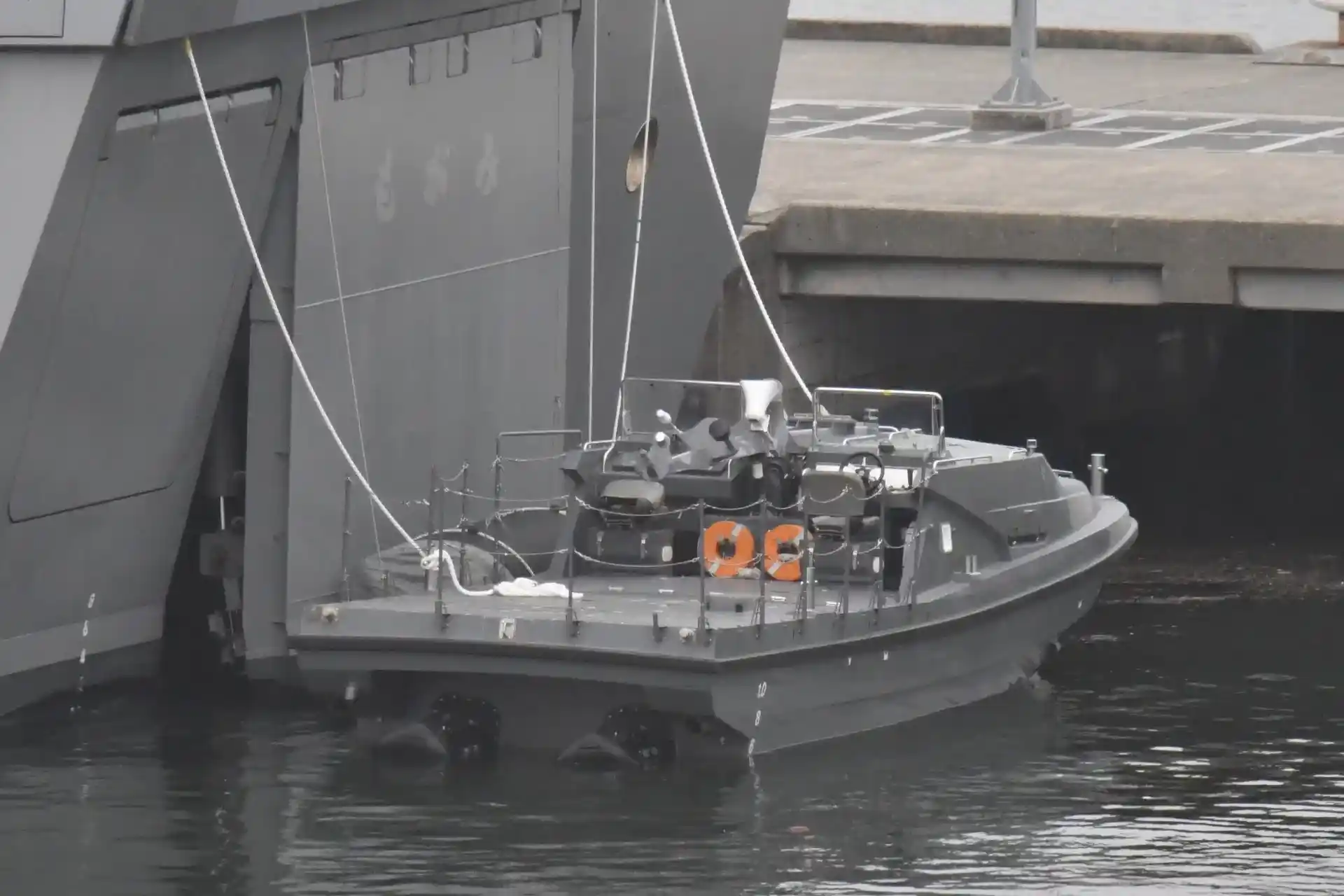
These USVs carry out:
- Reconnaissance and target designation
- Electronic warfare and decoy operations
- Direct kinetic strikes on hostile ships
This approach is crafted to saturate and complicate enemy decision-making, forcing adversaries into untenable trade-offs: expend valuable munitions or allow unmanned threats to breach perimeters.
Subsurface, the SHIELD program incorporates unmanned underwater vehicles (UUVs) optimized for:
- Persistent chokepoint surveillance
- Seabed mapping
- Amphibious movement tracking
These UUVs supply continuous data feeds to SHIELD’s command network, maintaining domain awareness even in contested zones where manned platforms might be denied access.
Command and Control: The Brain Behind SHIELD
A central element distinguishing SHIELD from isolated drone efforts is its resilient, distributed command-and-control (C2) architecture. This system synchronizes UAVs, USVs, and UUVs across all domains, transforming them into dynamic nodes within a sensor-to-shooter web. Rather than operating in silos, these unmanned assets provide live targeting data for conventional strike assets—long-range missiles, coastal artillery, and naval weapons.
This data fusion allows:
- Faster kill chain cycles
- Economical munitions employment
- Real-time adaptability in fluid battlespaces
In effect, SHIELD ensures that even expendable assets contribute to strategic outcomes, reversing the logic that only high-end platforms drive combat effectiveness.
Lessons from Ukraine: Attrition as a Strategy
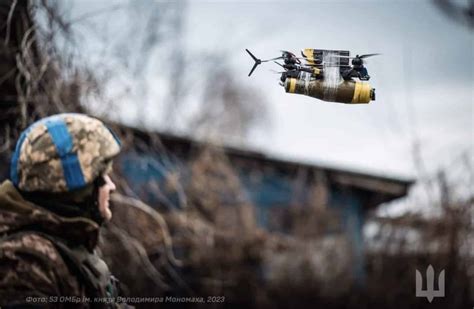
Japanese defense planners have carefully studied the drone-centric warfare in Ukraine, where low-cost UAVs inflicted disproportionate damage and degraded opponent morale and cohesion. SHIELD internalizes this model, viewing attrition not as failure, but as a deliberate warfighting method. By compelling adversaries to burn through advanced interceptors and costly standoff weapons to counter cheap drones, Japan seeks to erode enemy initiative long before decisive engagements.
This perspective aligns with a broader cultural transition within Japan’s defense establishment. For decades, Japanese doctrine emphasized conservation, precision, and minimal force exposure. Now, it openly embraces mass, saturation, and redundancy in unmanned systems—maximizing endurance while protecting personnel.
Budgetary Backing and Implementation Timeline
The FY2026 budget reflects this transformation with JPY 312.8 billion earmarked for unmanned defense capabilities, and a dedicated JPY 128.7 billion to fully operationalize SHIELD by FY2027. This budgetary commitment signals more than procurement; it lays the foundation for:
- Industrial scale-up of drone production
- Expansion of ground-based drone brigades
- Joint-service training and operational integration
- Field testing and refinement in southwestern island exercises
This sustained investment affirms Japan’s long-view of conflict in the Indo-Pacific. It is no longer planning for short, high-tech skirmishes but rather for protracted, high-intensity engagements marked by missile barrages, amphibious thrusts, and gray-zone operations.
Deterrence Through Saturation and Complexity
For any adversary eyeing the first island chain, the implications are sobering. Engaging Japan in its southwestern approaches now means confronting:
- Dense clouds of autonomous UAVs and USVs
- Underwater sensor networks in chokepoints
- Degraded targeting due to electronic jamming and decoys
- Rapid reconstitution of strike capabilities via drone swarms
SHIELD presents an environment where superior technology can be drowned by superior numbers. It shifts the cost calculus dramatically—where each step of an invasion draws fire, risks exposure, and drains munitions.
Strategic Messaging and Regional Reactions
Beyond operational utility, SHIELD is a message: Japan is no longer content with reactive defense. It is building a distributed offensive capability, embedded within its constitutional limits but capable of shaping conflict dynamics from the outset.
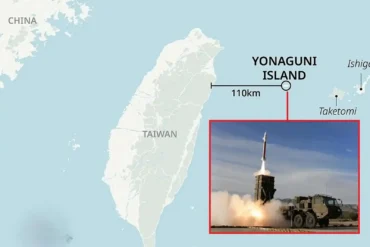
The Chinese military, long preoccupied with penetrating Japanese and U.S. air defenses, now faces a cluttered, unpredictable battlefield in the Ryukyus and beyond. SHIELD does not seek to dominate via singular superiority, but through cumulative disruption, resilience, and adaptability.
Conclusion: From Defense Budget to Combat Blueprint
SHIELD’s centrality in the FY2026 defense budget reveals Tokyo’s answer to a new era of warfare. It is not simply acquiring drones—it is constructing a multilayered, multidomain combat network that upends traditional attrition equations and imposes unacceptable risks on would-be aggressors.
In doing so, Japan moves decisively from defensive preparedness to proactive deterrence. SHIELD is not just a tool—it is a doctrine in motion, a harbinger of drone-dominant battlefields, and a blueprint for enduring conflict across Asia’s most volatile frontier.