Wake Island once sent one of the most dramatic messages in American military history. In December 1941, amid relentless Japanese attacks following the strike on Pearl Harbor, the isolated outpost transmitted its final communications before falling silent. More than eight decades later, the tiny atoll is again emerging as a critical piece of American strategy. In an era defined by long-range missiles, drones, and contested battle spaces, the same remote island that symbolized resistance during World War II is once more becoming indispensable to the U.S. Navy and the wider American military presence across the Indo-Pacific.
For decades, American military power rested upon large, heavily developed overseas bases. These installations projected influence, reassured allies, and provided the infrastructure necessary for global operations. Yet modern warfare has transformed the strategic equation. The war in Ukraine demonstrated how vulnerable fixed facilities can become when confronted by precision-guided weapons, cruise missiles, and mass-produced drones. Similar lessons are shaping military thinking in the Pacific, where China has developed one of the world’s most formidable missile arsenals.
Rather than concentrating forces in a few major hubs, the United States is increasingly embracing distributed operations. Smaller locations spread across vast distances provide flexibility and survivability while making enemy targeting considerably more difficult. Within this framework, Wake Island has regained extraordinary importance.
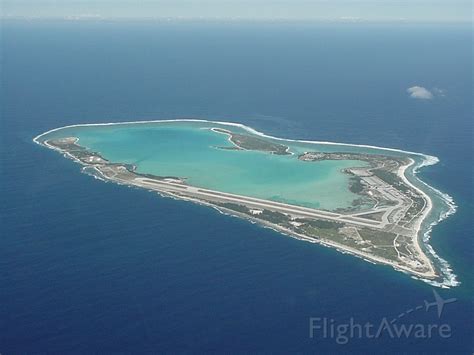
Located roughly halfway between Hawaii and Guam, Wake Island occupies one of the most strategically valuable positions in the Pacific Ocean. Though remote and sparsely populated, the atoll provides an ideal logistics node and emergency staging point for military operations. Unlike heavily concentrated bases closer to Asia, Wake lies beyond the reach of much of China’s conventional missile inventory, giving planners an additional layer of operational depth.
Wake Island’s Historic Connection To Pearl Harbor
Wake Island’s name is forever linked with the events of December 1941. After the Japanese attack on Pearl Harbor, the small American garrison stationed on the island fought fiercely against overwhelming odds. Marines, sailors, civilians, and support personnel mounted an unexpectedly effective defense, even sinking enemy ships during the early stages of the battle.
Eventually, Japanese forces overwhelmed the defenders. Before communications ceased, Wake transmitted its final messages to Pearl Harbor, marking the end of one of the first and most heroic episodes of America’s entry into World War II. Those final transmissions became symbols of sacrifice and determination.
Today, the same island that once disappeared from the American operational picture is experiencing a remarkable revival.
Why Large Military Bases Have Become Increasingly Vulnerable
Throughout the Cold War and the decades that followed, the United States maintained extensive military infrastructure across Asia. Approximately 80,000 American service members remain stationed throughout the region, with major concentrations in Japan, South Korea, and Guam.
Japan hosts around ninety U.S. military facilities, supporting roughly 60,000 personnel. Marine Corps and Navy units represent the largest concentrations. South Korea maintains between 24,000 and 25,000 American troops spread across dozens of installations. Guam, although smaller, remains one of the most important American territories in the Pacific, housing nearly 10,000 personnel and dozens of military organizations.
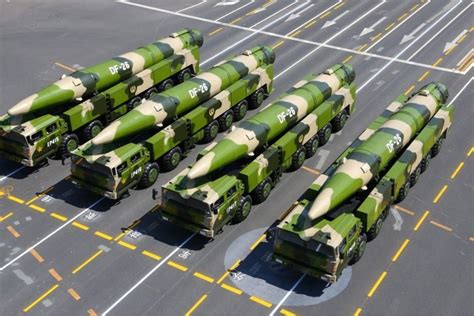
These installations have long formed the backbone of American power projection. However, they also present lucrative targets. China’s missile force possesses hundreds of short-range ballistic missiles, over a thousand medium-range systems, numerous intermediate-range weapons, and increasingly sophisticated cruise missiles and hypersonic capabilities.
In the event of a crisis involving Taiwan, analysts widely believe that major American facilities could face immediate attacks intended to disrupt operations. The challenge is not simply the destructive power of these weapons, but their numbers. Saturation attacks could overwhelm defenses and degrade logistics networks.
Consequently, military planners have sought ways to complicate enemy targeting by dispersing assets across multiple smaller locations rather than relying exclusively on a few large bases.
Distributed Operations Are Reshaping American Strategy
Every branch of the U.S. military has adapted to operate inside contested environments.
The Army established Multi-Domain Task Forces capable of breaking down into smaller formations. Marine Corps doctrine evolved through Expeditionary Advanced Base Operations, allowing compact units to deploy rapidly across islands. The Air Force introduced Agile Combat Employment concepts designed to keep aircraft moving among dispersed airfields. Meanwhile, the Navy embraced Distributed Maritime Operations to reduce vulnerability and increase flexibility.
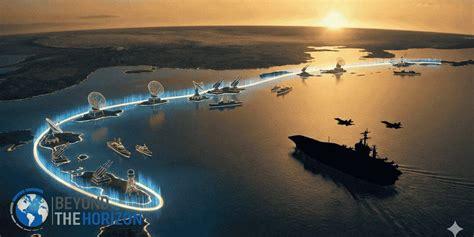
These concepts share a common philosophy. Smaller, mobile elements connected by communications and sensors create a web of mutually supporting capabilities. Such forces become harder to detect, harder to target, and easier to reposition.
Remote islands suddenly become far more valuable under this strategy. Instead of serving as giant fortresses, they function as nodes within an interconnected network stretching across thousands of miles.
Wake Island perfectly fits this vision.
Why Wake Island Matters In A Potential Indo-Pacific Conflict
Geography remains one of Wake Island’s greatest strengths. Positioned between Hawaii and Guam, the island offers a midpoint that enhances logistics and mobility throughout the Pacific.
Aircraft traveling between major bases gain access to additional refueling opportunities and emergency diversion options. Cargo aircraft can stage supplies closer to operational areas without exposing larger bases to unnecessary risks.
Wake is not intended to replace Guam or Japan. Instead, it acts as a support node that enhances strategic flexibility.
This approach creates redundancy. If one location becomes threatened or damaged, operations can shift elsewhere. That resiliency represents one of the primary goals behind distributed operations.
American planners increasingly view survivability as just as important as firepower. Wake contributes significantly to both.
Massive Infrastructure Improvements Have Brought Wake Island Back
Recent investments have transformed Wake Island from a neglected outpost into a modern operational facility.
An $87 million improvement effort rehabilitated major sections of the island’s infrastructure. Taxiway Bravo underwent repairs and extensions, enabling better aircraft movement. New parking aprons and hardstands expanded capacity. Drainage systems beneath the airfield received upgrades to improve long-term durability.
The Hot Cargo Pad, which handles hazardous materials, was completely restored. New lighting systems and advanced ground equipment further enhanced operational capabilities.
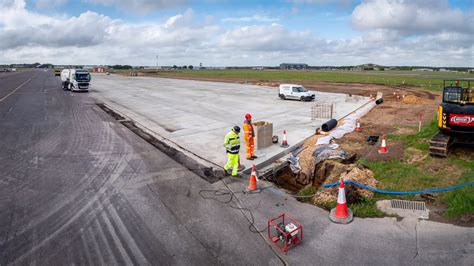
These improvements dramatically increased the island’s utility. Although Wake remains small compared with Andersen Air Force Base in Guam or Kadena Air Base in Okinawa, it now possesses the infrastructure necessary to support diverse missions.
Its 9,800-foot runway can accommodate an impressive variety of aircraft.
Among them are:
- Lockheed Martin F-35 fighters.
- Boeing B-52 strategic bombers.
- Boeing C-17 Globemaster III transport aircraft.
- Boeing P-8A Poseidon maritime patrol aircraft.
This flexibility makes Wake valuable across air, naval, and joint operations.
The U.S. Navy Is Returning To Wake Island
The island’s renewed importance became particularly evident with plans for Navy Summer Exercise 2026.
During two separate sixty-day periods between June and November, the U.S. Navy intends to utilize Wake Island as part of its operational activities. P-8A Poseidon aircraft will operate from the island under Task Force 72, which supports reconnaissance and surveillance missions for the Japan-based Seventh Fleet.
The P-8A plays an essential role in tracking submarines, monitoring maritime traffic, and providing intelligence across vast areas of the Pacific. Operating from Wake expands coverage and creates additional flexibility for commanders.
The return of Navy aircraft to the island represents far more than symbolic activity. It demonstrates the Pentagon’s broader commitment to creating resilient operational networks that can withstand future conflicts.
Army HIMARS And Marine Radar Units Have Already Been Training There
Wake Island’s revival extends beyond naval aviation.
In November 2025, soldiers from the 25th Infantry Division conducted HIMARS training on the island. The exercise demonstrated how rapidly rocket artillery units could deploy to remote locations, establish firing positions, and relocate before enemy forces could react.
Using C-17 transport aircraft, the Army showcased expeditionary capabilities specifically designed for contested environments.
Earlier, in December 2024, Marines from the 12th Littoral Anti-Air Battalion deployed advanced AN/TPS-80 radar systems to Wake. These sophisticated sensors can track aircraft, missiles, and numerous airborne threats simultaneously.
Together, these exercises highlighted the concept of integrated operations. Radar units identify targets. Communications networks relay information. Rocket artillery delivers fires. Aircraft provide mobility and logistics support.
Each component supports the others, creating a distributed operational web capable of surviving against peer adversaries.
China’s Expanding Military Reach Is Driving Strategic Changes
China’s military modernization has accelerated dramatically over recent decades. The People’s Liberation Army Rocket Force possesses an enormous inventory of ballistic and cruise missiles capable of striking targets across the Pacific.
Systems such as the DF-21, DF-26, CJ-10, and DF-17 provide varying combinations of range, speed, and precision. Some can threaten Guam, while others focus on Taiwan and regional targets.
Although conflict remains avoidable and political solutions remain preferable, military planners must prepare for worst-case scenarios. Beijing has repeatedly stated that reunification with Taiwan remains a priority and has not ruled out military action.
Should tensions escalate into war, American forces would need resilient logistics networks capable of functioning despite missile attacks.
Wake Island provides precisely that kind of resilience.
Lessons From Ukraine Have Reinforced The Need For Smaller Nodes
Recent conflicts have shown that enormous fixed facilities can quickly become liabilities. Drones costing a fraction of traditional weapons can threaten infrastructure worth billions of dollars.
Precision-guided munitions, cruise missiles, and electronic warfare have altered assumptions that dominated military planning after the Cold War.
Survivability increasingly depends upon mobility, redundancy, and dispersal.
Rather than concentrating aircraft, supplies, and command structures in a handful of locations, militaries now seek numerous smaller sites that complicate enemy planning.
Wake Island exemplifies this philosophy. Its isolation, upgraded infrastructure, and strategic location combine to create a valuable node inside a broader network spanning the Pacific.
A Forgotten Outpost Has Become Essential Again
Wake Island’s story spans generations. In 1941, it stood as a lonely bastion that fought against impossible odds and transmitted its last messages toward Pearl Harbor before disappearing into history. For decades afterward, the atoll faded into relative obscurity.
Today, global competition has brought it back into focus.
Far from being merely a historical landmark, Wake Island has become an active component of America’s evolving Indo-Pacific strategy. Upgraded facilities, Navy exercises, Army rocket deployments, and Marine radar operations all point toward one reality: the age of giant, immovable bases is giving way to a more flexible network of distributed power.
In that transformation, the island that once sent its final wartime transmission to Pearl Harbor has found a new mission. More than eighty years after its darkest chapter, Wake Island is once again answering the call of American grand strategy, proving that even the most isolated places can shape the balance of power across the Pacific.