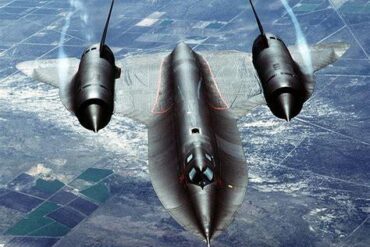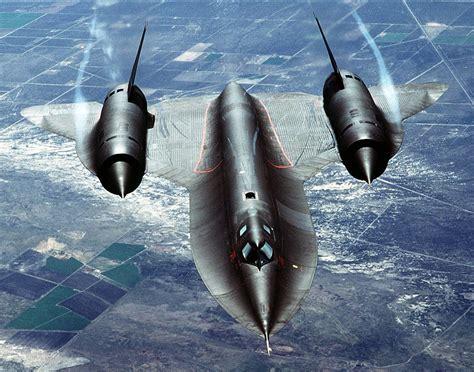
The Lockheed SR-71 Blackbird was one of the most technologically extreme aircraft ever built. It cruised faster than a rifle bullet, operated in the thin upper atmosphere above 85,000 feet, and generated skin temperatures hot enough to warp metal during flight. Yet for all its futuristic engineering, the aircraft depended on something surprisingly old-school every time it prepared to leave the ground: two roaring American muscle-car V8 engines mounted inside a wheeled starter cart.
That contradiction is part of what makes the Blackbird legend so enduring. The fastest operational aircraft in history could not start itself. Before its titanium airframe sliced through the stratosphere at Mach 3+, ground crews first had to roll a low-slung cart beneath each engine nacelle and unleash a pair of Buick big-block V8s screaming near redline. Only then could the aircraft’s enormous Pratt & Whitney J58 engines begin turning fast enough to ignite.
The result was one of the most dramatic engine-start procedures ever seen on a military flight line. Flames blasted sideways from uncorked exhaust pipes. Mechanics stood clear of potential debris zones. Pilots watched gauges with surgical focus. Crew chiefs shouted timing calls over deafening mechanical chaos. And at the center of it all sat an industrial cart powered by Detroit iron.
The SR-71’s extraordinary speed often overshadows the equally remarkable engineering ecosystem required to support it. The AG330 start cart was not a quirky footnote or a novelty. It was an operational necessity born from ruthless aerospace compromise. Every pound saved aboard the aircraft mattered. Every system carried into the sky had to justify its existence against fuel capacity, thermal limits, and mission range. An onboard starter powerful enough to crank the gigantic J58 engines would have imposed an unacceptable weight penalty. Lockheed’s engineers decided the smarter solution was to leave the weight on the ground.
That decision created one of the most unusual intersections between aerospace engineering and American automotive culture ever witnessed.
By the standards of Cold War aviation, the SR-71 program already existed at the edge of practicality. The aircraft leaked fuel while parked because its skin panels only sealed properly after expanding from aerodynamic heating. Its specialized JP-7 fuel was intentionally difficult to ignite. Its engines transitioned from turbojet behavior toward ramjet-like operation at extreme speeds. Almost every system aboard the aircraft pushed beyond conventional aviation boundaries.
And none of it worked until two Buick V8s came to life underneath the wings.
The Ruthless Weight-Saving Philosophy Behind The SR-71
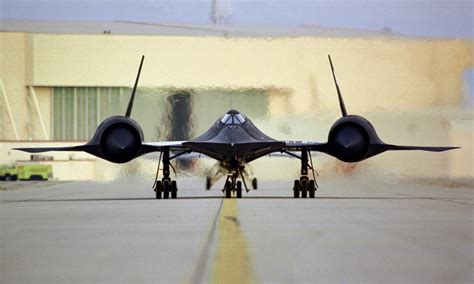
The SR-71 emerged from the legendary Skunk Works division led by aerospace visionary Clarence “Kelly” Johnson. Johnson understood that the aircraft’s survival depended on speed, altitude, and efficiency operating together as a single system. Every design choice revolved around minimizing drag, maximizing thermal resilience, and extending operational range.
At Mach 3.2, tiny inefficiencies became massive engineering problems. Additional onboard weight demanded more fuel. More fuel increased aircraft mass. Greater mass generated additional heat loads during sustained supersonic cruise. Even seemingly minor systems created cascading penalties elsewhere in the aircraft.
That philosophy explains why the Blackbird lacked an internal engine-starting system entirely.
Most military aircraft carry onboard starters using pneumatic, electric, or auxiliary power units. The SR-71 rejected all of those solutions because the Pratt & Whitney J58 engines required immense rotational force before ignition became possible. A lightweight onboard system powerful enough to spin the massive compressor assemblies simply did not exist within acceptable size and weight constraints during the early 1960s.
The J58 was not an ordinary turbojet. It was among the most sophisticated propulsion systems ever developed for operational service. Designed specifically for sustained Mach 3 flight, each engine weighed roughly 6,500 pounds and operated under temperatures and airflow conditions few other engines could survive.
At rest, however, the J58 had a simpler requirement: enormous torque.
The compressor stages needed to accelerate to approximately 3,200 RPM before ignition procedures could begin safely. That demanded far more mechanical force than conventional aircraft ground starters could comfortably deliver. Lockheed engineers realized that carrying such capability airborne made little sense when the system would only be used briefly during startup.
Instead, the solution would stay on the tarmac.
The choice reflected the SR-71 program’s broader engineering mindset. The Blackbird sacrificed convenience relentlessly in pursuit of performance. Pilots accepted complex procedures. Ground crews accepted intense maintenance demands. Logistics teams accepted specialized support equipment scattered across global deployment sites. All of it served one objective: sustained strategic reconnaissance at speeds no interceptor could reliably challenge.
Removing the onboard starter system saved weight, simplified internal arrangements, and improved overall mission efficiency. But it also guaranteed that every SR-71 launch became a carefully choreographed ground operation requiring dedicated external machinery.
That machinery eventually became almost as famous as the aircraft itself.
How Two Buick Nailhead V8s Became Aerospace Equipment
The AG330 start cart represented engineering improvisation at its finest. Instead of designing a completely bespoke turbine-powered starter unit from scratch, Lockheed engineers borrowed from something America already built exceptionally well: high-torque V8 engines.
The selected powerplant was the Buick 401 cubic-inch “Nailhead” V8, an engine originally developed for large American sedans during the golden age of Detroit muscle. The Nailhead was famous for producing immense low-end torque, exactly the characteristic required to spin a gigantic jet engine compressor from standstill.
Each Buick engine generated roughly 325 horsepower and 445 lb-ft of torque. By coupling two engines together, the AG330 delivered approximately 650 combined horsepower to the startup system.
The arrangement looked deceptively crude compared with the futuristic SR-71 above it. Yet mechanically, the AG330 was brilliantly engineered.
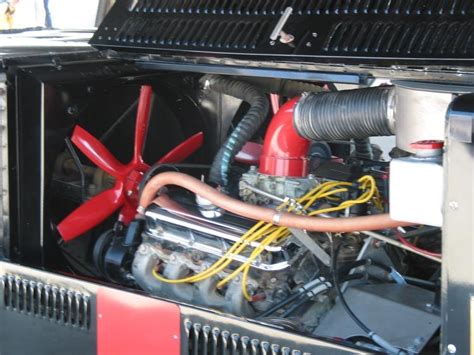
Two Buick Wildcat V8s sat side-by-side inside the cart. Each engine connected to its own Hydra-Matic automatic transmission equipped with electric shift controls. The transmissions were then linked together through a massive 12-inch-wide Gilmer toothed belt capable of transferring enormous rotational loads without slipping.
That combined output fed into a gearbox redirecting power vertically through a drive shaft extending upward from the cart. At the top sat a probe designed to mate precisely with a splined receptacle located beneath each J58 engine nacelle.
Everything depended on alignment.
The probe assembly incorporated limited gimbal movement allowing minor positional correction during engagement. Multiple microswitches verified proper connection before startup procedures continued. If the system failed to align correctly, crews risked catastrophic mechanical damage during engagement.
Operators monitored the AG330 through a densely packed control panel loaded with gauges and warning indicators. Oil pressure, water temperature, transmission status, torque output, gearbox health, and rotational speed all demanded constant attention.
Unlike modern computerized systems, nothing about the process was automated in a sophisticated digital sense. Human operators interpreted the machinery directly through gauges, sound, vibration, and experience.
And the sound was unforgettable.
The AG330 ran with completely uncorked exhausts. Each Buick engine used eight straight exhaust outlets, creating sixteen flame-belching pipes blasting horizontally from the cart during operation. At startup RPM, flames could extend nearly three feet outward while the V8s screamed toward their operational limits.
Witnesses frequently compared the noise to an entire drag strip erupting simultaneously beneath the wing of a spacecraft.
The Precise Mechanical Ballet Of Starting A Blackbird
Starting an SR-71 required exact timing between pilot, crew chief, and cart operator. Mistakes could destroy engines worth millions of dollars or ground aircraft critical to strategic reconnaissance operations.
The sequence began before the pilot even touched the throttle.
Ground crews first warmed the AG330’s Buick engines while technicians inspected gauges and confirmed transmission readiness. Once stabilized, the cart rolled carefully beneath the appropriate engine nacelle. The drive probe aligned with the starter receptacle under extremely tight tolerances.
Only after all microswitches confirmed proper engagement did the crew chief authorize the next phase.
The pilot then radioed the command: “Engage Buicks.”
At that moment, the cart operator advanced a single Morse throttle controlling both V8 engines simultaneously. The transmissions loaded instantly, and the Buicks began transferring massive torque through the gearbox into the dormant J58 engine.
This phase demanded constant precision.
Operators needed to maintain approximately 700 to 725 lb-ft of sustained torque while monitoring Buick RPM climbing toward the 4,500–4,900 range. Too much torque risked disengaging the probe violently. Too little torque prevented the J58 from accelerating quickly enough, creating dangerous temperature conditions inside the engine.
As the J58 compressor accelerated, cockpit instrumentation finally began coming alive. Pilots monitored oil pressure, fuel pressure, and tachometer readings carefully. Reaching 3,200 RPM marked the critical ignition threshold.
But rotational speed alone still was not enough.
The SR-71’s specialized JP-7 fuel resisted ignition intentionally. Standard aviation fuel would have ignited too easily under the aircraft’s extreme operating temperatures. During sustained Mach 3 flight, skin temperatures exceeded 600 degrees Fahrenheit in some areas. Conventional fuel would have posed enormous risks.
JP-7 solved that problem by being remarkably stable.
Unfortunately, that stability made it extraordinarily difficult to ignite on the ground.
Why The SR-71 Needed Explosive Green Fire To Start
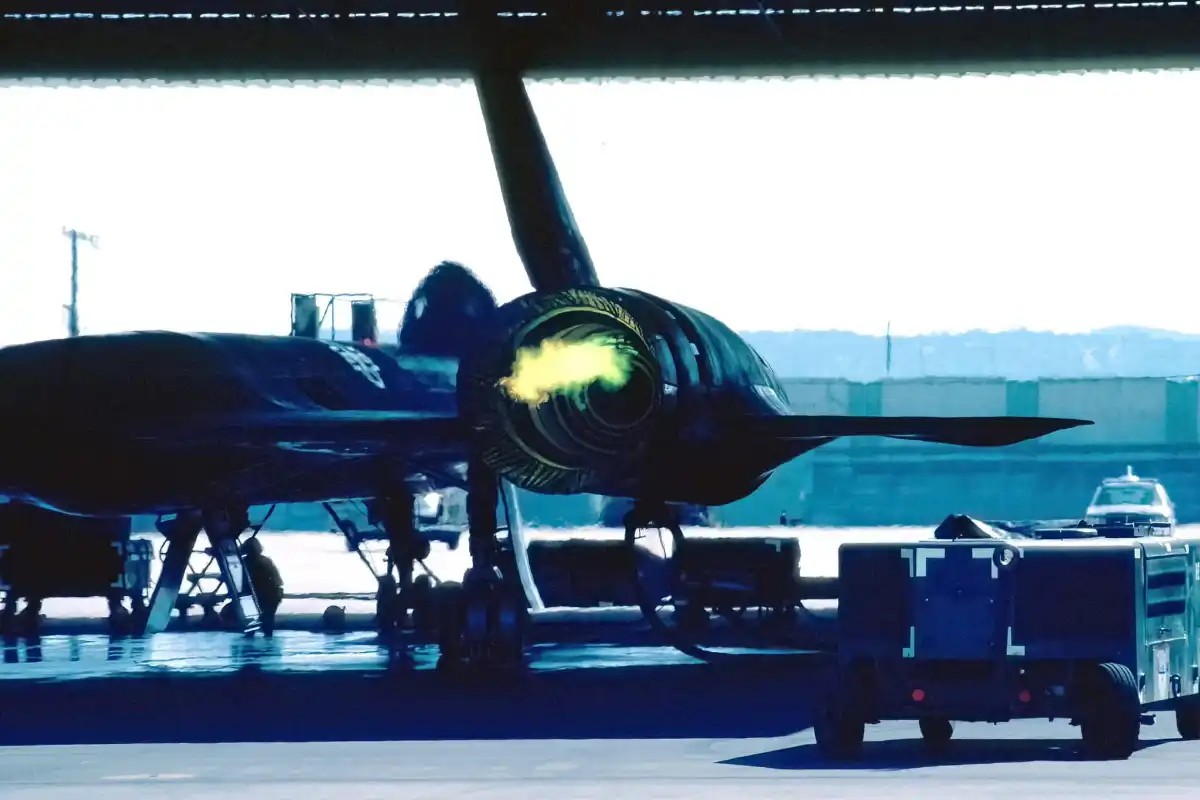
The Blackbird solved its fuel ignition challenge using one of the strangest chemicals ever routinely employed in military aviation: triethylborane, better known as TEB.
TEB is pyrophoric, meaning it ignites spontaneously when exposed to oxygen. The instant it contacts normal air, it bursts into brilliant green flame without requiring any spark source whatsoever.
That characteristic made it perfect for igniting stubborn JP-7 fuel inside the J58 engines.
Once the compressor reached sufficient rotational speed, the pilot advanced the throttle to idle position and injected a precisely measured 30cc burst of TEB into the engine’s burner cans. Ground crews watched carefully for the resulting green flash, confirming successful ignition.
The visual effect became iconic among Blackbird veterans.
A violent emerald-colored burst erupted beneath the nacelle, followed almost immediately by the deepening roar of the J58 achieving stable combustion. As the jet engine came alive, it began accelerating beyond the startup RPM range, gradually unloading the strain on the AG330’s Buick engines.
Timing now became critical again.
The instant the J58 stabilized and reached the proper threshold, the pilot or crew chief called “Buicks out.” The cart operator immediately initiated shutdown procedures, allowing the probe to disengage and fall free before the accelerating J58 could overspeed the starter system.
When everything worked correctly, the sequence appeared almost choreographed. Within minutes, one engine settled into stable idle near 3,950 RPM while crews repositioned the AG330 for the second engine.
Then the entire process repeated again from the beginning.
Every SR-71 sortie required two successful startup cycles. No shortcuts existed. Every reconnaissance mission, every Cold War deployment, and every high-speed dash across hostile airspace began with synchronized teamwork between aerospace technicians and a pair of screaming American V8s.
The Probe Hang-Up Nightmare That Could Destroy The Start Cart
The AG330 startup procedure worked brilliantly when every component behaved correctly. When something failed, however, the consequences escalated rapidly.
The most feared malfunction involved the starter probe failing to disengage after ignition.
Modern systems typically incorporate overrunning clutches allowing driven components to spin faster than the starter mechanism safely. The SR-71 startup system lacked such protection. If the probe remained engaged after the J58 accelerated beyond startup speed, the jet engine effectively began driving the Buick V8s instead of the reverse.
That situation became mechanically catastrophic within seconds.
The J58 idle speed exceeded the rotational limits the Buick engines could safely tolerate. While the V8s normally operated around 4,800 RPM during startup procedures, a hung probe could drive them well past 6,000 RPM almost instantly.
The Buick Nailhead was a torque engine, not a high-revving race motor. Sustained overspeed conditions often ended violently.
Former ground crews recalled connecting rods punching through engine blocks while oil and mechanical fragments exploded beneath the cart. Exhaust flames intensified. Metal debris scattered across the tarmac. The entire AG330 could self-destruct under the force of the overspeed event.
And unlike many aviation emergencies, the solution required direct physical action.
Crew members literally sprinted toward the malfunctioning cart and shook the probe handles aggressively, attempting to free the connection manually before catastrophic failure occurred. All of this unfolded while standing near sixteen open exhaust outlets firing flames horizontally at head height.
Ground crew positioning mattered enormously during startup operations for exactly this reason. Personnel trained carefully to avoid dangerous side zones around the cart where debris or flames could erupt unexpectedly.
The AG330’s violent personality became part of Blackbird culture. Veterans respected the system deeply because it balanced extraordinary utility against genuine mechanical risk. Starting the fastest aircraft in the world was never a sterile push-button experience. It was loud, hot, dangerous, and intensely physical.
That danger reinforced the discipline surrounding SR-71 operations everywhere the aircraft deployed.
The Sensory Violence Of A Blackbird Launch
Eyewitnesses consistently described SR-71 engine starts as among the most unforgettable spectacles in military aviation.
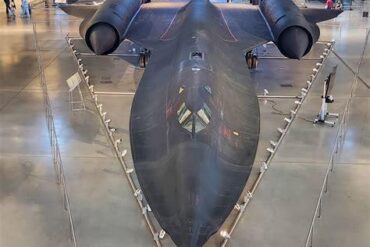
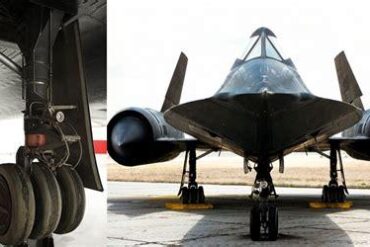
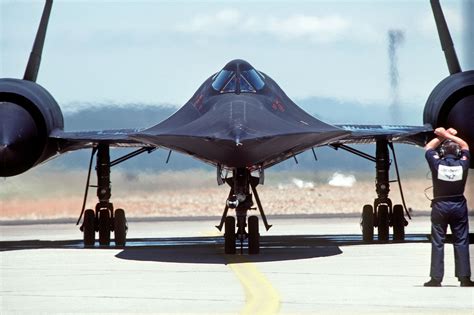
The aircraft already looked alien sitting motionless on the ramp. Its long chines, black titanium skin, and enormous nacelles resembled something built decades ahead of its era. Then the AG330 carts arrived underneath the wings, and the atmosphere changed completely.
Once engaged, the Buick V8s did not merely idle quietly in the background. They erupted.
The combined sound of sixteen uncorked exhaust pipes operating near maximum RPM created a wall of mechanical violence that rattled nearby structures and reverberated across the flight line. Flames blasted outward horizontally from the cart while crew chiefs communicated through practiced hand signals and headset coordination.
The spectacle felt closer to motorsport than conventional aviation.
Veterans at Beale Air Force Base, Kadena Air Base, and RAF Mildenhall often recalled how crowds instinctively stopped what they were doing when a Blackbird startup began. Even experienced aviation personnel recognized they were witnessing something extraordinary.
The sequence combined raw combustion energy with Cold War urgency.
These aircraft were not airshow performers. They existed to conduct strategic reconnaissance missions over politically sensitive regions at speeds faster than most missiles of the era. Every launch carried operational significance. Ground crews understood that timing errors, mechanical faults, or startup anomalies could delay missions with global intelligence consequences.
That pressure elevated the importance of every individual involved in the process.
Pilots monitored cockpit systems obsessively during startup. Crew chiefs coordinated timing between aircraft and ground equipment. Cart operators balanced torque output while watching multiple gauges simultaneously. Maintenance technicians remained alert for leaks, vibration anomalies, or overheating indications.
Even the starter carts themselves demanded extensive maintenance attention. The Buick engines required warm-up cycles, inspections, fluid monitoring, and periodic rebuilds. Gearbox chip detectors were checked constantly for signs of internal wear.
The SR-71 may have represented the cutting edge of aerospace technology, but its operations depended equally on disciplined mechanics wielding wrenches beside roaring Detroit V8s.
From Buick Nailheads To Chevrolet 454 Big Blocks
By the mid-1970s, the original Buick Nailhead engines powering the AG330 fleet became increasingly difficult to maintain. Buick had discontinued production years earlier, and sourcing replacement components turned into a growing logistical headache for the Air Force.
The solution once again came from American muscle-car engineering.
The Air Force replaced the aging Nailheads with Chevrolet LS7 454 cubic-inch V8 engines producing approximately 465 horsepower each. The new big-block Chevrolets offered substantially greater output and improved parts availability.
Operationally, the carts continued performing the same mission. Mechanically, however, many veterans felt the character changed.
The Buick Nailhead possessed a unique sound and torque delivery profile that became deeply associated with Blackbird operations during the aircraft’s early years. Some ground crew members later recalled viewing the transition to Chevrolet power almost nostalgically, as though an important piece of the original SR-71 culture disappeared with the old engines.
Still, the operational demands of sustaining the Blackbird fleet left little room for sentimentality.
By the early 1980s, however, even the upgraded AG330 system began disappearing. Advances in pneumatic starting technology finally provided a quieter, safer, and more logistically practical alternative. Garrett AiResearch developed a pneumatic air-start system eventually installed at dedicated Blackbird operating locations.
From a practical standpoint, the pneumatic solution was superior in almost every measurable way.
It reduced maintenance requirements. It simplified deployment logistics. It minimized mechanical failure risk. It eliminated the need for flame-belching V8 carts operating dangerously close to aircraft structures.
But it also eliminated much of the drama.
The AG330 embodied an era when aerospace engineering still tolerated mechanical spectacle in pursuit of operational capability. The later pneumatic systems worked efficiently, but they lacked the theatrical brutality that defined earlier Blackbird launches.
The change reflected a broader truth about aviation evolution. Over time, practicality almost always defeats romance.
Why The AG330 Became One Of Aviation’s Most Legendary Ground Vehicles
Today, surviving AG330 carts occupy museum floors as artifacts of a uniquely American engineering philosophy. They symbolize a period when aerospace innovation and automotive muscle unexpectedly converged in service of Cold War reconnaissance supremacy.
The contrast remains irresistible.
One of the most advanced aircraft ever flown depended on technology rooted partly in 1960s Detroit performance engineering. Titanium Mach 3 reconnaissance platforms relied on pushrod V8 engines originally intended for road-going American sedans.
Yet the pairing made perfect sense.
The Buick Nailhead excelled at producing exactly the kind of brute low-end torque required to spin gigantic jet compressors. The engines were robust, widely understood mechanically, and comparatively inexpensive to maintain. Lockheed engineers did not choose them because they were glamorous. They chose them because they worked.
That practicality ultimately defines the SR-71 program itself.
Despite its futuristic appearance, the Blackbird succeeded because its designers balanced revolutionary ideas with brutally pragmatic solutions. Exotic titanium structures existed alongside straightforward mechanical systems. Advanced aerodynamics operated beside analog instrumentation. Pyrophoric ignition chemicals worked in harmony with big-block American V8s.
Every element served a purpose.
The AG330 start cart remains unforgettable because it exposed the hidden reality behind the SR-71’s myth. Before the aircraft became an untouchable black dart streaking across hostile skies at Mach 3, it was still a machine that needed to be awakened carefully, violently, and precisely by a team of human beings on the ground.
And that awakening began with the thunder of twin Buick V8 engines screaming beneath the wings of the fastest aircraft America ever built.