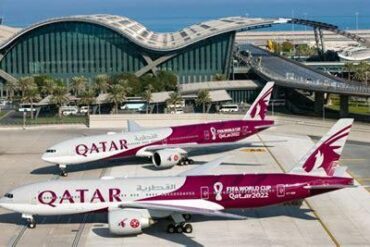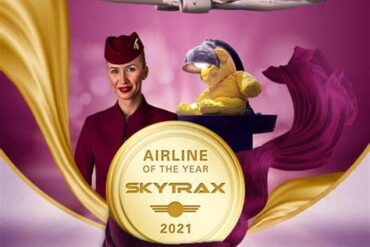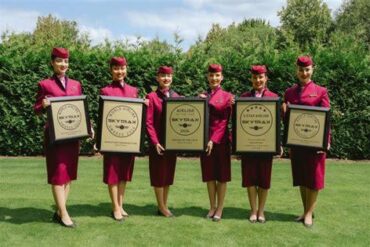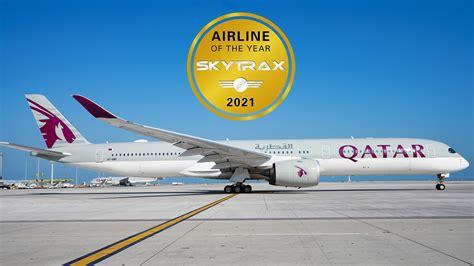
Qatar Airways has once again redefined aviation excellence, clinching the title of World’s Best Airline for the ninth time at the 2025 World Airline Awards. This historic win, announced during a high-profile ceremony at Le Bourget Airport in Paris amid the Paris Air Show, places the Doha-based carrier ahead of industry titans like Singapore Airlines, Cathay Pacific, Emirates, ANA, Air France, and Swiss.
This milestone is more than symbolic—it marks a deep, strategic superiority that extends across service quality, fleet innovation, customer loyalty, and regional leadership. With additional accolades for World’s Best Business Class and Best Airline in the Middle East, Qatar Airways isn’t just competing; it’s setting the agenda for the future of global aviation.
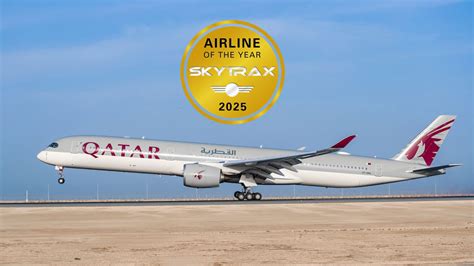
Qatar Airways: Precision, Prestige, and Passenger-Centric Mastery
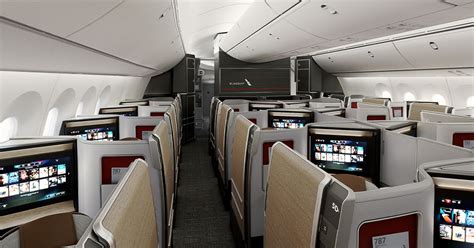
Qatar Airways’ ascent isn’t merely due to prestige—it stems from its relentless investment in passenger experience. From state-of-the-art Qsuite business class cabins to cutting-edge airport lounges and unmatched hospitality standards, the airline crafts each flight as a luxury journey. Operating from the ultra-modern Hamad International Airport, which itself is ranked among the world’s best, the airline continues to project not just operational prowess, but cultural leadership.
Its triumph in 2025 mirrors an evolving strategy—one that integrates tech innovation, luxury consistency, and a sharp response to post-pandemic traveler expectations. While rivals made notable advances, none matched Qatar Airways’ blend of precision operations and emotional connection with passengers.
A Ceremony That Reshaped Global Airline Hierarchies
Hosted in the storied Hall of Eight Columns, the 2025 World Airline Awards brought together over 500 senior aviation figures. This wasn’t merely a ceremonial affair—it was a recalibration of the industry’s global hierarchy. With over 325 airlines assessed, the competition was fierce, reflecting shifting patterns in customer satisfaction, innovation benchmarks, and resilience metrics.
Singapore Airlines fell to second place, still dominant in the ultra-premium cabin segment and awarded World’s Best Cabin Crew and Best First Class. Cathay Pacific’s resurgence, capturing third place, showcased renewed strength through entertainment upgrades and long-haul revitalization.
Emirates and ANA secured fourth and fifth, respectively. Emirates maintained its grip on luxury travel in the Gulf region, while ANA’s precision in ground and in-flight services earned it the Best Airport Services title.
Tactical Dominance: Qatar Airways’ Strategic Edge
The carrier’s ninth win isn’t luck—it reflects a multi-dimensional strategy rooted in:
- Exceptional Business Class Experience: The revolutionary Qsuite continues to raise expectations.
- Loyalty & Brand Identity: Qatar’s Privilege Club and co-branded initiatives deliver repeat travel appeal.
- Network Agility: Strategic expansions across underserved African, Asian, and European markets have built route resilience.
- Hospitality Training: Crew undergoes elite-level training, shaping industry-leading service touchpoints.
Qatar Airways also capitalizes on its regional hub’s geopolitical advantage. Doha sits at a pivotal axis between East and West, allowing the airline to dominate transit-heavy routes across Asia, Africa, and Europe.
A Fierce Contention Among Aviation Royalty
Though Qatar Airways dominated headlines, its closest competitors demonstrated sharp innovation. Singapore Airlines’ First Class Suites and celebrated cabin crew preserved its elite status. Cathay Pacific’s leap to number three came after significant long-haul product renewals, signaling renewed ambition from Hong Kong.
Emirates doubled down on its A380 revival, introducing refreshed interior configurations, while ANA leaned into AI-driven ground operations and precision in Japanese customer service.
Regional Forces Shape New Frontiers
Outside the top five, regional powerhouses made clear their intent to redefine expectations. Turkish Airlines took the crown as Europe’s Best Airline, underpinned by its unmatched business class catering. The airline’s investment in gastronomy and route expansion into Eastern Europe and Central Asia positions it as a formidable global connector.
Meanwhile, Ethiopian Airlines won Best Airline in Africa for the seventh consecutive year, highlighting its adaptability and strong intra-African connectivity amid regional volatility.
In the Asia-Pacific theatre, STARLUX Airlines emerged as a rising star. The Taiwanese boutique airline was named the World’s Most Improved Airline, receiving a coveted 5-Star rating. Its personalized service, premium-only cabin concept, and modern fleet structure underscore the future of niche luxury in commercial aviation.
Budget Carriers Rewriting the Low-Cost Playbook
The low-cost airline segment showed surprising evolution. AirAsia retained the World’s Best Low-Cost Airline title for the 16th year, demonstrating how a unified brand, digital integration, and loyalty targeting can generate enduring success. Its sibling, Scoot, took home Best Long-Haul Low-Cost Airline, reflecting growing trust in hybrid low-cost premium models.
In the Americas, Allegiant Air and JetSMART emerged as regional budget leaders, each rewriting the narrative of ultra-low-cost travel through technology-led operations and customer-centric route management.
Airlines Betting on the Passenger Experience Economy
Travelers today demand more than comfort—they demand meaningful travel narratives. Lufthansa won World’s Most Family-Friendly Airline, showcasing how child-friendly entertainment, dedicated services for parents, and smoother check-in procedures can redefine what it means to fly as a family.
Air France, on the other hand, stunned with its win for Best First Class Lounge Dining, underscoring the elevated importance of pre-flight experiences in shaping brand loyalty.

Inflight dining and airport ambience aren’t extras—they’re battlegrounds. Turkish Airlines claimed accolades for onboard catering, while Air Canada’s Signature Suite in Toronto earned praise for delivering culinary luxury in airport environments.
Alliances and Airports: The Nexus of Connectivity
The success of an airline is now tied closely to the ecosystem it operates within. ANA’s award for Best Airport Services reflected the growing role of seamless ground coordination. Star Alliance, having clinched World’s Best Airline Alliance and Best Alliance Lounge, emphasized the strategic value of co-branded services, network interoperability, and premium alliances.
Oceania and North America: Reclaiming Regional Dominance
Air Canada returned to form, securing Best Airline in North America with frontline staff credited for their empathy and service resilience. Delta Air Lines followed close behind, recognized for staff service excellence, a key soft-power differentiator.
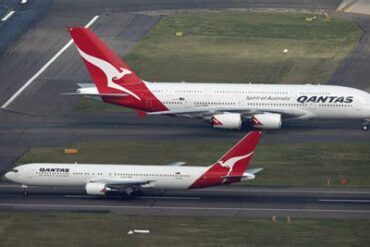
Qantas, having recovered from operational setbacks, regained its title as Best Airline in Australia, with Virgin Australia highlighted for its human touch via the Best Staff Service award.
India and South Asia: Fast Growth, Low-Cost Power
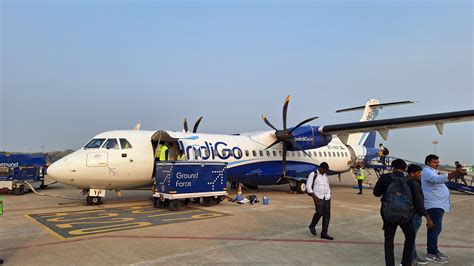
In the booming South Asian market, IndiGo emerged as a heavyweight. Winning both Best Airline in India/South Asia and Best Low-Cost Airline in the region, it demonstrated how aggressive fleet expansion, schedule efficiency, and domestic route mastery can deliver long-term dominance.
This victory shows how rising middle-class demand and new airport infrastructure are creating a new blueprint for success in price-sensitive markets.
Future of Aviation: Not Just Flight, but Feeling
This year’s World Airline Awards captured a decisive truth: the most successful airlines don’t just move passengers—they move emotions. Today’s traveler wants a story, a ritual, a memory. Luxury, reliability, and emotional consistency are shaping the new battleground.
Qatar Airways’ ninth win isn’t just a record—it’s a manifesto for what travel should feel like: uninterrupted elegance, operational grace, and human-centered design. As we enter an era of surging demand and digital expectations, this win shows that excellence isn’t static—it’s iterative, evolving, and deeply intentional.
Airlines are no longer just competing for wallet share. They’re competing for hearts and minds. And in 2025, Qatar Airways owns the skies.