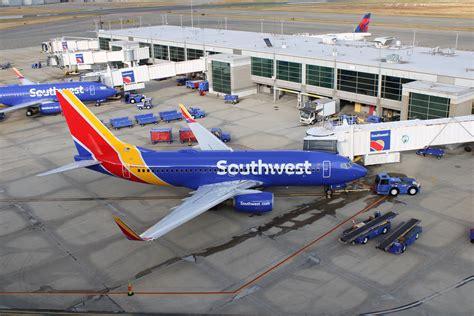
For decades, Southwest Airlines built an empire on a radical idea: keep it simple, keep it friendly, keep it cheap. No seat assignments. No baggage fees. No labyrinth of fare classes engineered to extract incremental dollars. Just open seating, two free checked bags, and a boarding process that felt more like a county fair than a corporate transaction. That formula didn’t just work — it became mythology.
But mythology rarely survives contact with shifting economics.
The airline that once proudly catered to leisure travelers and price-sensitive flyers is now steering into more complex airspace. Southwest’s evolving business product marks one of the most significant strategic pivots in its history, as it moves deliberately toward corporate travelers who demand predictability, premium options, and seamless integration into managed travel systems. This is not cosmetic change. It is structural.
The transformation reveals something deeper about the modern airline industry: simplicity is elegant, but scale demands segmentation.
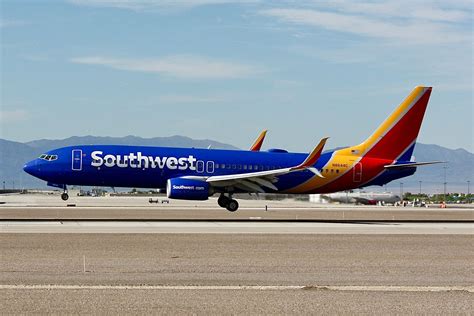
From Low-Cost Icon to Corporate Contender
The pandemic reshaped airline economics in ways that still ripple through balance sheets. Leisure travel rebounded quickly, but the real revenue strength has come from premium demand. Airlines with differentiated cabins and corporate contracts recovered yields faster. Unit costs rose across the board — fuel volatility, labor agreements, airport fees — and suddenly the one-size-fits-all low-cost model looked financially constrained.
Southwest’s leadership has acknowledged this reality openly. Corporate travel managers increasingly require assigned seating, transparent fare structures, refundable options aligned with travel policies, and distribution through global distribution systems (GDS). For years, Southwest resisted much of this infrastructure. It prided itself on independence.
Now, it is leaning into the very mechanisms it once sidestepped.
The shift is not about abandoning its identity. It is about broadening it. The airline wants to move from being “loved by flyers” to being “chosen by travel managers.” That difference is subtle but profound. Affection drives leisure bookings. Compliance drives corporate spend.
The Fare Structure Overhaul: Predictability Replaces Open Chaos
The most visible change is the dismantling of the old fare branding. “Wanna Get Away” tickets symbolized Southwest’s breezy ethos. That language is fading, replaced by a clearer tiered structure ranging from Basic to Choice Extra.
The new structure introduces assigned seating — a concept that once felt almost heretical within Southwest culture. Corporate travel departments value certainty. An employee flying to a morning client meeting needs to know where they will sit. They need to board predictably. They need reimbursement alignment without exceptions.
Under the new system, three seating categories define the onboard hierarchy:
- Standard seats with 31-inch pitch toward the rear cabin.
- Preferred seats forward of the wing, enabling quicker boarding and exit.
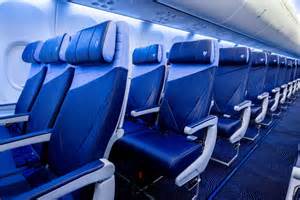
- Extra Legroom seats in the first rows and exit rows, offering up to five additional inches of pitch.
The design is deliberate. Business travelers often prioritize time efficiency and comfort on short-haul routes. Five extra inches of pitch may not sound revolutionary, but in aviation geometry it changes posture, laptop usability, and perceived personal space.
Yet let’s be intellectually honest: this is still economy seating. It is not a dedicated domestic business class cabin.
Extra Legroom Isn’t Business Class — And That Matters
Here lies the strategic tension. Competitors such as Delta Air Lines and United Airlines offer full domestic first-class cabins with wider seats, greater recline, and differentiated service. JetBlue’s Mint product introduces lie-flat seats on select routes. Even ultra-low-cost carriers have carved out quasi-premium front cabins.
Southwest’s Extra Legroom seats increase pitch, but they do not fundamentally alter cabin architecture. The traveler still sits in a narrow-body 3-3 configuration. The soft product remains closer to economy than to premium business class.
For some corporate contracts, that gap is decisive. Travel policies often allow business-class booking without executive exception. A larger seat with genuine separation carries compliance clarity.
Southwest executives have publicly acknowledged this competitive reality and signaled that larger, more premium front-cabin seating is under consideration for at least part of its Boeing 737 fleet. If implemented, that would mark a philosophical turning point: Southwest would no longer be purely single-class.
Managed Travel Infrastructure: Quietly Rebuilding the Back End
While seat pitch grabs headlines, the more consequential shift may be happening behind the curtain.
Southwest now distributes content across the three major global distribution systems and settles through ARC (Airlines Reporting Corporation), aligning with the standard financial workflows of corporate travel management companies (TMCs). This reduces friction. Friction is the silent killer of supplier selection.
For years, Southwest’s partial isolation from GDS channels made it cumbersome for large corporations to integrate fully into policy-managed booking systems. That barrier is dissolving.
The airline has also upgraded its Southwest Business Assist portal. What began as a reporting dashboard has evolved into an operational control center for travel managers.
New capabilities include automated name changes, a contract credit bank for negotiated benefits, streamlined unused fund conversion into UATP workflows, expanded dashboards for top travelers and route analysis, sustainability reporting tools, and enhanced duty-of-care oversight.
This shift is strategic intelligence in action. Corporate buyers don’t simply purchase seats. They purchase administrative efficiency. Each manual exception costs time and money. Automation converts goodwill into structural loyalty.
Partnerships Expand Global Relevance
Southwest has long flown primarily point-to-point domestic routes with select service to Mexico, Central America, and the Caribbean. That geographic limitation constrained corporate appeal for multinational firms.
In 2025, the airline dramatically upgraded its interline partnerships, forming connectivity agreements with carriers including Icelandair, China Airlines, EVA Air, Philippine Airlines, Condor, and most notably Turkish Airlines.
These partnerships expand Southwest’s global footprint without forcing immediate fleet diversification. A traveler can now book itineraries that extend beyond Southwest’s own route map while maintaining coordinated baggage handling and ticketing alignment.
Interlining acts as a bridge strategy. It allows global relevance without committing billions to widebody aircraft or long-haul operational infrastructure. Whether it remains a bridge or becomes the destination is an open strategic question.
Lounges: The Cultural Rubicon
Few symbols represent premium aviation more than the airport lounge. For decades, Southwest avoided this arena entirely. Lounges implied overhead, exclusivity, and stratification — all somewhat at odds with its egalitarian branding.
That resistance is softening.
The airline has secured approval to open its first lounge at Honolulu International Airport, a 12,000-square-foot, two-level space in Terminal 2. Honolulu is an interesting choice. It combines heavy leisure traffic with long flight durations, making pre-departure comfort more valuable.
A single lounge does not create a network. However, leadership has openly stated that a lounge system could anchor a premium credit card offering and deepen loyalty.
If Southwest builds lounges strategically, its strongest candidates are airports where it dominates operations — Chicago Midway, Dallas Love Field, Houston Hobby. Dominance creates leverage with airport authorities and ensures consistent demand density.
Lounges do more than provide snacks and Wi-Fi. They create emotional stickiness. A road warrior choosing between two airlines often weighs pre-flight sanctuary heavily. Behavioral economics favors comfort.
The Long-Haul Frontier: Widebodies and Identity
The most dramatic potential shift would be long-haul international flying. Historically, Southwest’s single-fleet Boeing 737 strategy simplified maintenance, training, and scheduling. It became a case study in operational purity.
Entering long-haul markets would require abandoning that simplicity. A widebody aircraft — likely the Boeing 787 Dreamliner given existing manufacturer ties — would introduce new pilot training programs, maintenance protocols, crew rest requirements, and capital expenditure complexity.
Other global low-cost carriers have embraced this evolution. IndiGo ordered Airbus A350s. flydubai committed to Boeing 787-9 aircraft. flyadeal and flynas invested in Airbus A330-900 widebodies. The global pattern suggests that scale eventually nudges low-cost carriers toward hybridization.
For Southwest, long-haul operations would not simply be network expansion. They would redefine its cost structure and brand perception. A Dreamliner with a differentiated premium cabin would position the airline in direct competition with legacy giants on intercontinental routes.
The risk is enormous. So is the potential reward.
Economics Behind the Evolution
Unit costs in aviation rarely decline structurally. Labor contracts rise. Fuel volatility persists. Airport infrastructure grows more expensive. Revenue segmentation becomes a defensive mechanism.
Premium seating allows airlines to extract higher yield per square foot of cabin space. A few rows of larger seats can dramatically increase revenue density without proportionally increasing cost. Corporate contracts provide predictable demand. Predictability reduces revenue volatility.
Southwest’s pivot reflects these realities. It is not chasing luxury for its own sake. It is engineering resilience.
At the same time, the airline must tread carefully. Its brand equity rests on approachability and transparency. Overcomplicating fare structures or appearing to nickel-and-dime loyal leisure customers could erode trust.
The balancing act is delicate: expand upward without alienating the base.
A Strategic Identity in Motion
Airlines are organisms. They adapt or they shrink.
Southwest once defined itself by what it refused to do: no seat assignments, no lounges, no fare fragmentation. Today, it defines itself increasingly by what it is willing to try.
Assigned seating increases predictability. Extra legroom introduces tiered comfort. Business Assist enhances corporate integration. Interline partnerships extend reach. A lounge pilot hints at premium ecosystem ambitions. Long-haul aircraft remain a speculative but plausible future step.
None of these changes individually transform the airline into a legacy carrier clone. Together, they signal evolutionary momentum.
The aviation industry rewards flexibility more than nostalgia. Markets shift. Travelers’ expectations evolve. Corporate procurement departments demand alignment with compliance systems and sustainability reporting frameworks. Airlines that ignore these demands fade.
Southwest’s journey from a pure low-cost icon to a hybrid corporate contender illustrates a broader truth about strategy: purity is elegant, but adaptability is survival.
If the airline ultimately installs larger front-cabin seats, expands a lounge network across key hubs, and commits to widebody aircraft, historians may look back at this period as the hinge moment. The point when Southwest Airlines stopped merely being the friendly alternative and started positioning itself as a full-spectrum competitor in the premium domestic and international arena.
A company built on simplicity is now embracing complexity with intention. The next decade will determine whether this calculated evolution elevates Southwest into a new strategic altitude — or whether the gravitational pull of its original identity keeps it forever grounded in economy.