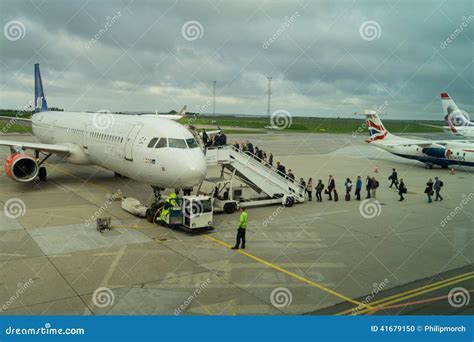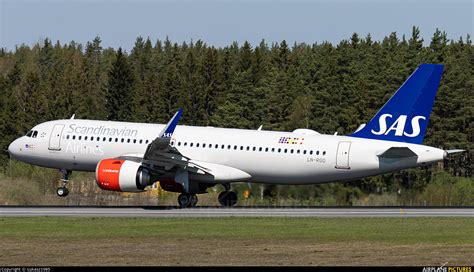
In a landmark development for global aviation, Scandinavian Airlines (SAS) has decisively claimed the title of the world’s most on-time airline for May 2025, outpacing industry stalwarts such as Azul, LATAM, Copa Airlines, Aeromexico, Qatar Airways, Safair, and Iberia. The newly released Cirium On-Time Performance (OTP) Report reveals SAS’s commanding lead in global punctuality rankings, reshaping the competitive dynamics of the airline industry.
The aviation world has taken notice—SAS’s 89.72% OTP rate across more than 22,000 flights is not merely a statistic. It signals a strategic mastery of operational efficiency, route planning, and hub performance. As air travel returns to pre-pandemic traffic levels, reliability is no longer a luxury—it is a defining trait of airline excellence.
SAS’s Precision Sets the Global Standard
Operating from its core hubs in Stockholm Arlanda (ARN) and Copenhagen (CPH), SAS delivered exceptional reliability, culminating in a 99.65% flight completion rate. This figure underscores the airline’s dedication to not just scheduling flights, but actually getting passengers to their destinations without disruption.
The importance of such performance cannot be overstated. As passengers increasingly prioritize punctuality when choosing carriers, SAS has quietly transformed itself into a benchmark of trust. It’s not just about beating competitors—it’s about redefining global standards for reliability in aviation.
Copa Airlines: Latin America’s Model of Efficiency
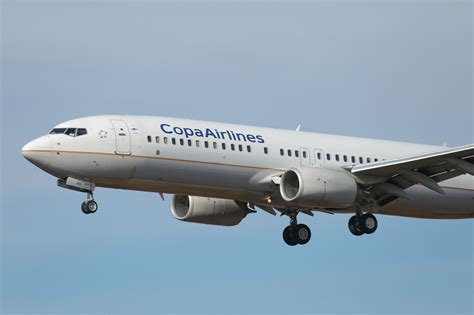
Though SAS leads the global chart, Copa Airlines (CM) out of Panama City (PTY) dominated the Latin American region with an impressive 93.49% on-time arrival rate. This performance, occurring in a region known for operational hurdles like volatile weather and airport congestion, reflects Copa’s strategic hub design and flight scheduling finesse.
Copa’s punctuality cements its position as a critical hub-and-spoke connector across the Americas. Its OTP success in May 2025 is not an isolated achievement but part of a long-term trajectory that could reshape how Latin American aviation is viewed globally.
Safair’s Stellar OTP in Middle East and Africa
Flying under the radar, Safair (FA) posted a staggering 95.22% OTP in the Middle East and Africa, outperforming legacy carriers and newer entrants alike. With operations centralized in Johannesburg (JNB), Safair’s performance sets a new bar for punctuality in a region that has long struggled with infrastructural limitations.
This accomplishment is especially notable considering the airline’s low-cost carrier model, which typically leaves less room for recovery from delays. By achieving such performance metrics, Safair is emerging as an unlikely—but deserving—hero in the race for operational supremacy.
Global Top Five: A Competitive Performance Landscape
Cirium’s May 2025 rankings highlight a tight global race among the most reliable airlines:
- SAS (SK) – 89.72% OTP | Hub: ARN/CPH
- Saudia (SV) – 89.18% | Hub: RUH
- Aeromexico (AM) – 89.06% | Hub: MEX
- Qatar Airways (QR) – 87.48% | Hub: DOH
- Avianca (AV) – 85.81% | Hub: BOG
Each of these carriers has demonstrated not just technical proficiency but also operational discipline, delivering high completion rates in tandem with punctuality. This elite group illustrates that airline success is increasingly being measured by precision, not just by size or route network.
Europe’s Flight Discipline Surges
Europe’s post-pandemic aviation recovery has been anything but uniform. Yet in May 2025, SAS’s achievement was not an anomaly. Iberia Express and Austrian Airlines also reported OTP rates of 89.52% and 88.35% respectively, signaling a broader European movement toward flight punctuality.
This collective performance strengthens Europe’s appeal to business travelers and reinforces consumer trust in the continent’s carriers. In an age of digital booking transparency and user reviews, punctuality translates directly into loyalty and repeat business.
Regional OTP Leaders Shape Global Competition
Across the global aviation map, several carriers stood out for their regional excellence:
- North America: Air Canada (79.06%), Delta (79.03%), Alaska Airlines (78.65%)
- Asia-Pacific: Virgin Australia (85.83%), Thai AirAsia (84.63%), Air New Zealand (82.40%)
- Europe: SAS (89.72%), Iberia Express (89.52%), Austrian (88.35%)
These regional leaders demonstrate that OTP excellence is no longer limited by geography. Whether you’re boarding a flight in Brisbane, Vienna, or Mexico City, operational dependability is becoming a universal brand differentiator.
Airport Efficiency Reinforces Airline Success
While airline OTP is critical, airports themselves play an enormous role in enabling punctual performance. In May 2025, Oslo Gardermoen Airport (OSL) posted the highest on-time departure rate globally at 91.22%. This performance provided critical support to SAS’s success.
Other notable airports include:
- Panama City (PTY) – underpinning Copa’s performance
- Johannesburg (JNB) – reinforcing Safair’s dominance
- Kona International (KOA) – showcasing reliability at smaller, less congested hubs

Why On-Time Performance Now Drives Traveler Choice
In a global airspace that remains volatile from post-pandemic restructuring, OTP is no longer a secondary metric. It has become the defining factor in consumer travel choices. Airlines boasting high OTP rates provide a powerful value proposition: a reduced likelihood of missed connections, fewer hotel cancellations, and a more stress-free travel experience.
From a business perspective, OTP directly impacts cost control and network profitability. Late flights result in crew rescheduling, additional fuel costs, and reduced aircraft turnaround efficiency. Thus, the strategic push toward punctuality is about more than passengers—it’s about survival and growth.
OTP as the New Competitive Benchmark
The Cirium OTP data for May 2025 confirms that airlines that invest in operational precision are reaping both reputational and financial rewards. For SAS, Copa Airlines, and Safair, this month’s performance will likely translate into market share gains, increased passenger loyalty, and expanded route influence.
For legacy carriers trailing behind, the message is clear: OTP is no longer optional. It’s a currency of trust in a world where delays can destroy brand reputation overnight. Passengers have more options than ever—and they’re paying attention.
What Lies Ahead for the Rest of 2025
As the industry moves toward the peak summer travel season, the pressure will intensify. Flight frequencies will rise. Weather disruptions will increase. Airport congestion will test every system. The question now is whether SAS, Copa, and Safair can maintain their momentum.
The Cirium report has thrown down the gauntlet. Global carriers must now choose whether to compete on punctuality or be left behind. Because in 2025, being on time isn’t just a bragging right—it’s a business imperative.