May 2025 proved to be a watershed month for the global business aviation industry. Defying persistent global economic headwinds, the sector demonstrated extraordinary resilience and adaptability, posting double-digit growth in multiple emerging markets. This remarkable upswing wasn’t limited to a single region—it stretched across Africa, Asia-Pacific, and South America, establishing a new phase of expansion in the global business aviation narrative. Meanwhile, North America and Europe, typically more mature and stable, showed modest but meaningful gains, underscoring the industry’s evolving dynamics.
Business Aviation Defies Gravity Despite Economic Uncertainty
In a time marked by inflationary pressures, geopolitical instability, and volatile markets, the global business aviation sector refused to stall. Instead, turbine aircraft activity rose 2.7% year-over-year in May, according to the latest TraqPak data from Argus International. This surge is not merely statistical—it’s directional, pointing to a shift in where and how growth is emerging.
Africa led the pack with soaring traffic, closely followed by accelerating flight activity in the Asia-Pacific and South American regions. These markets collectively saw a dramatic 14% rise in activity, overshadowing the smaller but stable gains of 0.9% in North America and 0.6% in Europe.

This momentum isn’t a fluke. It reflects a transformation in global travel demand, led by rising wealth in non-traditional markets, an increase in remote operational needs, and a hunger for connectivity where commercial aviation often falls short.
North America: A Bedrock of Stability, Quietly Innovating
While the eye-popping growth came from developing regions, North America’s performance deserves attention. The region remains the largest contributor to global business aviation activity. In May, light jets posted a 1.9% increase, with large-cabin jets up by 1.7%. Though midsize jets stagnated, edging down 0.1%, the underlying data shows a more nuanced trend.
The fractional ownership segment—particularly among large-cabin and light jets—saw dramatic growth. Large-cabin fractional operations surged 23.8%, while light jets grew 15.9%. This suggests that affluent corporate clients are doubling down on flexibility and efficiency, prioritizing long-range capability and cost-effective fleet access models.
Conversely, Part 91 (private operations) dropped slightly by 0.2%, and Part 135 (on-demand charters) declined 0.8%. This indicates that while casual or discretionary private flying may be cooling, institutional and high-frequency use is holding firm.
Europe: Modest Growth in a Surprising Turnaround
Europe entered May under a cloud of pessimism, with analysts predicting a 3.6% contraction in business aviation activity. However, the continent delivered a pleasant surprise—registering 0.6% growth instead.
Midsize and large-cabin jets led this quiet revival with 1.5% and 4.8% increases, respectively. This was enough to offset declines in light jets (-2.8%) and turboprops (-1.2%).
This trend indicates a subtle but important shift: Europe’s business travelers are favoring larger, more capable aircraft, likely in response to increased demand for longer intra-European or transcontinental flights. These signs of resilience across traditional economic centers suggest confidence in business continuity, even amid uncertain macroeconomic conditions.
Emerging Markets: The New Epicenter of Growth
The real headline, however, belongs to emerging markets. Africa, Asia-Pacific, and South America aren’t just participating—they’re driving the global rebound.
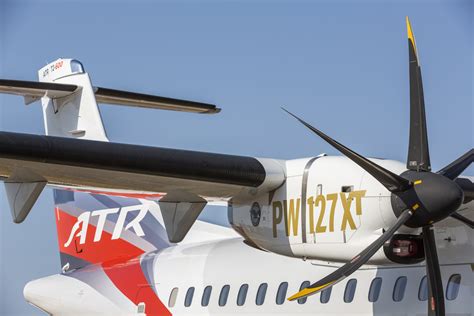
- Turboprops skyrocketed 23.3%, primarily serving regional and remote routes.
- Light jet operations rose 10.1%, ideal for short-haul business travel.
- Large-cabin jets jumped 9.3%, suggesting increased intercontinental mobility.
- Even midsize jets gained 0.8%, reinforcing across-the-board adoption.
Key drivers include countries like Brazil and Australia, which stand out on Argus’ performance heatmap. In Brazil, operators are scaling up regional turboprop services, linking smaller cities to commercial hubs in a nation where terrain and size challenge conventional travel modes. Meanwhile, Australia is enhancing connectivity between its urban centers and remote mining or agricultural outposts, underlining the indispensable role of aviation in national logistics.
This type of growth reflects structural, not cyclical, demand. The rise of new business hubs, the expansion of infrastructure, and increased intra-regional trade are powering this surge. Business jets, especially turboprops and light jets, are filling critical gaps that commercial airlines still cannot serve adequately.
The Strategic Role of Business Jet Resilience
Business aviation continues to occupy a unique strategic niche—one that becomes even more critical during times of uncertainty. While commercial carriers may reduce routes or frequency due to cost pressures, business jets remain agile, serving high-value travelers and mission-critical operations.
Wealthy individuals and corporations aren’t just maintaining their travel patterns—they’re expanding them. Fractional ownership models are gaining traction, lowering the threshold for frequent fliers to enjoy semi-private service with lower operational costs per hour. This appeals especially to mid-size enterprises and emerging-market millionaires who demand premium service without full aircraft ownership costs.
In the context of geopolitics, too, business aviation offers a risk-mitigated alternative. For executives and diplomats navigating unstable regions or time-sensitive deals, business aviation provides not just comfort, but security, speed, and certainty.
Summer Outlook: Optimism Takes Flight
Looking forward, the data continues to project positive momentum. Argus forecasts a 1.1% YOY increase for North America and a 0.4% bump in Europe for June. Emerging markets are expected to sustain their double-digit trajectory, especially in regions like Sub-Saharan Africa, Southeast Asia, and Northern South America.
The rise of jet card programs, shared-ownership platforms, and digital booking interfaces has made private aviation more accessible than ever. New entrants are pushing fractional access into midsize and even large-cabin categories, expanding the potential client base beyond legacy corporate giants.

As business travel redefines itself post-pandemic, agility and adaptability will remain non-negotiable. Business aviation, through its ability to respond rapidly to demand shifts and open new routes, stands out as the mode of choice for the global elite and enterprises seeking edge.
Strategic Implications for Operators and Investors
The implications are clear. Operators must prepare for regional diversification, adapting fleets and staffing to meet localized surges. For investors, the growth pockets in Africa, Asia, and Latin America present opportunities in aircraft leasing, infrastructure development, and digital aviation platforms.
Airports in secondary cities may need expanded FBOs (Fixed Base Operators), hangars, and service facilities. Governments in high-growth zones may look to incentivize private investment in aviation infrastructure, recognizing its potential to catalyze commerce and tourism.
For aviation professionals and stakeholders, the message is unambiguous: business aviation is not just bouncing back—it’s expanding into territories once considered peripheral. The opportunity landscape is shifting—those who follow the data and anticipate regional needs will lead the next phase of growth.
Conclusion: A Global Sky Without Borders
The surge in May’s business aviation activity is no anomaly—it is the beginning of a broader recalibration of where demand lives and how it evolves. As emerging markets accelerate and traditional players hold firm, the global business aviation map is being redrawn in real time.
With its combination of flexibility, resilience, and reach, business aviation stands not as a luxury, but as a necessity—a vital tool for economic progress, strategic connectivity, and corporate agility. The sky is no longer the limit—it’s the launchpad for the next era of global business.