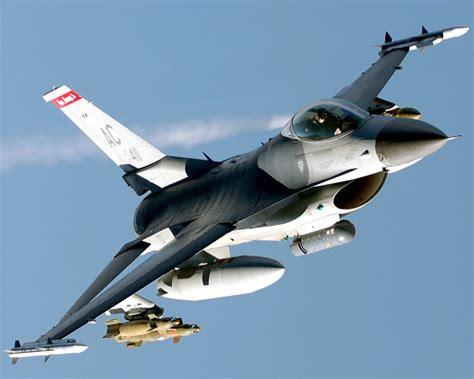
The United States Air Force fields one of the most technologically capable fleets on the planet, yet its most heavily used fighter jet isn’t the stealth-driven F-35 Lightning II or the air-dominance F-22 Raptor. The crown goes to the F-16 Fighting Falcon, a combat-tested multirole platform whose extraordinary longevity and adaptability have cemented its position as the service’s most indispensable workhorse. With a reputation for agility, reliability, and cost-effectiveness, this nearly 50-year-old fighter continues to shape America’s global airpower footprint.
Since entering service in 1979, the F-16 has demonstrated a performance legacy difficult to match. Its remarkable 76:1 kill ratio, achieved across decades of combat operations, stands as one of the strongest testimonies to its effectiveness. This level of dominance was not a one-era accomplishment but the result of continuous upgrades, structural improvements, and evolving mission adaptability.
Why the F-16 Remains the Air Force’s Most Numerous Fighter Jet
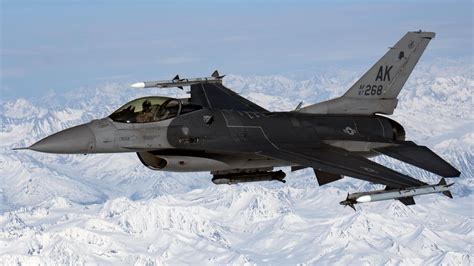
Across the Air Force inventory today, roughly 840 F-16s remain in active service—more than any other fighter platform by a wide margin. To put this into perspective, several entire national air forces operate fewer total aircraft than the number of F-16s flown by the United States alone. Globally, more than 4,550 units have been produced for 28 allied nations, making it not just a U.S. staple but one of the world’s defining combat aircraft.
The F-16’s widespread international adoption stems from the same traits that sustain its dominance within the U.S. fleet: adaptability, affordability, and long-term upgrade potential. Its aerodynamic design, relaxed static stability, and fly-by-wire controls created a fighter that was revolutionary in the 1970s and still hard to beat in modern air-to-air maneuvering.
Inside the Modernized F-16V Block 70/72
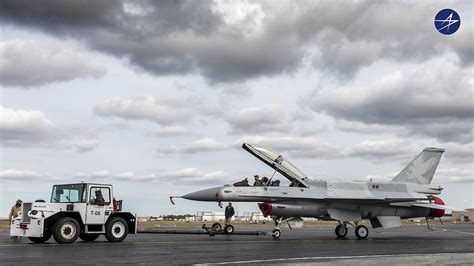
The latest iteration, the F-16V Block 70/72, elevates the legacy platform into a highly advanced 21st-century combat system. This model incorporates Northrop Grumman’s APG-83 AESA radar, a sensor suite designed to dramatically enhance situational awareness, tracking precision, and electronic warfare resilience. It brings fifth-generation-inspired capability to a fourth-generation airframe, enabling pilots to detect and engage threats with dramatically improved clarity.
Power comes from a single Pratt & Whitney F100-PW-229 or General Electric F110-GE-129 turbofan engine, allowing the aircraft to reach Mach 2 (1,535 mph) while maintaining impressive range and mission endurance. With a combat radius that extends to 2,002 miles, the Fighting Falcon remains fully capable of long-distance strike missions and rapid-response air defense tasks.
Weapon flexibility has always been a defining characteristic. The modern F-16 can deploy a vast arsenal: beyond-visual-range air-to-air missiles, anti-ship systems, laser-guided bombs, GPS-guided munitions, and specialized payloads for suppression of enemy air defenses. Its internal 20 mm M61A1 Vulcan cannon—a staple since the earliest models—provides close-in lethality that complements its precision strike capabilities across modern battle environments.
Why a Nearly 50-Year-Old Fighter Still Leads the Fleet
The continued reliance on the F-16 is not sentiment or inertia—it is a strategic choice rooted in performance and practicality. The aircraft delivers a blend of speed, firepower, range, and maneuverability that remains astonishingly relevant. While stealth jets like the F-35 carry cutting-edge advantages, they also come with higher operational costs and narrower deployment roles. The F-16 fills the gaps with a multirole versatility unmatched across the Air Force’s fighter inventory.
In an era of rapidly evolving threats, the F-16’s persistent modernization ensures its survival. Its avionics, sensors, targeting technology, and survivability upgrades allow it to fight as effectively today as it did during its Cold War debut. This combination of lethal capability, global interoperability, and cost-effective sustainment explains why the United States continues to operate the F-16 at scale—and why retirement remains nowhere in sight.
The Fighting Falcon’s future is secure not because of nostalgia but because of objective capability. As long as it continues receiving advanced upgrades and remains structurally sound for decades of additional service, the Air Force’s most prolific fighter jet will continue soaring above the modern battlefield as an enduring symbol of American airpower.