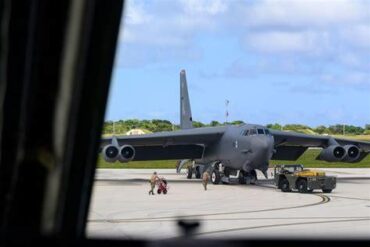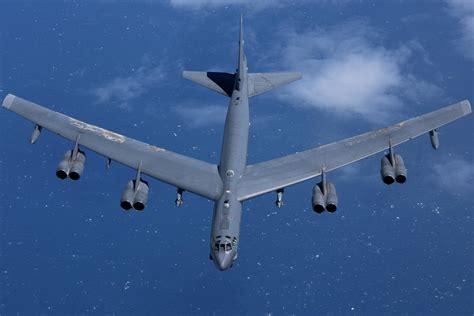
The Boeing B-52 Stratofortress, one of the most formidable long-range strategic bombers ever constructed, continues to dominate the skies in 2026—more than 70 years after its maiden flight. With its unmistakable silhouette, eight-engine configuration, and a combat record stretching across generations, the B-52, affectionately nicknamed the BUFF (“Big Ugly Fat Fellow”), is still the cornerstone of America’s strategic bomber force.
As of 2026, 76 B-52H Stratofortresses remain in the United States Air Force fleet, with 58 actively flying and the remaining 18 held in reserve. Despite the aircraft’s vintage, it remains central to the Air Force’s doctrine due to its range, payload capacity, versatility, and now, its transition into the B-52J variant.
The Modern B-52 Fleet: An Aging Titan Still in Its Prime
All B-52s flying today are of the B-52H variant, which rolled off Boeing’s production line in the early 1960s. Though the aircraft is entering its eighth decade of service, its sheer utility ensures its continued relevance. Outfitted with upgraded digital avionics, a planned engine modernization, and enhanced weapon capabilities, the B-52 is no relic—it is a living, flying platform of transformation.

The active fleet is managed across three wings:
- 2nd Bomb Wing at Barksdale AFB, Louisiana
- 5th Bomb Wing at Minot AFB, North Dakota
- 307th Bomb Wing (Reserve), also at Barksdale
Each wing carries distinct historical significance and current strategic duties. These units not only maintain the B-52’s combat readiness but also sustain its critical role in America’s nuclear deterrence strategy.
From Cold War to Future War: Why the B-52 Still Matters
The resilience of the B-52 lies in its modular airframe. Boeing’s original design from the 1950s unintentionally gifted future generations a platform so over-engineered that it could accommodate nearly every conceivable upgrade. The aircraft’s longevity has made it a strategic asset, rather than a liability.
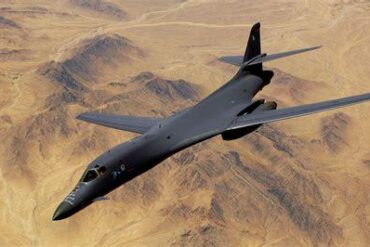
Where the B-1 Lancer and B-2 Spirit have struggled with high maintenance costs and complex stealth materials, the B-52’s maintenance requirements are simpler. It is not stealthy, but it doesn’t have to be. Instead, it acts as a “missile truck”, capable of launching stand-off weapons from hundreds of miles away.
B-52J: The Next Evolution of the Stratofortress
A comprehensive modernization effort is underway, transforming the B-52H into the B-52J. The most significant upgrade is the Rolls-Royce F130 engine, chosen under the Commercial Engine Replacement Program (CERP). These engines are 30% more fuel-efficient and are expected to last the aircraft’s remaining lifespan without a single overhaul.
The new engines, derived from the BR700 commercial line, already power the Air Force’s C-37 and E-11 BACN platforms, streamlining logistics and training. The F130s also improve fuel economy and allow the aircraft to carry heavier payloads over longer distances.

Alongside new engines, the B-52J will feature:
- Glass cockpits replacing analog instruments
- Link 16 communication systems
- A brand-new Active Electronically Scanned Array (AESA) radar
- Reconfigured pylons to carry hypersonic weapons and next-gen cruise missiles
These modifications future-proof the aircraft into the 2050s, aligning with the Air Force’s high-low mix strategy, where the B-52 serves as the low-cost, high-availability counterpart to the B-21 Raider.
The Numbers Behind the Legend
Built between 1952 and 1962, a total of 744 B-52 Stratofortresses were produced, including prototypes. While most have been scrapped, a select few remain stored at Davis-Monthan AFB’s Boneyard in Tucson, Arizona.

An estimated 10 to 12 airframes are preserved in various stages:
- Type 1000: Long-term storage, ready for full regeneration
- Type 2000: Parts reclamation for active fleet
- Type 3000: Flying Hold status, with systems maintained for rapid activation
Reactivating a stored B-52 is a multi-year process. Crews perform ferry flights to Barksdale, followed by full disassembly and overhaul at Tinker AFB, Oklahoma. Each revived airframe is brought to the same combat-ready configuration as the rest of the fleet.
Where the Buff Lives: Strategic Bomb Wings of 2026
The 2nd Bomb Wing remains the largest and most storied B-52 wing. Based at Barksdale AFB, it provides global strike capability and houses the bulk of training missions. Its three active squadrons—11th, 20th, and 96th Bomb Squadrons—boast combat pedigrees dating back to World War I.
Meanwhile, Minot AFB is home to the 5th Bomb Wing, integral to America’s nuclear alert posture. Known as the Guardians of the Upper Realm, they uphold a legacy of 24/7 deterrent readiness established during the Cold War. The 5th’s strategic location in North Dakota also provides advantageous launch corridors in northern polar vectors.

Supporting the active-duty force, the 307th Bomb Wing, or “The Long Rangers,” stands as the only Reserve unit operating B-52s. These veteran aviators deliver training and maintain nuclear certification standards, ensuring depth and redundancy in the Air Force’s bomber enterprise.
Strategic Relevance in a Changing World
Despite its age, the B-52 remains a symbol of American airpower projection. Whether flying deterrence missions in Europe, freedom-of-navigation patrols in the Pacific, or show-of-force flights across the Middle East, the BUFF is a visible and deliberate expression of military reach.
This visibility is not without purpose. While stealth aircraft like the B-2 and B-21 are designed to be undetectable, the B-52 sends a message precisely because it can be seen. That deliberate transparency reinforces international alliances and broadcasts commitment without ambiguity.
The B-52’s massive payload and flexibility allow it to carry nuclear bombs, precision-guided conventional weapons, naval mines, and now, hypersonic weapons. The upcoming integration of the AGM-183A Air-Launched Rapid Response Weapon (ARRW) and other next-generation munitions will push its strike envelope even further.
The Two-Bomber Future: B-52 and B-21
As part of the Air Force’s strategic modernization, a two-platform bomber force is emerging:
- The B-21 Raider, the stealthy, survivable next-gen bomber
- The B-52J, the persistent, cost-effective, and massively upgradable workhorse
With B-1 and B-2 platforms gradually being retired, the USAF plans to field at least 100 B-21s, possibly growing to 200. These will operate alongside the 76 modernized B-52s, each filling complementary roles in peacetime deterrence, crisis response, and potential conflict scenarios.
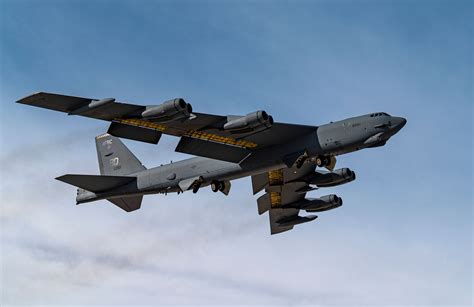
This strategy balances technological superiority and operational scalability. While B-21s will penetrate denied airspace with minimal radar signature, the BUFFs will saturate adversary defenses with missile volleys from standoff distances, or loiter to provide long-duration strike capacity.
Costs and Commitment: Sustaining the BUFF into the 2050s
The cost of keeping the B-52 flying is not negligible. The entire upgrade program is projected to cost between $11 billion and $15 billion, including $2.6 billion for new engines. While the program has experienced some delays and overruns, the cost-benefit calculus remains favorable.
A new bomber platform would cost significantly more and take years—if not decades—to field at scale. The B-52’s proven reliability, existing infrastructure, and enormous airframe capacity make it the more prudent choice.
The B-52 will likely continue flying until at least 2050, surpassing the 100-year mark. No other combat aircraft in history has approached that kind of operational longevity.
Conclusion: The Sky Isn’t Letting Go of the B-52 Yet
With 76 airworthy B-52s and a modernization program that breathes new life into the airframe, the Stratofortress is not merely a Cold War survivor—it is a critical node in 21st-century warfare. From Minot to Barksdale, from desert boneyards to hypersonic arsenal, the B-52 is poised to fly well into the middle of the century.
What began as a deterrent against the Soviet Union now evolves into a launch platform for tomorrow’s most advanced weaponry. The BUFF isn’t just still flying. It’s still winning.