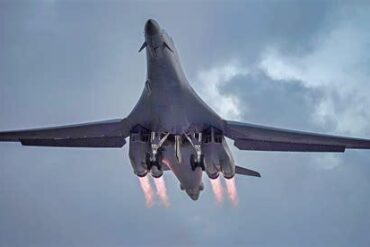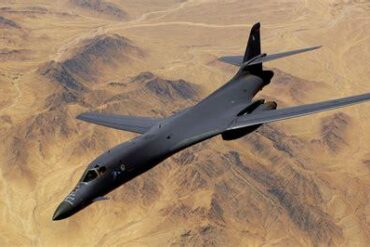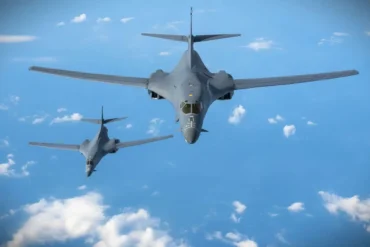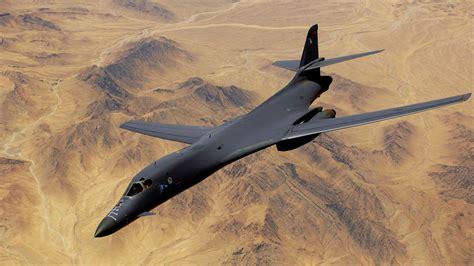
The Rockwell B-1B Lancer occupies a strange, almost poetic place in American airpower. It is neither the oldest bomber still flying nor the stealthiest, yet it remains one of the most visually arresting and operationally demanding aircraft the United States Air Force has ever fielded. With its variable-sweep wings, massive internal payload, and reputation for flying brutally low and fast, the B-1 was built for a kind of warfare that no longer fully exists—but has not entirely disappeared either.
Questions about how many B-1 bombers are left are not academic. They sit at the intersection of strategy, budget reality, industrial capacity, and the unforgiving physics of metal fatigue. Every remaining Lancer represents both combat power and a growing maintenance liability, a balancing act the Air Force has been wrestling with for more than a decade.
As of 2026, the B-1 fleet is smaller, older, and more fragile than at any point in its operational life. Yet it still flies global missions, still drops live weapons, and still fills a niche no other bomber can replicate quite the same way. Understanding how many B-1s remain—and what “remain” really means—requires peeling back layers of retirements, accidents, boneyard recoveries, and future planning.
The B-1’s story is not just about numbers. It is about tradeoffs made under pressure, technological ambition colliding with operational wear, and a bomber that refuses to fade quietly.
The Rockwell B-1 Lancer: A Bomber Born From Strategic Anxiety
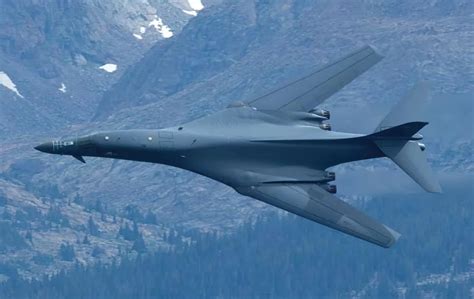
The B-1 program emerged from a moment when the United States feared losing its ability to penetrate advanced Soviet air defenses. Earlier solutions like the XB-70 Valkyrie assumed that speed and altitude alone could guarantee survival. Surface-to-air missiles shattered that assumption almost as soon as it was made.
Instead of flying above threats, the B-1 was designed to hide beneath them. The original B-1A could sprint at Mach 2.2, then drop to treetop level where radar coverage fractured against terrain. When the B-1B entered service, raw speed was traded for survivability. The redesigned airframe reduced radar cross section dramatically compared to the B-52, making the Lancer far harder to track even if it could no longer outrun everything.
This design choice defined the aircraft’s fate. Flying low and fast meant brutal structural loads. Variable-geometry wings demanded enormous hydraulic systems. Fuel lines flexed constantly. Every mission aged the jet faster than a traditional high-altitude bomber. The B-1 was devastatingly capable—but it paid for that capability with maintenance hours measured in the thousands per flight hour.
How Many B-1 Bombers Were Originally Built
Only 104 B-1 airframes ever existed. Four were B-1A prototypes used for testing and development. The remaining 100 were production B-1B Lancers, delivered to the Air Force beginning in the mid-1980s.
At its peak, the operational fleet hovered near that 100-aircraft mark. Over time, accidents, structural fatigue, and budget-driven retirements steadily reduced the total. By the late 2010s, the Air Force had stabilized the inventory at 62 B-1Bs, a number it attempted to sustain while waiting for the next-generation bomber to arrive.
That holding pattern ended in 2021.
The 2021 Drawdown That Redefined the Fleet
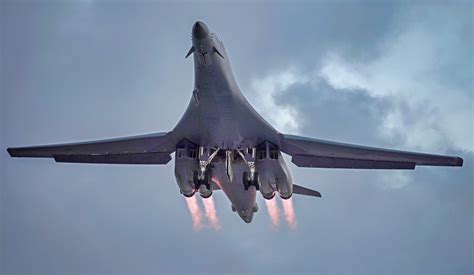
In 2021, the Air Force made a decisive move: 17 B-1B Lancers were retired at once, shrinking the fleet from 62 to 45 aircraft. This was not a symbolic cut. It was an acknowledgment that the B-1 could no longer be treated as a long-term solution.
Air Force Global Strike Command framed the decision bluntly. Decades of nonstop deployments—particularly in the Middle East—had consumed the structural life of the aircraft faster than planners ever intended. Bringing many jets back to “as-new” condition would have required tens of millions of dollars per airframe, with no guarantee hidden problems would not surface later.
The retired aircraft were sent to Davis-Monthan Air Force Base, home of the AMARG boneyard. Some were placed in reclaimable storage. Others were immediately stripped for parts, sacrificed so the remaining fleet could keep flying.
The Boneyard Reality: Storage Does Not Mean Survival
The phrase “in storage” hides uncomfortable truths. At Davis-Monthan, aircraft exist in multiple states. Some are carefully preserved, engines sealed, systems protected. Others are effectively organ donors, their wings, avionics, and landing gear removed to support operational jets.
As of 2026, approximately 27 B-1B Lancers reside at the boneyard. On paper, that sounds like a reserve. In practice, only a handful were ever intended to fly again. The Air Force classified four as Type 2000 storage, meaning they could theoretically be resurrected if needed.
Even that assumption proved optimistic.
Pulling Bombers Back From the Dead
Two B-1s have already proven that retirement is not always final. In April 2024, a Lancer nicknamed Lancelot was pulled from storage to replace an aircraft lost to a catastrophic engine fire during maintenance. In July 2025, another jet—Rage, serial number 86-0115—followed the same path.
Rage’s return was particularly revealing. Engineers determined it was faster, cheaper, and lower-risk to restore a stored bomber than to complete an extensive structural repair on an active jet. That calculus speaks volumes about the condition of the remaining fleet.
These recoveries did not increase the total inventory. They merely prevented it from shrinking further.
Mishaps and Attrition: The Quiet Erosion
The B-1 has suffered roughly 10 to 12 total losses over its lifetime, including one prototype. Since the 2021 drawdown, at least one more aircraft was lost in January 2024 at Ellsworth Air Force Base, reducing the effective fleet even further.
Low-level flight leaves no margin for error. Bird strikes, hydraulic leaks, and engine fires become existential threats when an aircraft is racing 200 feet above the ground at near-transonic speed. Every accident is not just a loss—it is irreplaceable, because no new B-1s will ever be built.
So, How Many B-1 Bombers Are Left in 2026?
Officially, the United States Air Force lists 45 B-1B Lancers in its inventory. Congressional documents published in January 2026 reaffirm that number, citing data current through April 2024.
Operationally, the picture is murkier. Maintenance cycles, structural inspections, and regeneration efforts mean fewer than 45 are available at any given moment. Some estimates place the number of mission-capable jets closer to 40, occasionally dipping below that threshold.
Still, from an inventory standpoint, 45 is the number that matters.
Why the B-1 Is the First Bomber to Go
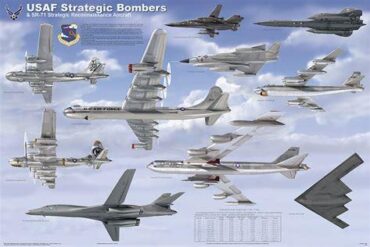
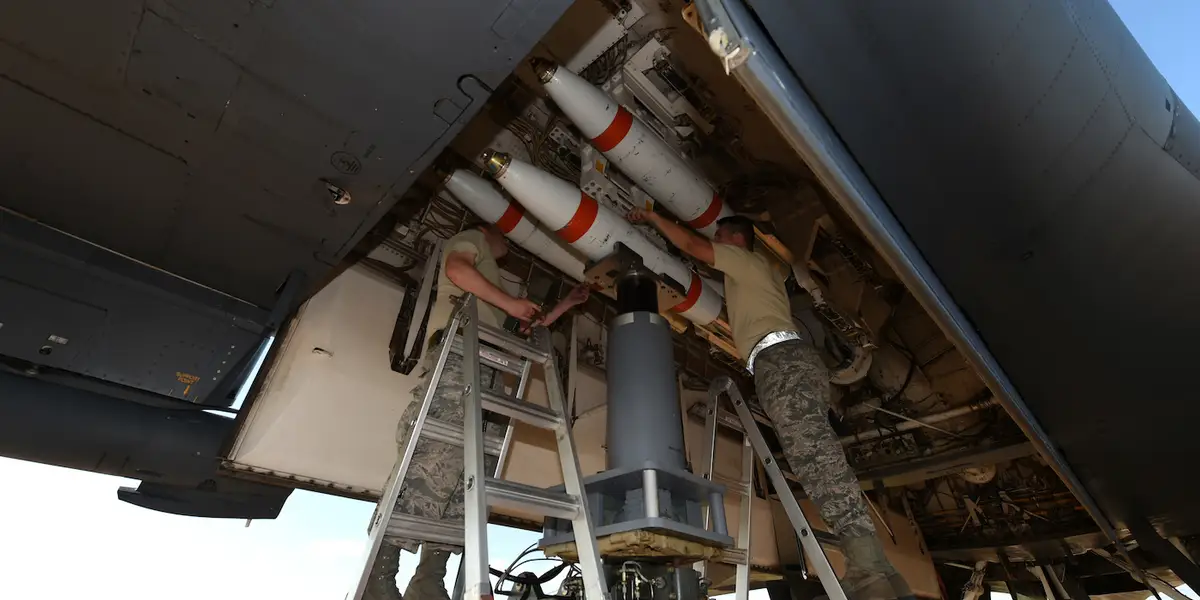
The Air Force operates three bombers today: the B-52, the B-2, and the B-1. Of the three, the B-1 is the most maintenance-intensive and the least survivable in a high-end conflict against modern integrated air defenses.
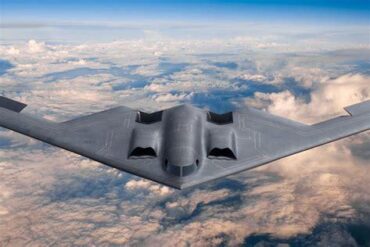
The B-52, despite its age, can launch stand-off weapons from extreme range. The B-2 remains stealthy enough to penetrate defended airspace. The B-1 sits uncomfortably between those worlds—no longer stealthy enough, yet too expensive to keep viable indefinitely.
That is why it is first on the chopping block.
The B-21 Raider and the Countdown Clock
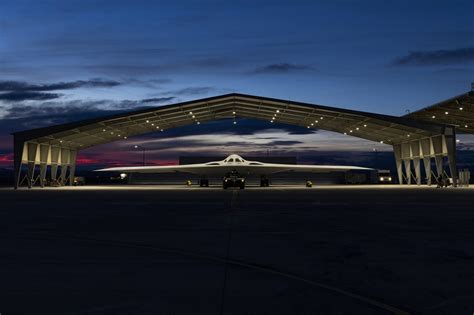
The arrival of the B-21 Raider seals the B-1’s fate. As of early 2026, two B-21s are already flying in test configuration. The Air Force plans to ramp production to roughly 10 aircraft per year, with a long-term goal of fielding more than 100 Raiders.
Budget documents show no additional B-1 retirements until fiscal year 2028. Then the pace accelerates: nine bombers in 2028, ten more in 2029. If that trajectory holds, only 26 B-1s will remain by the end of the decade.
At that point, retirement becomes a formality.
When Will the Last B-1 Fly?
Based on current plans, the final B-1B Lancers are expected to retire around fiscal year 2032. That timeline is flexible, dependent on B-21 production and the health of the remaining airframes. A major grounding or unexpected structural discovery could accelerate the end.
What is certain is that the B-1 will not linger. Unlike the B-52, it was never designed for a century-long service life. It burned bright, hard, and fast—and now it is paying the price.
A Fleet Measured in Months, Not Decades
So how many B-1 bombers are left? The most accurate answer is 45 in inventory, fewer in practice, and diminishing every year. Each remaining Lancer represents a calculated risk, a trade between near-term capability and long-term sustainability.
The B-1 will be remembered not just for its numbers, but for its audacity. It was a bomber built to cheat physics, hug the earth, and dare defenses to keep up. As it fades from the flight line, it leaves behind lessons written in titanium spars, hydraulic scars, and a legacy that refuses to be small.