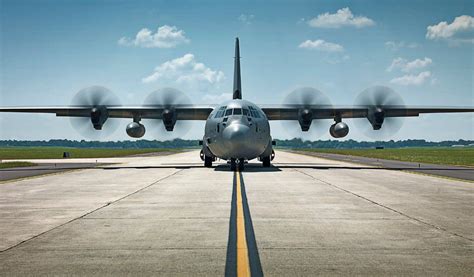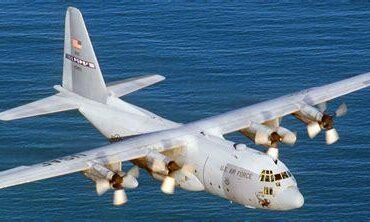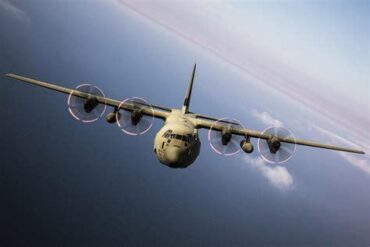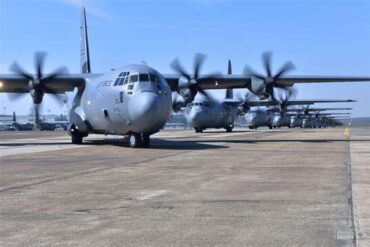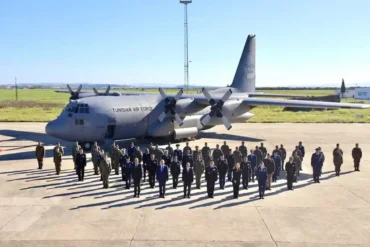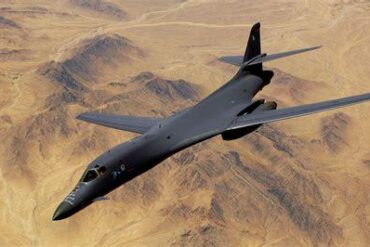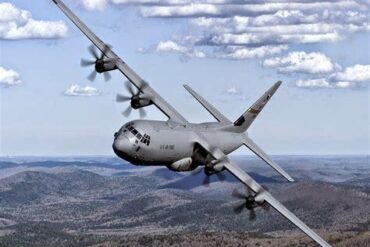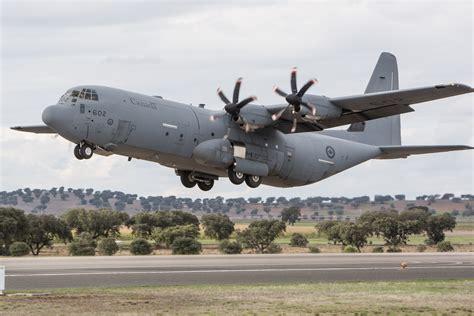
The Lockheed C-130 Hercules remains one of the most enduring and versatile military aircraft in aviation history. As of 2025, it continues to fly missions across the globe, with the latest figures estimating around 1,100 C-130 Hercules aircraft in active service. The aircraft, renowned for its rugged reliability and extraordinary adaptability, has become a staple in both combat and civilian roles over nearly seven decades. But with thousands built and hundreds decommissioned, stored, or destroyed, the question remains: how many C-130 Hercules are actually left?
The Enduring Legacy of the C-130 Hercules
First introduced in 1956, the C-130 Hercules was designed to perform as a tactical transport aircraft, capable of operating on unprepared runways in remote areas. Originally created for the U.S. Air Force, its success led to widespread adoption across over 60 nations. Its design has proven so robust and adaptable that production has continued uninterrupted for over 70 years, making it the longest continuously produced military aircraft in history.
Its operational roles have expanded dramatically over time. Besides tactical transport, the Hercules has been configured for aerial refueling (KC-130), maritime patrol, search and rescue (HC-130), electronic warfare, firefighting, and even gunship operations (AC-130). Its ability to evolve has kept it relevant in every major conflict and humanitarian mission since the Vietnam War.
Total Production Numbers and Key Variants
Over 2,800 Hercules aircraft have been produced to date, including military and civilian variants. Here’s a breakdown of the main families:
- C-130A/B/E/H (legacy variants): ~2,271 units
- C-130J Super Hercules: 560+ units
- L-100 civilian Hercules: 114 units
- LM-100J (civilian Super Hercules): Limited, possibly within C-130J count
The C-130J Super Hercules, introduced in the late 1990s, has modern avionics, engines, and longer range. It’s currently in production and is set to remain Lockheed Martin’s primary tactical airlifter for decades. It represents the future of the Hercules platform, even as older variants age out or are replaced.
Current Global Fleet: Operational Aircraft
As of 2025, it’s estimated that approximately 1,100 C-130 Hercules aircraft are operational worldwide. This includes both legacy models and modern C-130Js, spread across military and civilian operators. However, the bulk of these aircraft are held by a few major countries, with the United States operating nearly half of the global fleet.
United States Inventory:
- United States Air Force (USAF): ~460 C-130s (including C-130H, C-130J, AC-130, WC-130J, MC-130J)
- United States Marine Corps (USMC): 74 KC-130J tankers
- United States Navy (USN): ~35 aircraft (including tankers and support variants)
- United States Coast Guard (USCG): 25 HC-130 variants (9 HC-130Js and 18 HC-130Hs)
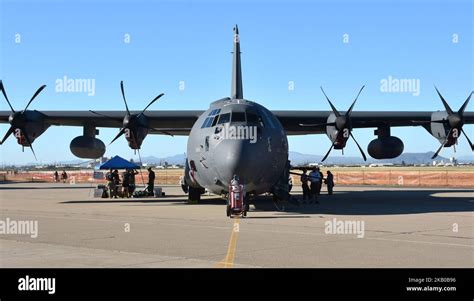
The USAF alone accounts for over 40% of the operational fleet. Specialized aircraft such as the AC-130J Ghostrider, MC-130J Commando II, and WC-130J Weatherbird serve distinct mission profiles from special operations to weather reconnaissance.
Storage, Scrapping, and Survivability
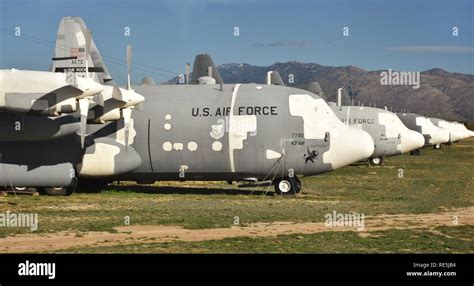
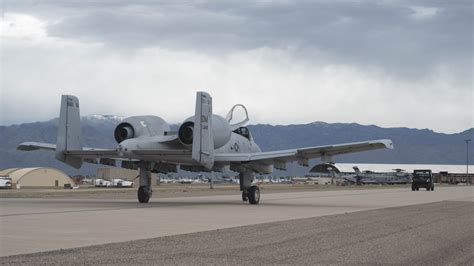
While 1,100 aircraft are flying, many more sit idle. Estimates suggest that 400 to 500 Hercules aircraft are in storage, awaiting potential reactivation or parts salvage. The largest concentration of these is at the Davis-Monthan Air Force Base boneyard in Arizona, which houses more than 314 C-130s of various generations.
These stored aircraft include:
- Retired legacy C-130s awaiting scrapping or parts cannibalization
- Aircraft grounded due to age or maintenance costs
- Sanction-affected fleets, such as Iran’s, which are mostly unserviceable
- Partially grounded fleets in nations like Egypt, which still uses aging C-130H aircraft
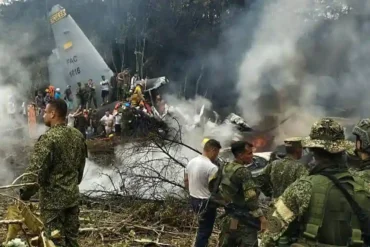
Approximately 500 to 600 aircraft have been completely written off due to combat losses, accidents, or age-related scrapping. During the Vietnam War alone, the U.S. lost about 70 Hercules aircraft in combat.
Civilian and Commercial Use
Although primarily a military aircraft, the C-130 Hercules also has civilian derivatives, most notably the L-100 and LM-100J. Only 114 of the former were built, and production of the newer LM-100J has been limited.
Lynden Air Cargo, based in Anchorage, Alaska, is one notable civilian operator. Its fleet of ten L-100-30s provides logistics support, including government and military contracts, often flying into remote and hazardous environments where few aircraft can safely operate.
International Operators and Transition Trends
The Hercules remains widely used internationally, but some militaries are beginning to transition to newer platforms, such as the Embraer C-390 Millennium. Countries like Portugal, Hungary, Brazil, Austria, and South Korea have ordered the C-390, though deliveries remain relatively low.
However, the Hercules still has a strong foothold. In 2024, Australia announced the procurement of 20 new C-130Js to replace its current fleet of 12 aging Super Hercules. Vietnam is also in negotiations to acquire the type, and Egypt placed orders for at least two new C-130Js despite maintaining older models.
Modernization and Extended Lifespan
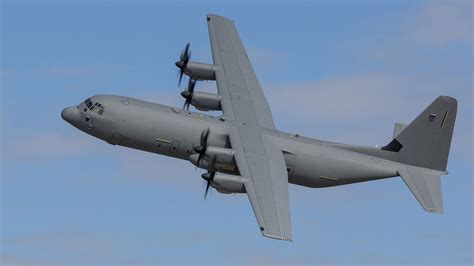
In June 2025, Lockheed Martin announced a major breakthrough in wing structure testing. The results showed that the C-130J’s wing structure exceeded expectations by 40%, increasing the projected Equivalent Flight Hours (EFH) from 90,000 to 122,500 EFH. This effectively doubles the aircraft’s design life, providing operators with a longer return on investment and greater mission endurance.
The C-130J remains in service with 28 military operators across 23 nations, and demand shows no signs of waning. The aircraft’s unique balance of payload, runway flexibility, range, and modular roles makes it irreplaceable in many theatres.
The Future: A Legacy That Refuses to Fade
Despite competition and aging airframes, the C-130 Hercules is poised to continue flying well into the 2040s and beyond. With over 2,800 units built, an active fleet of 1,100 aircraft, and a continually running production line, its future is more secure than ever. Each time a Hercules retires, another takes its place — often newer, stronger, and more capable.
The C-130 is not just an aircraft; it’s a global symbol of reliability, adaptability, and endurance. Its unparalleled service history, wide operational range, and cross-role versatility ensure that it remains the backbone of tactical airlift operations worldwide.
In a world where next-gen platforms come and go, the Hercules stands as a true aviation icon — evolving but never obsolete.