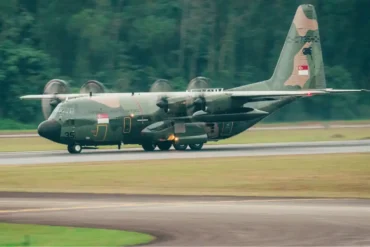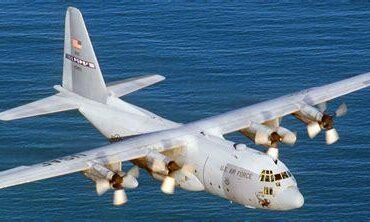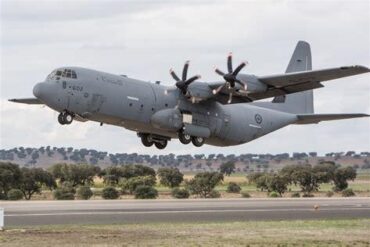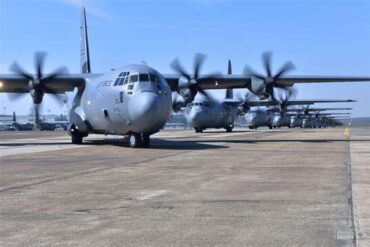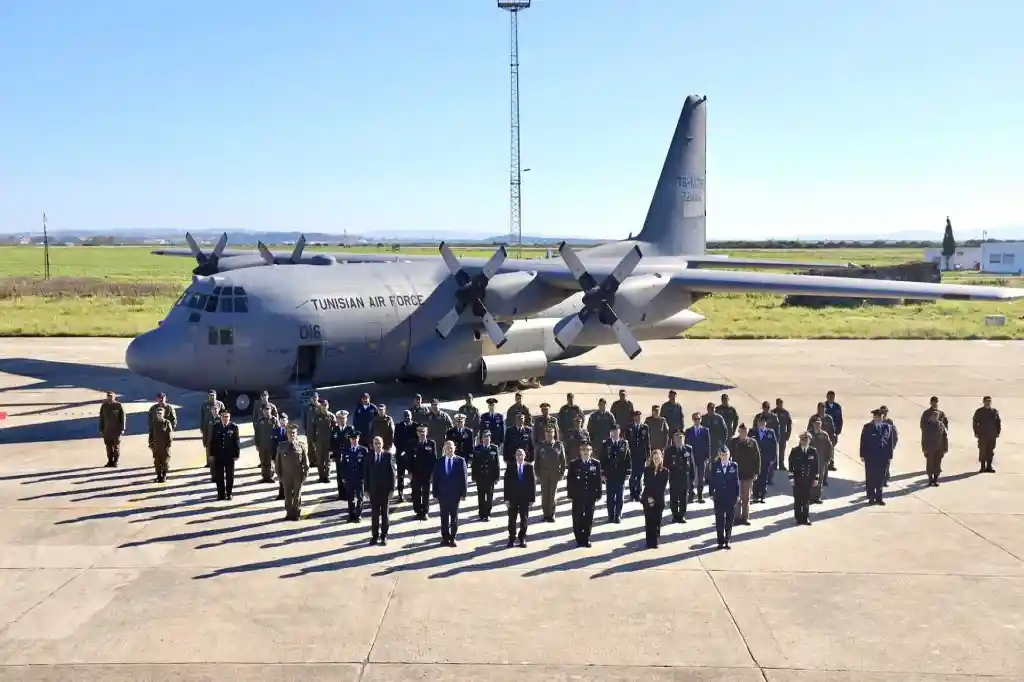
The United States has delivered a fourth C-130H Hercules tactical transport aircraft to the Tunisian Air Force, reinforcing Tunisia’s medium airlift capacity and underscoring the deepening military cooperation between Washington and Tunis. The aircraft was formally handed over on January 13, 2026, during a ceremony at Sidi Ahmed Air Base, a key hub for Tunisian air operations. This transfer builds on previous C-130 deliveries since 2021 and reflects a sustained focus on improving Tunisia’s ability to conduct transport, security, and rapid response missions across North Africa and the wider Mediterranean region.
The delivery was confirmed by the U.S. Embassy in Tunisia, which highlighted the aircraft’s role in supporting a broad spectrum of missions, from routine logistics and joint exercises to humanitarian assistance and regional contingency operations. The timing and symbolism of the ceremony emphasized continuity rather than a one-off gesture. This was not merely an aircraft handover but another step in a long-running effort to modernize and stabilize Tunisia’s air mobility capabilities in an increasingly complex security environment.
Senior civilian and military officials from both countries attended the event, signaling its strategic importance. Among them were U.S. Ambassador Bill Bazzi, Tunisian Minister of National Defense Khaled Sehili, Chief of Staff of the Tunisian Air Force General Mohammed Hajem, U.S. Air Force international affairs official Kelli Seybolt, and Brigadier General Shawn Holtz of U.S. Africa Command. Their presence reinforced the message that airlift capacity is viewed as a cornerstone of Tunisia’s defense readiness and interoperability with partner nations.
Strengthening Tunisia’s Tactical Airlift Backbone
Medium tactical airlift occupies a critical niche for the Tunisian Armed Forces. Tunisia’s geography, bordered by Libya and Algeria and facing the central Mediterranean, places a premium on rapid internal mobility and regional reach. The addition of a fourth C-130H directly increases the availability of aircraft capable of moving troops, equipment, and supplies on short notice, particularly into areas with limited infrastructure.
Unlike strategic jet transports, the Hercules is optimized for flexibility rather than speed. It can operate from short, semi-prepared runways, making it well suited to dispersed operations and austere environments. For Tunisia, this translates into improved support for border security missions, counterterrorism operations, disaster response, and multinational exercises conducted with U.S., European, and African partners.
Officials explicitly linked the delivery to an expansion of Tunisia’s available airlift capacity, rather than a replacement of existing aircraft. This distinction matters. Increasing fleet depth allows the Tunisian Air Force to sustain operations over longer periods, rotate aircraft through maintenance cycles more efficiently, and respond simultaneously to domestic and regional taskings. In practical terms, it reduces operational risk by ensuring that airlift does not hinge on a small number of airframes.
A Bilateral Framework Built Over Years
This transfer follows earlier C-130 deliveries in June and November 2024, confirming that the program is part of a structured, multi-year cooperation framework rather than an ad hoc decision. Since 2021, the United States has steadily provided Tunisia with additional airlift assets, training support, and sustainment assistance aimed at preserving long-term operational viability.
Bilateral military cooperation between the two countries has increasingly emphasized capacity building rather than headline-grabbing acquisitions. Transport aircraft may lack the glamour of fighter jets, but they quietly enable everything else. Exercises, peacekeeping deployments, humanitarian missions, and internal security operations all depend on reliable air mobility. The Hercules, with its mature logistics ecosystem, fits neatly into this philosophy.
For the United States, supporting Tunisian airlift capacity also serves broader regional objectives. A capable and self-sufficient Tunisian Air Force can respond more effectively to crises without immediate external intervention, contributing to regional stability and reducing pressure on allied forces. This aligns with U.S. Africa Command’s long-standing emphasis on enabling partner nations rather than substituting for them.
The Tunisian Air Force and Its Evolving Fleet
The Tunisian Air Force operates a mixed fleet of fixed-wing and rotary-wing aircraft designed to meet a wide range of missions, including transport, training, surveillance, and operational mobility. Over the past decade, Tunisia has pursued incremental modernization, focusing on platforms that offer practical utility rather than cutting-edge novelty.
Recent acquisitions illustrate this approach clearly. Tunisia has inducted Textron Aviation C-208B Grand Caravan EX aircraft configured for intelligence, surveillance, and reconnaissance (ISR) missions, complete with night vision capability and a comprehensive support package valued at approximately $54 million. These aircraft enhance situational awareness along borders and coastal areas, complementing the transport role of the C-130 fleet.
Pilot training has also been strengthened through the acquisition of Beechcraft T-6C Texan II trainer aircraft. The first four of eight were delivered in July 2023 and assigned to a squadron at Sfax Air Base, supporting both basic flight training and operational familiarization missions along the southern border. Together, these investments form a coherent force structure in which the C-130H plays a central logistical role.
The C-130 Hercules: A Proven Global Workhorse
Few military aircraft have achieved the longevity and ubiquity of the Lockheed C-130 Hercules. Developed in the early 1950s and entering service in 1956, the Hercules was designed from the outset to solve a specific problem: how to move meaningful payloads into and out of short, unimproved airfields. The solution was a high-wing, four-engine turboprop aircraft with rugged landing gear and a rear loading ramp, a configuration that has proven remarkably enduring.
More than 2,700 C-130 aircraft have been produced worldwide, serving in dozens of air forces and performing roles that extend far beyond basic transport. Over time, the platform has been adapted for aerial refueling, search and rescue, maritime patrol, special operations, and humanitarian relief. Despite technological advances, the core airframe architecture has remained consistent, a testament to the soundness of the original design.
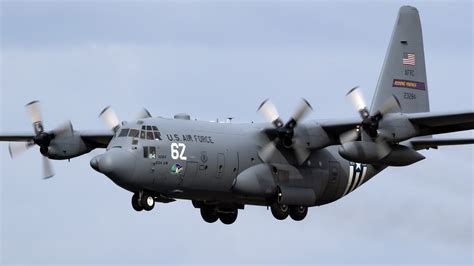
The Hercules’ global popularity is not accidental. It combines respectable payload capacity with manageable operating costs and an unmatched ability to function in challenging environments. For air forces with limited budgets but demanding operational requirements, it represents a pragmatic balance between capability and sustainability.
Why the C-130H Variant Still Matters
The C-130H variant occupies a particularly important place within the Hercules family. Introduced in the mid-1970s as an evolution of the earlier C-130E, it incorporated Allison T56-A-15 turboprop engines, offering improved reliability and performance. Structural reinforcements increased payload margins and extended service life, while avionics upgrades were progressively integrated over time to keep the aircraft relevant.
Although production of the C-130H ended in the mid-1990s, the variant remains widely operated. Its appeal lies in its balance. It offers more capability than early models while avoiding the higher acquisition and sustainment costs associated with the newest C-130J variants. For Tunisia, which already operates Hercules aircraft, the H-model integrates seamlessly into existing training, maintenance, and logistics frameworks.
Performance and Payload Capabilities
From a performance perspective, the C-130H is firmly optimized for tactical and regional missions. It can reach a maximum speed of approximately 589 km/h at 20,000 feet, with a service ceiling of 23,000 feet while carrying substantial payloads. The maximum takeoff weight for C-130E and H variants is around 69,750 kg, enabling the transport of heavy vehicles, engineering equipment, or large volumes of supplies.
Short takeoff and landing performance remains one of the aircraft’s defining strengths. The C-130H can operate from runways far shorter than those required by jet-powered transports, allowing access to remote or damaged airstrips. This capability is particularly valuable for humanitarian assistance and disaster relief missions, where infrastructure may be limited or compromised.
Inside the Hercules: Cargo Flexibility by Design
The internal design of the C-130H reflects decades of operational refinement. Its cargo hold features a flat, reinforced floor with integrated tie-down points and a hydraulically operated rear ramp. Measuring roughly 12.5 meters in length, 3.12 meters in width, and 2.74 meters in height, the hold can accommodate standard NATO pallets, light armored vehicles, or specialized mission modules.
The rear ramp supports both roll-on/roll-off loading and airborne delivery operations, including parachute airdrops of cargo and personnel. Seating configurations are modular, allowing the aircraft to carry up to 92 troops or 64 fully equipped paratroopers. This adaptability explains why the basic internal layout has changed little over decades; it simply works.
Long-Term Impact on Tunisian Operations
The newly delivered C-130H joins a Tunisian Hercules fleet that includes older C-130B/H aircraft as well as newer C-130J models delivered between 2013 and 2015. Within this mix, the H-model aircraft form the numerical backbone of Tunisia’s medium transport capability. Their continued operation is supported by established maintenance practices, readily available spare parts, and accumulated institutional knowledge.
By adding another airframe, Tunisia gains not just capacity but resilience. Aircraft availability improves, maintenance schedules become more flexible, and the air force can sustain higher operational tempos without overextending individual platforms. Whether moving troops, delivering aid, or supporting multinational exercises, the fourth C-130H strengthens Tunisia’s ability to act quickly and independently when circumstances demand it.
In strategic terms, the transfer reinforces a simple but powerful truth: in modern military operations, mobility is leverage. With this latest delivery, Tunisia gains more of that leverage, and the long-serving Hercules once again proves why it remains indispensable well into its seventh decade of service.