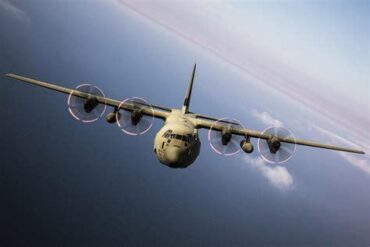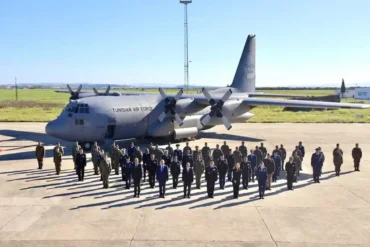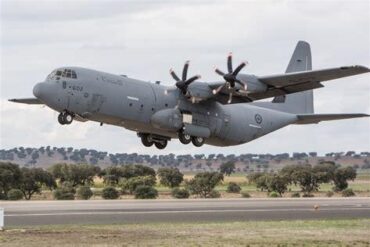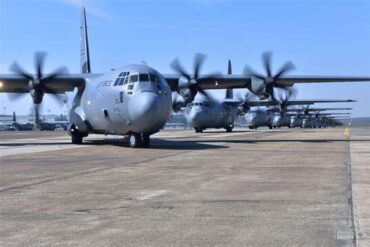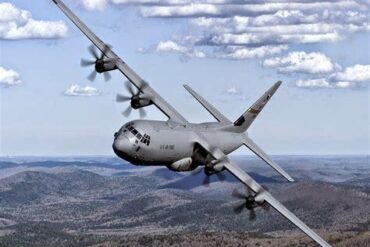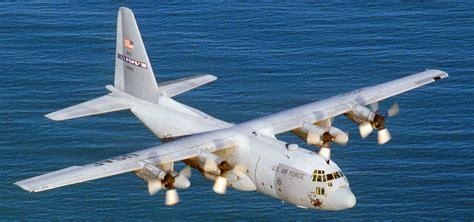
The Lockheed C-130 Hercules stands as a monumental achievement in military aviation—a testament to enduring design, adaptability, and mission reliability. Since its debut in December 1956, the C-130 has become the backbone of tactical airlift operations for more than 60 countries, evolving through dozens of variants to meet changing military and humanitarian needs.
The Hercules program has defied typical aircraft lifespans. Over 2,500 units have been produced, and it remains in continuous production today—70 years after its first flight. From airlifting paratroopers to serving as a missile-launching platform, the C-130’s operational versatility is unparalleled.
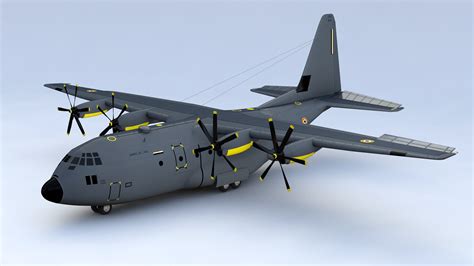
Design Origins Rooted in Korean War Needs
In 1951, the United States Air Force issued a General Operational Requirement (GOR) for a next-generation tactical transport aircraft, driven by lessons learned during the Korean War. The goal was to develop an aircraft capable of carrying 92 troops or 64 paratroopers, featuring a rugged build and a rear loading ramp for rapid deployment.
Lockheed’s proposal, the Model 82 (L-206), triumphed over submissions from Boeing and Douglas, leading to the birth of the YC-130 prototype, which first flew on August 23, 1954. By 1956, the initial C-130A entered service, equipped with Allison T56 turboprop engines that significantly outperformed prior piston engines. Early modifications like the C-130D variant with skis for Arctic operations and wing tank enhancements for extended range demonstrated the design’s adaptability from the outset.
Advancements in the B and E Series
Lockheed quickly built upon the original C-130A model. In 1959, the C-130B introduced center-wing fuel tanks, four-bladed propellers, and an AC electrical system, offering better efficiency and mission flexibility. Experimental versions tested innovations like blown control surfaces for improved maneuverability.
By 1962, the C-130E brought substantial upgrades: external Sargent Fletcher tanks, T56-A-7A engines, and structural reinforcements that enabled higher payload capacity and range. This model also introduced the KC-130 aerial refueling tanker, broadening the Hercules’ strategic utility. The C-130G, meanwhile, was tailored for the U.S. Navy with a higher gross weight rating, underscoring the airframe’s customizability.
C-130H and Export Successes
Perhaps the most widely produced variant, the C-130H, launched in 1964 with T56-A-15 engines, redesigned wings, and updated avionics. Its stretched version, the H-30, improved troop and cargo capacities, while the H3 subvariant introduced glass cockpit technology.
Export variants like the C-130K, also known as the Hercules C.1 and C.3 in Royal Air Force service, further demonstrated global demand. Notably, the W.2 meteorological reconnaissance version, nicknamed Snoopy, played a critical role in atmospheric data collection.
Special Mission Variants and Unconventional Roles
Few aircraft can rival the C-130’s operational diversity:
- MC-130 Combat Talon: Designed for special forces insertion under adverse conditions.
- EC-130 Commando Solo/Compass Call: For psychological operations and electronic warfare.
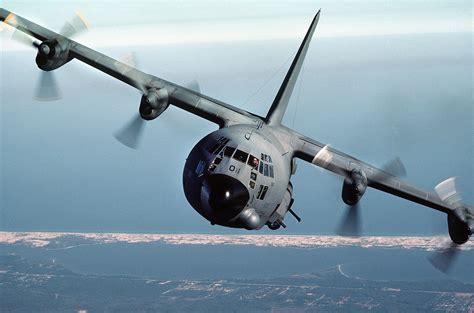
- AC-130 Gunship: Armed with side-firing cannons for close air support.
- HC-130: Dedicated to search and rescue missions.
- RC-130 and L-100: Roles ranging from reconnaissance to civilian cargo transport.
C-130J Super Hercules: A Modern Marvel
The modern C-130J Super Hercules, launched in the 1990s, embodies decades of innovation. It features:
- Six-bladed composite propellers
- Rolls-Royce AE 2100D3 turboprops
- Digital glass cockpit
- Reduced crew requirements
- Improved climb and range capabilities
Pioneered by earlier experimental platforms like the HTTB (High Technology Test Bed) in the 1980s, the C-130J integrates fly-by-wire controls, enhanced situational awareness, and robust electronic warfare suites.
Recent innovations include the AMP (Avionics Modernization Program) and NP2000 propeller system, which introduced eight-blade propellers for better fuel efficiency and thrust. In 2021, the Hercules even demonstrated its role in Rapid Dragon, an airdropped missile launcher concept, setting the stage for JDAM-XR integration.
Global Operational History and Combat Proven Record
From the jungles of Vietnam to the deserts of the Middle East, the C-130 has left an indelible mark on global military history:
- Vietnam War: Supported Blind Bat night surveillance missions, Commando Vault bunker-buster drops, and Agent Orange chemical delivery.
- Entebbe Raid (1976): Enabled Israel’s high-stakes hostage rescue.
- Falklands War (1982): Used by Argentina for long-range support.
- Operation Desert Storm (1991) and Enduring Freedom (2001): Delivered frontline logistics and special operations support.
- Indo-Pakistani Conflict (1965): C-130s were used in an improvised bombing role.
- Franco-German Joint Squadron (2021): Highlighted multinational cooperation.
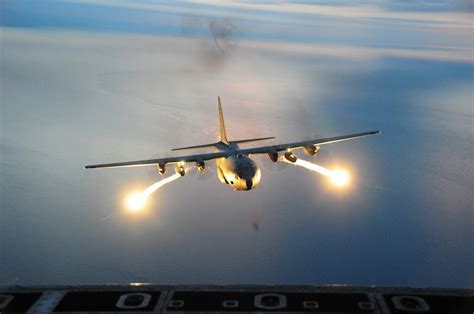
Domestic Roles: Beyond the Battlefield
The Hercules has also served in numerous domestic emergencies. During the 2010 Deepwater Horizon oil spill, specially fitted C-130s sprayed dispersants over the Gulf of Mexico for five weeks. In 2017, the aircraft played a critical role in controlling mosquito populations following Hurricane Harvey through aerial insecticide missions.
Additionally, the Modular Airborne FireFighting System (MAFFS), introduced in the 1970s, converted C-130s into airborne firefighting platforms. These aircraft can carry up to 3,000 gallons of retardant, assisting in wildfire containment across North America.
What Comes Next: Replacement and Future Concepts
In 2010, the USAF initiated a Capability Requirements and Feasibility Initiative (CRFI) seeking a future airlifter with nearly 190% of the C-130’s payload. Concepts like the AMST and Speed Agile STOL demonstrators explored short takeoff and landing designs for future platforms.
While no direct replacement has entered production, the C-X program targets 2030s deployment, signaling the beginning of a new generation of airlift technology. Until then, continued C-130J production and retrofits ensure the Hercules will remain vital for years to come.
Conclusion: A Legacy Cemented in Steel and Sky
The Lockheed C-130 Hercules is more than a military aircraft—it is a global workhorse, an engineering legend, and a strategic asset. Its remarkable longevity, expansive mission portfolio, and continuous innovation define it as one of the most successful aircraft in aviation history.
From Arctic research missions to night-time close air support and humanitarian airlifts, the Hercules has redefined tactical airlift, one sortie at a time. As modern warfare and climate response evolve, so too will the C-130, reinforcing its legacy well into the 21st century.