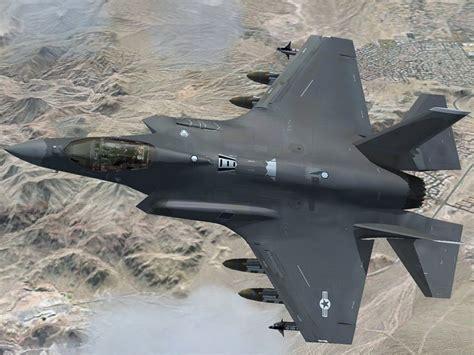
The Joint Strike Fighter (JSF) program represents one of the most ambitious and technically complex military aviation projects of the 21st century. Designed to deliver a multinational, multirole combat aircraft, the JSF aimed to unify diverse operational needs across the United States and allied forces under a single, adaptable fighter platform. Led by the U.S. Air Force, Marine Corps, and Navy—with critical involvement from the United Kingdom, Italy, Canada, Australia, the Netherlands, Denmark, Norway, and formerly Turkey—the program set out to replace a wide array of aging fighter, strike, and ground-attack aircraft, including the F-16 Fighting Falcon, A-10 Thunderbolt II, F/A-18 Hornet, and AV-8B Harrier.
The Origins and Conception of the JSF
The genesis of the JSF can be traced to the 1990s defense consolidation era, when the Department of Defense (DoD) sought to streamline military procurement and create more cost-efficient weapon systems. The program emerged from the fusion of DARPA’s Common Affordable Lightweight Fighter (CALF) initiative and the Joint Advanced Strike Technology (JAST) program. CALF, initially conceived to replace the F-16 for the Marine Corps, explored advanced Short Takeoff and Vertical Landing (ASTOVL) technologies. After critical evaluations, Paul Bevilaqua’s lift-system design revealed that CALF could complement the USAF’s F-22 Raptor, accelerating its inclusion in a broader initiative.
On January 27, 1994, the JAST office was formally established to pursue a family of next-generation aircraft adaptable for multiple combat roles. By November 1995, the United Kingdom had become a pivotal partner, contributing 10% of the funding for the concept demonstration phase. Canada followed suit in 1997, solidifying the program’s international framework.
The Competitive Duel: Boeing vs. Lockheed Martin
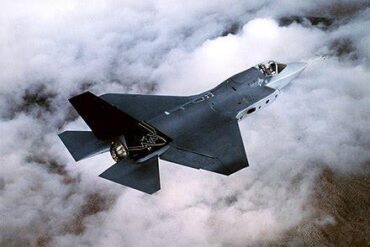
The JSF competition drew in the titans of American aerospace. Boeing proposed its X-32, featuring a reheated turbofan engine that could reconfigure for direct-lift thrust-vectoring. Lockheed Martin countered with the X-35, employing an innovative shaft-driven lift fan (SDLF) to power its Short Takeoff and Vertical Landing (STOVL) capabilities. Other concepts from McDonnell Douglas and Northrop Grumman were rejected early in the process.
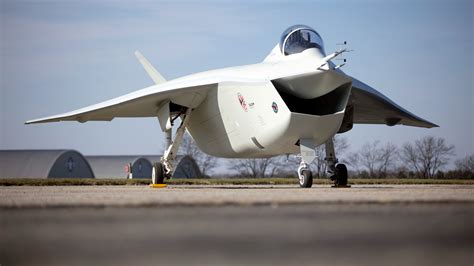
By November 16, 1996, both Boeing and Lockheed Martin received $750 million contracts to develop demonstrators for Conventional Takeoff and Landing (CTOL), Carrier-Based (CV), and STOVL configurations. The trials were rigorous: the X-35B famously achieved a sub-500 ft takeoff, transitioned to supersonic flight, and completed a vertical landing—a critical performance benchmark that Boeing’s X-32B struggled to meet.
Selection and Program Expansion
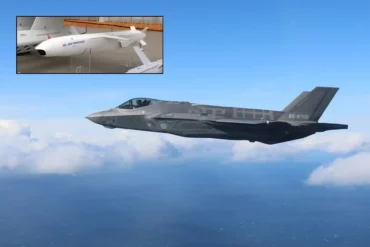
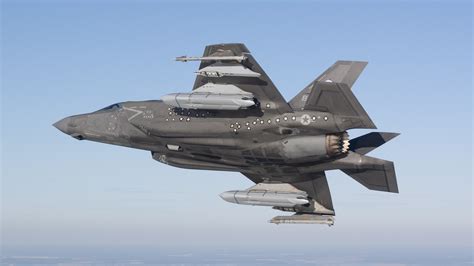
The watershed moment came on October 26, 2001, when Lockheed Martin’s X-35 was declared the winner, leading to the aircraft’s designation as the F-35 Lightning II. The decision hinged primarily on Lockheed’s superior lift-fan STOVL design, which outperformed Boeing’s direct-lift approach, particularly in addressing hot-air exhaust recirculation issues. Joint funding poured in from international partners, with Turkey initially playing a significant role until its removal from the program in July 2019 following its acquisition of the Russian S-400 defense system.
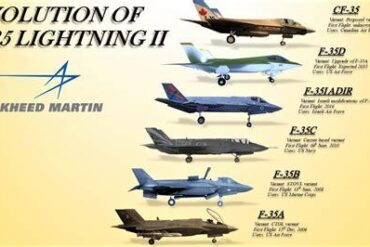
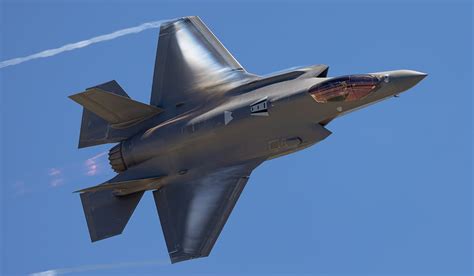
The F-35 family features three core variants: the F-35A (CTOL) for the USAF, the F-35B (STOVL) for the Marine Corps, and the F-35C (CV) for the Navy. All variants are powered by the formidable Pratt & Whitney F135 engine, with the F-35B using the F135-PW-600 configuration for vertical lift capability. On April 6, 2009, the DoD announced plans to procure 2,443 aircraft—cementing the JSF’s status as the backbone of U.S. air power for decades to come.
Mounting Challenges: Espionage, Cost Overruns, and Performance Criticism
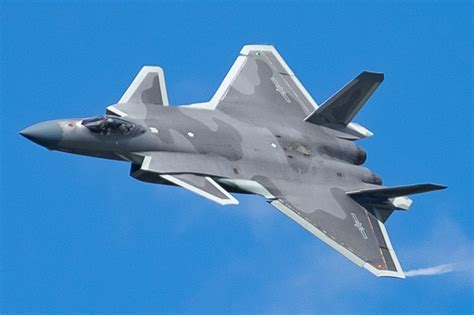
The JSF’s trajectory has not been without severe turbulence. In April 2009, the Wall Street Journal disclosed that alleged Chinese cyber spies had breached the JSF database, extracting terabytes of sensitive data. These security lapses raised alarms that the stolen information may have influenced the development of China’s Chengdu J-20 and Shenyang FC-31 fighters.
Cost overruns further marred the program’s reputation. On February 1, 2010, Secretary of Defense Robert Gates removed Major General David R. Heinz from his leadership role and suspended $614 million in performance bonuses for Lockheed Martin. By mid-February, Deputy Secretary William Lynn announced a full-year delay, while the Government Accountability Office (GAO) reported staggering cost growth: F-35A unit costs had escalated from $50 million (2002) to $74 million (2010) in constant dollars. Canada’s $45 billion, 42-year commitment was thrust into political contention, particularly during the 2015 federal election, where a promise was made to reconsider the F-35 acquisition.
Performance concerns also emerged prominently. While media outlets sensationalized RAND Corporation simulations, misreporting adverse air-combat outcomes for the F-35, defense insiders cautioned against dismissing these challenges. USAF Maj. Richard Koch remarked candidly about the limitations, emphasizing the aircraft’s restricted air-dominance payload. Aviation Week and other industry experts raised critical questions about the F-35’s touted capabilities, challenging claims that it was “400% more effective” than legacy fighters.
A Lasting Legacy Amid Complexity
Despite its controversies, the JSF program has profoundly reshaped modern air combat doctrine and defense-industrial collaboration. The F-35’s unmatched sensor fusion, stealth, and network-centric warfare capabilities symbolize a leap toward fully integrated battlefield dominance. Additionally, the program has pioneered new paradigms in multinational defense procurement, emphasizing shared technological baselines and joint sustainment strategies across participating nations.
However, the experience has also imparted valuable cautionary lessons. The challenges of balancing divergent operational requirements, managing spiraling costs, and safeguarding sensitive technologies have influenced subsequent defense programs—most notably, the Future Vertical Lift (FVL) initiative, which has adopted a more open-ended and modular approach to minimize the pitfalls seen with JSF.
Conclusion
The Joint Strike Fighter program stands as a testament to the ambitions—and complexities—of modern military aviation. While the road has been marked by innovation, setbacks, and intense scrutiny, the F-35 Lightning II continues to redefine aerial warfare, serving as a potent symbol of both technological progress and the enduring challenges inherent in multinational defense collaborations.