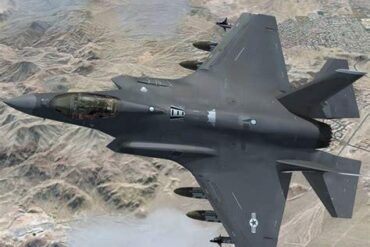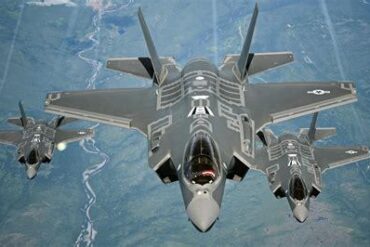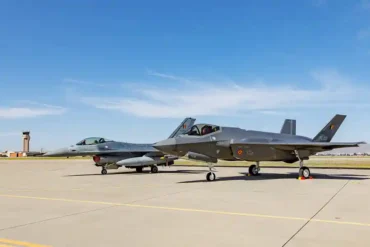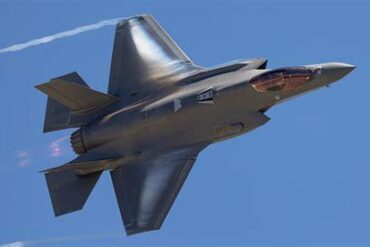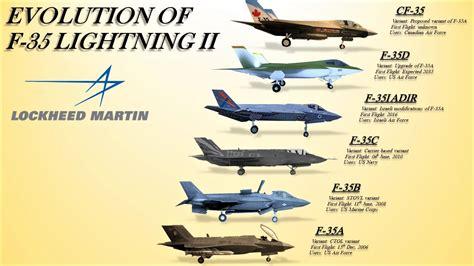
The F-35D has become one of the most intriguing subjects in modern military aviation discussions — not because it exists, but because of what it represents. While Lockheed Martin has never officially designated an F-35D variant, the name has evolved as a shorthand for potential next-generation upgrades and experimental configurations that could transform the F-35 Lightning II into a “Ferrari-class fighter jet.” These conceptual developments promise to bridge the technological gap between fifth-generation and sixth-generation air dominance platforms, aiming to deliver 80% of NGAD’s performance at 50% of its cost.
Understanding the F-35D Concept
The F-35D label originated from informal discussions within defense circles exploring the natural evolution of the F-35 series. Historically, fighter aircraft progress through incremental advancements — A/B variants often evolve into C/D versions, incorporating enhanced avionics, engines, and stealth capabilities. The F-16C/D and F/A-18C/D exemplify this evolutionary pattern. Similarly, speculation about the F-35D emerged as experts envisioned how the Lightning II could mature beyond its current three variants:
- F-35A: The conventional takeoff and landing version for the U.S. Air Force.
- F-35B: The short takeoff/vertical landing (STOVL) version for the U.S. Marine Corps.
- F-35C: The carrier-capable version designed for the U.S. Navy.
The hypothetical F-35D stands as a symbol of evolutionary ambition—an aircraft that integrates advanced propulsion, sensor fusion, and enhanced stealth shaping without the massive expense of building an entirely new airframe.
Early F-35D Concepts and Canceled Projects
The idea of an F-35D variant first gained traction in 2007, when the U.S. Air Force explored a short takeoff and landing (STOL) model optimized for close air support (CAS) missions. This proposed variant would have filled a unique operational niche, bridging the gap between the F-35B and A-10 Warthog. However, development costs and reduced commonality with the F-35B led to the project’s cancellation.
A subsequent concept envisioned an “F-35D Penetrating Counter-Air” model. This aircraft featured larger wings for extended range, expanded internal fuel storage, and a new F136 Alternate Engine co-developed by GE Aerospace and Rolls-Royce. Producing over 40,000 pounds of thrust, the F136 promised higher speed and efficiency but introduced a logistical problem: reduced compatibility across existing F-35 fleets. As costs climbed, this too was shelved.
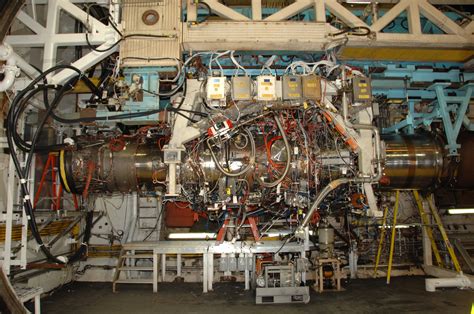
These canceled projects demonstrate the U.S. Air Force’s recurring interest in a more capable, flexible F-35—one that could surpass mission constraints and redefine multirole performance.
Technological Vision: From Fifth to Fifth-Plus Generation
Lockheed Martin’s current “Ferrari F-35” proposal, sometimes nicknamed the F-35D, represents a fifth-generation-plus evolution of the Lightning II. This conceptual model aims to integrate advanced systems developed during Lockheed’s Next Generation Air Dominance (NGAD) program participation.
Key proposed upgrades include:
- Next-Gen Integrated Core Processor (ICP) offering exponentially faster computing power for real-time threat analysis.
- Panoramic Cockpit Display, expanding pilot situational awareness and data visualization.
- Passive Infrared Radar System, capable of detecting enemy aircraft without active radar emissions.
- Advanced Electronic Warfare Suite capable of suppressing enemy air defenses more effectively.
- Enhanced Stealth Geometry, with refined radar-absorbent materials reducing the radar cross-section even further.
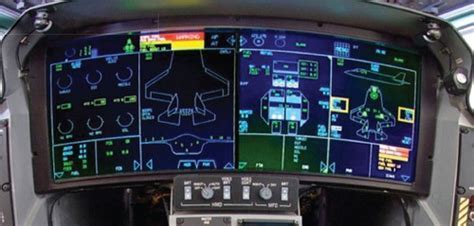
Lockheed Martin CEO James Taiclet referred to this iteration as a “Ferrari version” of the fighter — a high-performance derivative offering superior stealth, range, and situational dominance.
The Ferrari F-35D: Bridging Two Generations
The so-called Ferrari F-35D concept embodies a marketing and engineering philosophy often summarized as “80 percent of a 6th-gen aircraft at 50 percent of the cost.” In essence, the F-35D would serve as a cost-effective bridge between today’s Lightning II and tomorrow’s NGAD platforms.
This conceptual fighter would share design DNA with the NGAD F-47, recently awarded to Boeing, but utilize Lockheed’s proven F-35 framework as a foundation. Lockheed’s engineers propose to integrate classified NGAD technologies, potentially including AI-assisted targeting systems, networked sensor fusion, and autonomous wingman drone control capabilities.
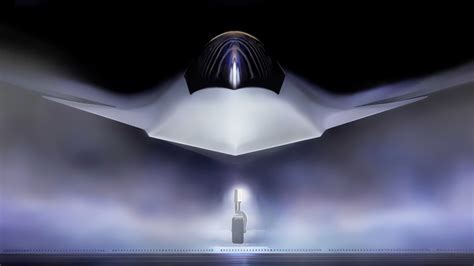
Taiclet confirmed that parts of this research stem from government-funded R&D investments for both F-35 and NGAD development programs. This co-funding structure means that some technologies already in prototype testing could feasibly migrate into future F-35 production blocks, potentially labeled as Block 5 or “D” configuration.
Cost and Feasibility
Lockheed Martin’s Ferrari proposal also raises the question of affordability. With projected unit costs reaching $150 million per aircraft, the F-35D risks pricing itself out of range for foreign military sales (FMS) customers. Currently, the F-35A averages around $82.5 million per unit, while the F-35C reaches roughly $103 million.
| Variant | Role | Approx. Unit Cost (USD) | Primary Users | Status |
|---|---|---|---|---|
| F-35A | Conventional takeoff | $82.5 million | USAF, Japan, Israel | Active |
| F-35B | STOVL | $108 million | USMC, UK, Italy | Active |
| F-35C | Carrier operations | $103 million | US Navy | Active |
| F-35D (Concept) | Upgraded stealth & NGAD tech | $150 million (est.) | TBD | Conceptual |
While the F-35D’s performance potential is alluring, such pricing could limit production to U.S. units or strategic allies rather than broader export markets.
Strategic Importance and Future Outlook
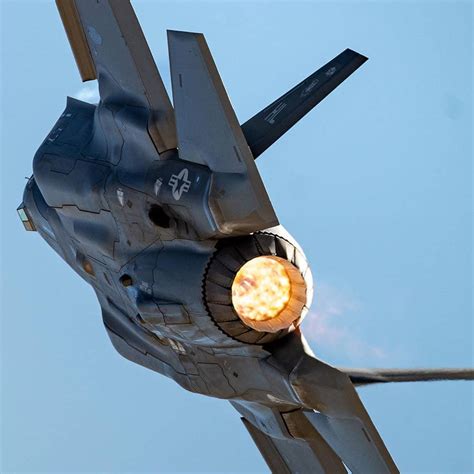
The F-35D concept demonstrates how incremental evolution remains central to airpower dominance. Rather than waiting for full sixth-generation designs to mature, the U.S. could modernize its fifth-generation fleet with selective NGAD technologies, preserving combat readiness while extending the Lightning II’s service life.
The F-35 program’s open-architecture design makes such evolution possible. Its modular hardware and software structure allow incremental insertion of new systems without total redesign. Lockheed Martin’s Block 4 upgrades—already underway—may lay the groundwork for an eventual F-35D transition, integrating new sensors, AI-enabled logistics, and enhanced mission data fusion.
Should the F-35D proceed, it would likely act as a mid-term capability bridge, sustaining tactical superiority until the NGAD and allied sixth-gen programs mature by the mid-2030s.
F-35D and Global Defense Synergy
Beyond U.S. borders, the F-35D could serve as a collaborative technology platform for allied nations already operating F-35s. Countries like Japan, the UK, Australia, and Italy—deeply integrated into the Joint Strike Fighter ecosystem—stand to benefit from shared upgrade pathways. Lockheed’s approach could encourage modular upgrade kits, allowing existing airframes to adopt D-class performance without new procurement.
This approach mirrors strategies used in programs such as the Eurofighter Typhoon’s Tranche upgrades and the Rafale F4 modernization, ensuring competitive relevance without replacing entire fleets.
Could the F-35D Become Reality?
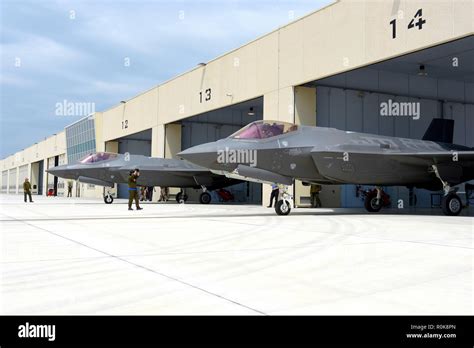
Ultimately, whether the F-35D materializes depends on three critical variables:
- Funding Priorities: Congressional approval and Pentagon budget allocations determine feasibility.
- NGAD Progress: If NGAD costs spiral, a hybrid fifth-plus-generation F-35D could become the fallback solution.
- Allied Demand: Strong export interest could offset high unit costs, accelerating production viability.
Given the growing complexity of modern air warfare—dominated by electronic countermeasures, hypersonic threats, and drone swarms—the F-35D’s conceptual blend of stealth, power, and digital intelligence remains an attractive proposition for global air forces.
Conclusion
The F-35D represents far more than a speculative designation. It embodies the future trajectory of the Lightning II, where evolution outpaces revolution. While the aircraft itself does not officially exist, the conceptual framework surrounding the F-35D highlights Lockheed Martin’s ambition to extend fifth-generation dominance into the sixth-generation era through strategic innovation and technological integration.
As a “Ferrari-class” evolution, the F-35D could one day symbolize the ultimate refinement of the world’s most versatile fighter platform—a jet that merges affordability, stealth, and intelligence into one formidable package.
FAQs About the F-35D
Is the F-35D an official variant of the F-35?
No. The F-35D is not an official designation. It is an informal label used to describe proposed future upgrades or enhanced versions of the F-35 Lightning II, sometimes associated with Lockheed Martin’s “Ferrari” concept.
How would the F-35D differ from the current F-35A/B/C variants?
The F-35D would incorporate NGAD-derived technologies, including next-gen processors, enhanced stealth geometry, passive infrared radar systems, and potentially a more powerful engine. These changes would position it between fifth- and sixth-generation capabilities.
What is the expected cost of the F-35D if developed?
Estimates suggest a per-unit price of around $150 million, depending on configuration and production scale. This makes it substantially more expensive than the current F-35A but still cheaper than projected sixth-generation fighters.
Could existing F-35s be upgraded to F-35D standards?
Yes. Lockheed Martin’s modular architecture could allow retrofit packages for certain features, such as avionics and sensor upgrades, making partial F-35D-level enhancements possible for allied fleets.