F-35, the Best Fighter Jet, Defining the Apex of Air Supremacy
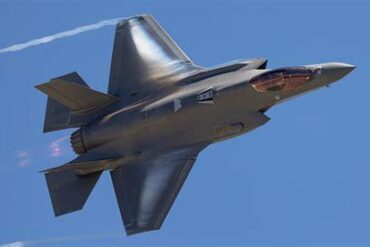
In the evolution of aerial combat, one aircraft stands above all others in terms of stealth, versatility, and technological dominance — the F-35 Lightning II. As the crown jewel of fifth-generation fighters, the F-35 has redefined what it means to own the skies. Developed under the Joint Strike Fighter (JSF) Program, it is not only the most technologically advanced multirole combat aircraft in the world, but also one of the most expensive military programs ever executed.
Engineered by Lockheed Martin and supported by an international coalition of allied defense partners, the F-35 family integrates next-generation avionics, stealth design, and combat-ready agility into a single airframe. The project, though financially ambitious, represents a leap toward a unified, network-centric aerial doctrine for allied forces worldwide.
Engineering Excellence Meets Operational Versatility
The F-35 Lightning II is not merely a fighter jet. It is a multi-domain combat platform capable of executing a diverse array of missions. Its capability envelope includes air superiority, precision strike, electronic warfare, intelligence, surveillance, and reconnaissance (ISR) — all seamlessly integrated into a single aircraft.
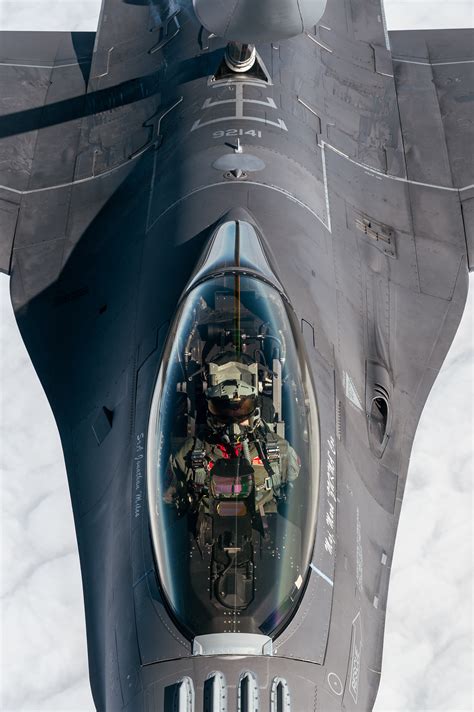
The aircraft’s defining characteristic is its stealth — achieved through radar-absorbent materials, an internal weapons bay, and minimized heat and acoustic signatures. This design allows it to engage targets in heavily contested environments with unprecedented survivability.
The Triad of Variants: A Fighter for Every Role
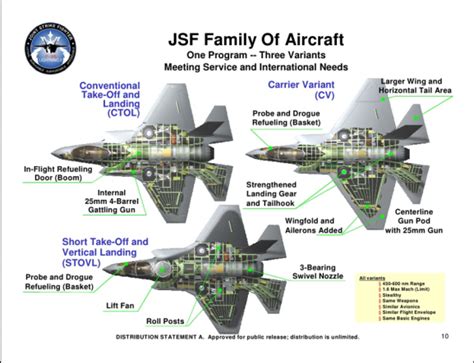
The F-35 Lightning II program includes three distinct variants, each tailored to specific operational requirements while sharing a common platform:
F-35A: Air Force’s Agile Assassin
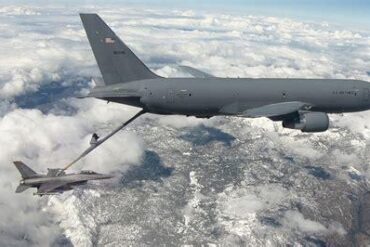
The F-35A is the most agile and conventional takeoff and landing (CTOL) variant. Designed for high-G maneuverability (capable of 9g), it has been adopted by the U.S. Air Force and other allied nations. The A variant features internal weapons bays, in-air refueling, and the option to add a drag-chute pod for operations in icy or short-field environments.
Advantages:
- Lightest of the three variants
- Fastest acceleration and highest agility
- Standard NATO-compatible refueling systems
Primary Operators: USAF, Israel, Norway, Japan, Belgium
F-35B: The Vertical Lift Powerhouse
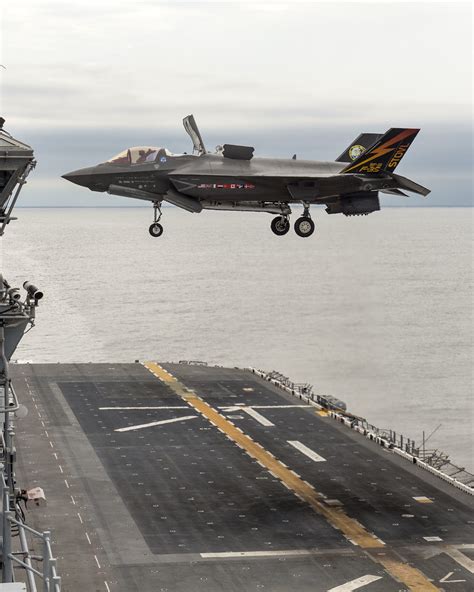
The F-35B introduces a revolutionary capability — short take-off and vertical landing (STOVL). Designed for expeditionary forces, naval units, and marine operations, it sacrifices one-third of its internal fuel capacity to integrate the vertical thrust vectoring system. This allows it to launch from short runways, austere airfields, and amphibious assault ships, giving combatant commanders flexibility previously unmatched in jet fighters.
Key Features:
- Lift fan behind the cockpit
- Rotatable rear exhaust nozzle
- 7g maneuverability
Primary Operators: U.S. Marine Corps, Royal Navy, Italian Navy
F-35C: The Carrier-Dominant Variant
Built specifically for catapult launches and arrested landings on aircraft carriers, the F-35C features larger wings, foldable wingtips, and reinforced landing gear. Its expansive wingspan improves low-speed control, crucial for carrier-based operations. Limited to 7.5g, it prioritizes range and payload over close-quarters dogfighting agility.
Specialized Attributes:
- Longest range among all variants
- Optimized for carrier suitability
- Heavier airframe with enhanced durability
Primary Operators: U.S. Navy, future carrier-based allies
Stealth Technology: Beyond the Radar Horizon
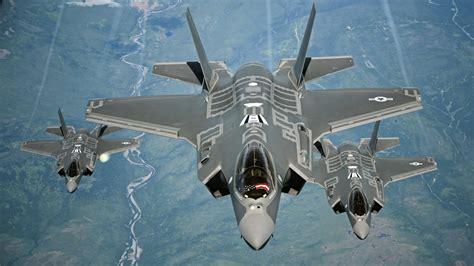
At the heart of the F-35’s dominance lies its stealth profile, making it almost invisible to modern radar systems. The fighter employs an angular design, non-reflective coating, and embedded sensors, significantly reducing its radar cross-section (RCS). While many fourth-generation aircraft use external pods or pylons, the F-35’s internal configuration keeps its weapons hidden, preserving its stealth even during engagement.
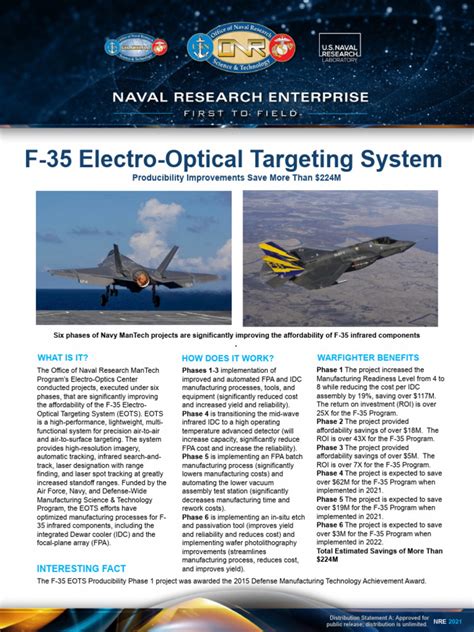
The Distributed Aperture System (DAS), Electro-Optical Targeting System (EOTS), and Active Electronically Scanned Array (AESA) radar provide a 360-degree battlefield picture, enabling pilots to detect and engage threats without relying on external support.
Joint Development and Global Deployment
One of the most ambitious aspects of the F-35 program is its international collaboration. Nine partner nations — including the United States, United Kingdom, Italy, Netherlands, Turkey, Canada, Denmark, Norway, and Australia — participated in its design and funding. Today, over a dozen countries operate the F-35 in their air forces, making it a truly global aircraft.
This partnership extends beyond procurement. Shared training programs, joint maintenance facilities, and collaborative R&D have made the F-35 a backbone for allied interoperability.
Cost and Controversy: The Billion-Dollar Question
While the unit cost of an F-35 sits around $110 million, the full program cost — including R&D, logistics, support, training, and upgrades through the plane’s lifecycle — is an eye-watering $1.196 trillion, estimated until the year 2077. This makes it the most expensive military aircraft program in human history.
Critics have targeted delays, software bugs, and maintenance costs. However, proponents argue that the value proposition lies in mission versatility, unified fleet logistics, and the eventual reduction of unit cost through mass production.
Combat-Proven Performance and Real-World Missions
The F-35 is no longer theoretical. It has been deployed in combat missions, gathering real-time intelligence, delivering precision strikes, and performing electronic suppression. Its combat deployments in the Middle East and Indo-Pacific have validated its operational capability.
Even in peacetime, its presence alters the balance of power. Adversaries now recalibrate tactics when F-35s are in theater, due to the aircraft’s ability to penetrate denied airspace and coordinate multinational coalition strikes with precision.
The Future of Air Dominance
With continuous software upgrades, modular avionics, and AI-enhanced mission planning systems, the F-35 remains future-proofed. Upgrades like Block 4 enhancements introduce longer-range missiles, improved targeting systems, and enhanced electronic warfare suites.
As sixth-generation concepts remain on the drawing board, the F-35 is already operational, scalable, and battle-tested. Its fusion of technology, stealth, and networking cements its place as the best fighter jet of our era.
Frequently Asked Questions
What makes the F-35 the best fighter jet in the world?
The F-35 combines stealth, multirole versatility, advanced sensors, and network-centric warfare capabilities into a single platform. Its ability to perform air-to-air, air-to-ground, electronic warfare, and ISR missions makes it superior to legacy aircraft in nearly every aspect.
Why is the F-35 program so expensive?
The high cost stems from its complexity, global development partnership, and the ambition to replace multiple aircraft types across numerous allied fleets. With R&D, logistics, training, and lifecycle upgrades included, it becomes a long-term strategic investment.
Which countries currently operate the F-35?
Countries including the United States, United Kingdom, Italy, Australia, Norway, Japan, South Korea, Israel, and others have active F-35 fleets. More countries are in procurement or evaluation stages.