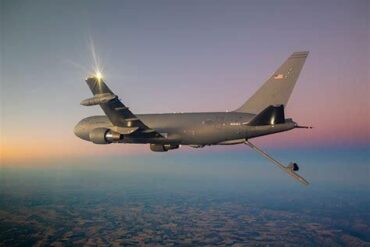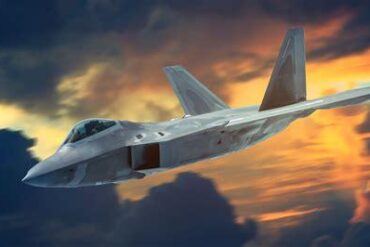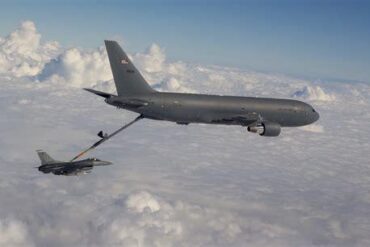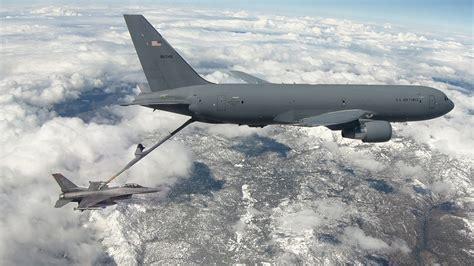
In the unforgiving arena of modern aerial warfare, inflight refueling is more than a force multiplier—it is a mission enabler. Nations with global defense responsibilities demand fighter aircraft that can fly farther, stay airborne longer, and reach into contested zones without returning to base. Aerial refueling grants this edge, bridging the limits of fuel tanks and terrain to provide unmatched operational flexibility.
Here, we spotlight six fighter jets that exemplify this aerial endurance and tactical reach. Each combines combat prowess with a refueling interface that transforms short-range tactics into strategic depth.
F/A-18 Super Hornet: Backbone of Carrier-Based Long-Range Power
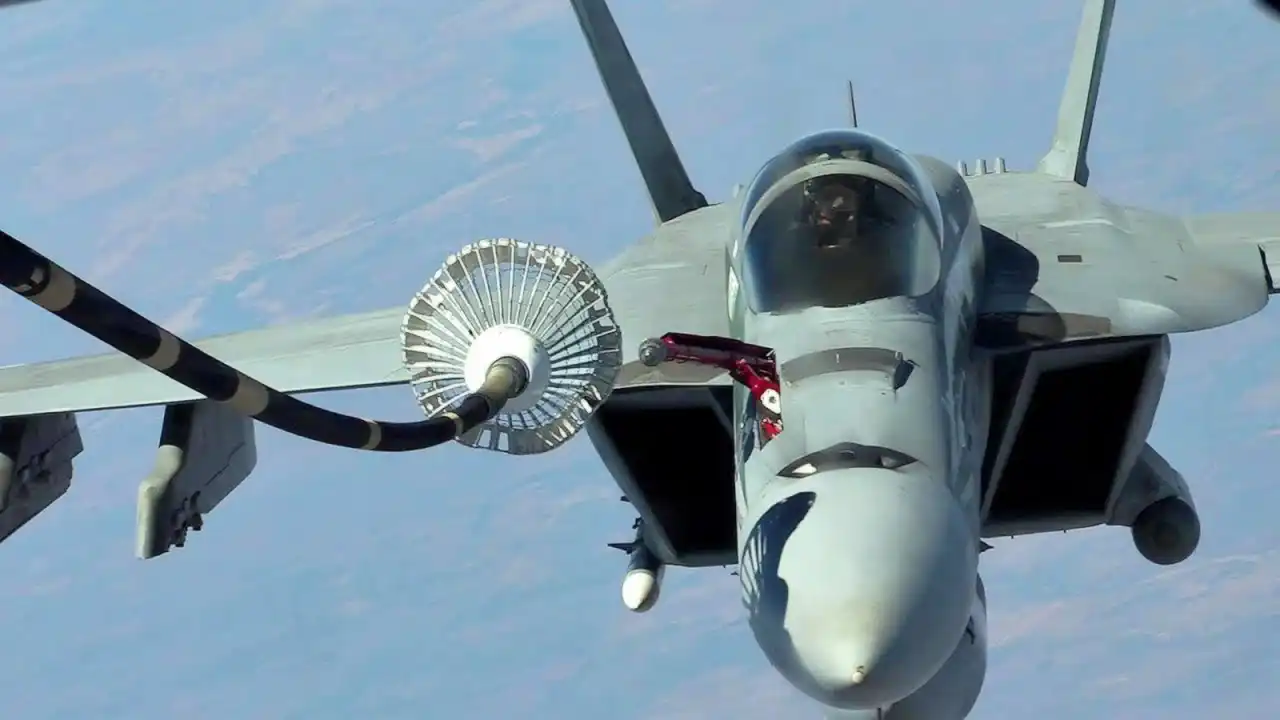
The F/A-18 Super Hornet, an evolution of the original Hornet design, stands as the U.S. Navy’s core multirole fighter. Its carrier-based versatility, advanced radar systems, and seamless probe-and-drogue inflight refueling capability make it indispensable in power projection far beyond the range of shore-based assets.
Originally developed by McDonnell Douglas and now produced by Boeing, the Super Hornet expands on the Hornet’s compact frame with larger internal fuel storage, increased payload capacity, and state-of-the-art avionics. Its capability to refuel mid-air using KC-130s and KC-46 tankers grants it nearly double the range, making it ideal for patrolling expansive maritime territories or launching extended strike missions deep into enemy airspace.
Additionally, the Super Hornet can itself serve as a tanker in “buddy refueling” configurations, offering support to other aircraft on long missions. Armed with a potent mix of AIM-120 AMRAAMs, JDAMs, and laser-guided munitions, this platform’s ability to remain on station is invaluable in conflict zones.
F-16 Fighting Falcon: Agile, Adaptable, and Refueled for Distance
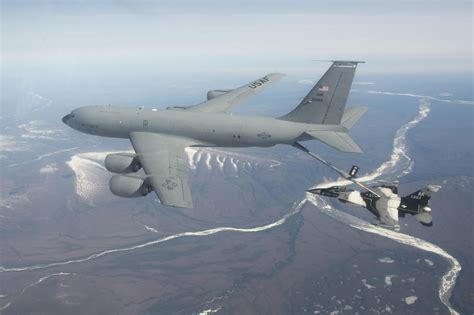
The F-16 Fighting Falcon is an icon of aerial combat—lightweight, lethal, and one of the most widely operated fighters in the world. Developed by General Dynamics and later handed to Lockheed Martin, the F-16’s introduction in 1978 marked a shift toward energy maneuverability and multirole adaptability.
Despite its smaller frame, the F-16 punches far above its weight thanks to its ability to refuel in-flight through either boom or probe-and-drogue methods, depending on the variant. With refueling, its limited 340-mile combat radius can stretch past 1,000 miles, enabling the Falcon to join deep strike operations or long-endurance patrols over complex theaters.
The jet’s unmatched modularity allows it to support a diverse weapons suite, including AGM-65 Mavericks, AIM-9 Sidewinders, and precision-guided bombs. Backed by upgraded AESA radars and datalink integration, the refueled F-16 remains a formidable airframe for global coalition operations, including NATO and Middle Eastern allies.
Sukhoi Su-30: Endurance and Power from the East
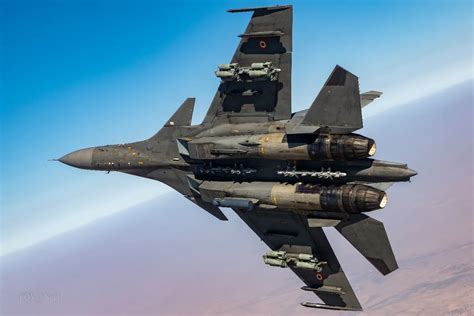
The Russian-built Sukhoi Su-30 brings heavyweight endurance to modern air forces. With a twin-engine layout and expansive internal fuel stores, the Su-30 is a true long-range multirole platform. Variants such as the Indian Su-30MKI and Malaysian Su-30MKM incorporate thrust-vectoring nozzles and advanced electronic warfare systems.
Its probe-and-drogue aerial refueling compatibility, especially with Il-78 Midas tankers, unlocks deep-penetration strike capabilities far into foreign airspace. The Su-30 can remain on station for hours, providing air dominance or ground support in conflicts where access to nearby airbases is limited or politically restricted.
Capable of carrying long-range R-77 and R-27 air-to-air missiles, as well as Kh-59 and KAB-series guided munitions, the Su-30 is a prime example of endurance, power, and flexibility. In refueled operations over Siberia, the Indian Ocean, or contested borders, the Su-30 offers sustained pressure, often overwhelming lighter or shorter-range opponents.
Dassault Rafale: NATO-Ready Strike Jet With Continental Reach
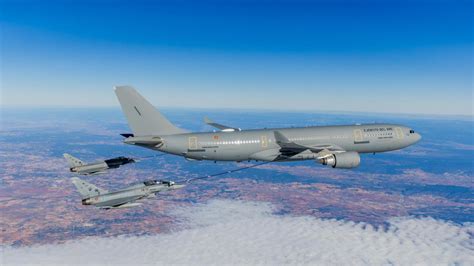
France’s answer to multirole dominance, the Dassault Rafale, stands out as a stealth-conscious, network-integrated jet with serious range. Its twin-engine delta-canard design offers outstanding agility, and its architecture allows for seamless probe-and-drogue refueling via NATO-standard tankers.
Whether launched from Charles de Gaulle’s deck or a forward-operating base in Djibouti, the Rafale can conduct extended missions thanks to aerial refueling from tankers like the A330 MRTT. France’s global military footprint—spanning the Sahel, the Mediterranean, and the Gulf—relies heavily on the Rafale’s ability to remain airborne across continents.
Armed with MBDA Meteor long-range air-to-air missiles, SCALP EG cruise missiles, and ASMP-A nuclear options, the Rafale becomes exponentially more threatening when it is not limited by fuel. The inclusion of electronic warfare suites like SPECTRA and advanced AESA radars further fortify its place in NATO’s integrated strike doctrine.
HAL Tejas: Lightweight Indigenous Jet Meets Strategic Endurance
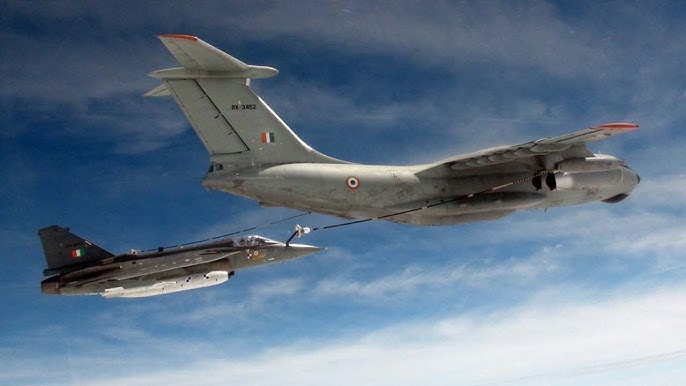
India’s HAL Tejas may not carry the bulk or firepower of heavier fighters, but it punches above its class in modern regional scenarios. As an indigenously developed light combat aircraft (LCA), it represents a leap toward self-reliant aerospace engineering for India. First inducted in 2015, the Tejas has steadily matured in capability and reach.
Though its initial limitations included a relatively modest 310-mile radius, the addition of probe-and-drogue inflight refueling has been a game-changer. Now, the Tejas can support cross-border missions and extended patrols across the Indian Ocean or over the Line of Actual Control with China.
The Tejas is outfitted with a mix of Indian, Israeli, and Western technology. It uses Python-5 and Derby missiles, laser-guided bombs, and Elta radar systems, combining compact size with advanced electronics. While not a strategic bomber, its ability to integrate into larger formations and stay airborne longer gives India an indigenous asset with real operational flexibility.
F-35 Lightning II: Fifth-Gen Stealth Meets Global Endurance
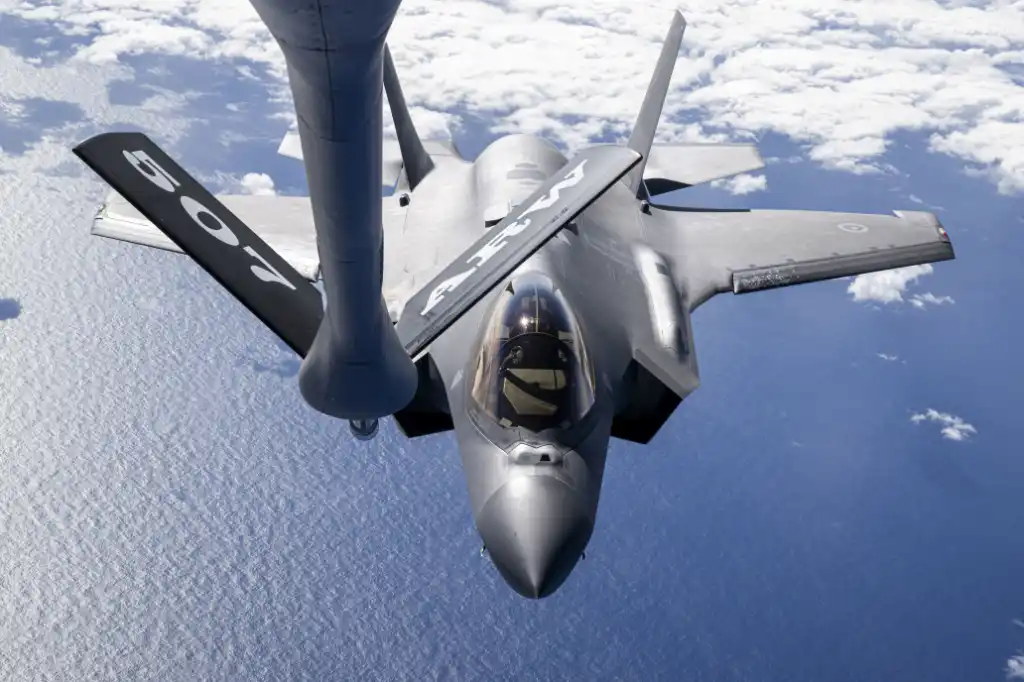
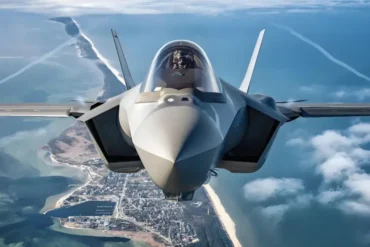
Arguably the most advanced fighter jet in service today, the F-35 Lightning II combines stealth, speed, and situational dominance with a flexible inflight refueling capability that spans continents and oceans.
Developed by Lockheed Martin, the F-35 comes in three configurations: the F-35A for conventional takeoff, the F-35B with short takeoff/vertical landing, and the F-35C for carrier operations. Each version is compatible with boom (used by U.S. tankers) and/or probe-and-drogue systems (used by many allied air forces), allowing it to adapt seamlessly into multinational coalitions and expeditionary campaigns.
The F-35’s fuel-efficient engine, combined with refueling, extends its combat radius from 590 miles to over 1,200 miles, depending on load and mission. With this endurance, it can project stealth power from Guam to the Korean Peninsula, from Diego Garcia into the Middle East, or across Europe under NATO operations.
Armed internally with AIM-120 AMRAAMs, GBU-53/B SDBs, and optionally external payloads for non-stealth missions, the F-35 is a full-spectrum platform. Its sensor fusion and data sharing allow a refueled F-35 to act as a battlespace quarterback, relaying targeting and intelligence data across land, sea, and air forces.
Strategic Implications: Why Aerial Refueling Redefines Air Dominance
In an era where wars are won not just by superior technology but by sustained presence and reach, the importance of inflight refueling cannot be overstated. The six jets featured here exemplify the evolution of air combat doctrine, where range and persistence matter just as much as speed or firepower.
From the Super Hornet’s carrier flexibility to the F-35’s global stealth network, these aircraft leverage refueling to:
- Conduct strategic strike missions beyond theater limitations.
- Support global rapid reaction forces without pre-positioned bases.
- Stay airborne during multi-hour patrols, providing air cover or ISR.
- Integrate seamlessly into multinational task forces, thanks to standardized refueling systems.
In short, aerial refueling turns capable fighters into global power projectors. It’s not just a matter of tanking up—it’s about reshaping the geography of war.
Closing Perspective: Fueling the Future of Air Warfare
As threats diversify and the distances of combat increase, nations must field aircraft that are not limited by geography. Inflight refueling is no longer a luxury—it’s the operational foundation of sustained air dominance. Whether defending homeland skies or patrolling hostile airspace halfway across the globe, fighter jets with advanced refueling capability are the sharpest tools in the modern arsenal.
The six fighters explored in this analysis prove that with the right combination of engineering, avionics, and tanker support, even the furthest mission objectives remain within reach.