When we imagine a fighter jet, we often think of a sleek, compact war machine slicing through the skies with deadly precision. But some of the most dominant aircraft in military arsenals today are not small or lightweight—they are massive, technologically advanced beasts that bring unmatched firepower and range. While agility remains a hallmark of air superiority, size in modern fighter jets often signifies greater fuel capacity, more weapons payload, and advanced multi-role capabilities.
That said, not every large aircraft qualifies as a fighter. This list focuses solely on fighter-class jets that are currently in operational service, capable of engaging in air-to-air combat and deploying as primary aerial assets. These four aircraft are not only among the largest in the world, but also some of the most powerful.
F-15 Eagle: America’s Unmatched Air Dominance Jet
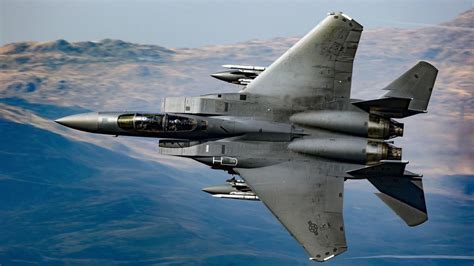
The McDonnell Douglas F-15 Eagle, developed in the early 1970s and now manufactured by Boeing, remains a cornerstone of U.S. air superiority. Since entering service in 1976, the F-15 has maintained a staggering 104-to-0 kill ratio in air-to-air combat. This perfect combat record is a testament to its engineering brilliance, combat agility, and raw power.
At a length of 63.8 feet and an empty weight of 31,700 pounds, the F-15C is anything but small. Its maximum takeoff weight hits a remarkable 68,000 pounds, giving it the heft of a small commercial aircraft. This weight includes a full load of missiles, bombs, and internal fuel. Despite its size, the F-15 remains blisteringly fast, achieving speeds up to 1,875 mph (Mach 2.5) thanks to its powerful twin Pratt & Whitney F100 engines.
Its versatility is enhanced by variants like the F-15E Strike Eagle, which doubles as a ground-attack bomber while retaining air combat supremacy. This makes the F-15 not just big, but strategically invaluable.
Sukhoi Su-34 Fullback: Russia’s Tactical Behemoth
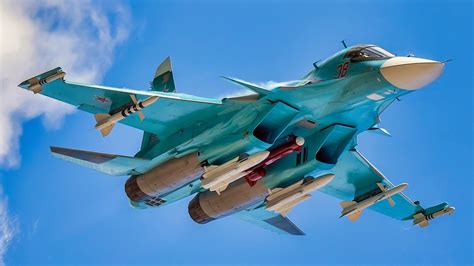
The Sukhoi Su-34, known by its NATO reporting name “Fullback”, is an imposing Russian fighter-bomber derived from the Su-27 Flanker. With a length of 76.5 feet, the Su-34 rivals the length of a Boeing 737-700 and is one of the few jets with side-by-side seating for its two crew members—adding to its wide, duck-billed appearance.
This design decision isn’t cosmetic; the Su-34 was built for long-range strike missions deep into hostile territory. The cockpit’s width provides additional instrumentation space and improved ergonomics for multi-hour sorties. The aircraft’s payload capacity is impressive, able to carry over 17,600 pounds of ordinance, including air-to-ground missiles, guided bombs, and air-to-air missiles.
Fully loaded, the Su-34 weighs in at 97,223 pounds, and while it’s not the fastest (topping out at 1,180 mph), its role is not to outmaneuver lightweight interceptors but to deliver massive payloads under the protection of long-range anti-air and ECM systems.
F-22 Raptor: The Stealth Titan of U.S. Air Superiority
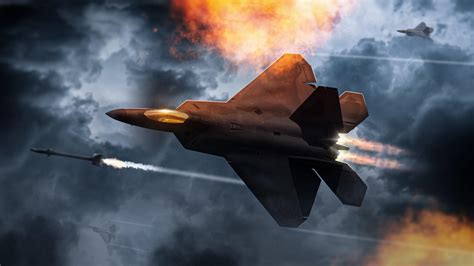
The Lockheed Martin F-22 Raptor remains one of the most secretive and lethal fighter aircraft ever built. Designed in the 1990s as the U.S. Air Force’s answer to emerging global threats, it blends stealth, speed, agility, and advanced avionics in a uniquely formidable package. With a length of 62.1 feet and an empty weight of 43,340 pounds, the F-22 is anything but diminutive.
Its twin Pratt & Whitney F119 engines produce 70,000 pounds of combined thrust, allowing the Raptor to cruise at supersonic speeds without afterburners (supercruise). While its top speed is officially classified, it is widely believed to exceed Mach 2.2. More importantly, its radar cross-section is comparable to a steel marble, giving it near invisibility to enemy radar.
What sets the F-22 apart is its air superiority mission: intercept and eliminate enemy aircraft before they know they’re being hunted. Unlike the more international-friendly F-35 Lightning II, the Raptor is exclusively flown by the U.S. Air Force, emphasizing its role as a domestic air dominance weapon.
Chengdu J-20 Mighty Dragon: China’s Stealth Powerhouse
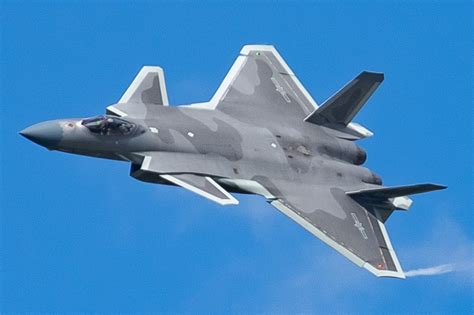
China’s Chengdu J-20, codenamed the “Mighty Dragon”, is its most ambitious aviation project yet—a fifth-generation stealth fighter aimed squarely at U.S. dominance in the Asia-Pacific region. Entering service in 2017, the J-20 is operated solely by the People’s Liberation Army Air Force (PLAAF).
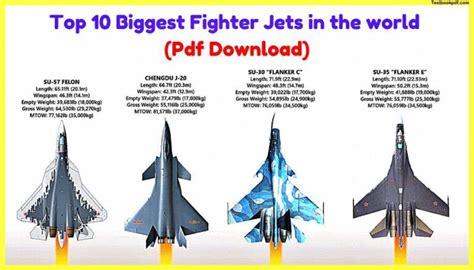
Measuring 66.9 feet in length and weighing approximately 70,750 pounds unloaded, the J-20 is longer and heavier than the F-22. It’s built for long-range air-to-air engagements, equipped with internal bays for beyond-visual-range missiles and external pylons for extended missions. Although it lacks an internal cannon, the J-20 compensates with stealth and speed, reportedly reaching speeds near Mach 2.
Its design incorporates canard-delta wing configurations, a long fuselage, and low observable materials. Though it may not yet rival the F-22 in every metric, its continued evolution and deployment mark China’s growing assertiveness in next-gen aerial warfare.
Big Doesn’t Mean Slow: Why These Fighters Matter
While size in fighter jets once implied a trade-off in maneuverability, modern aerospace design has erased much of that compromise. These massive fighters offer more than just visual intimidation—they provide extended combat range, greater weapons diversity, and multi-role adaptability.
- The F-15 Eagle proves that even a large airframe can achieve unmatched kill ratios.
- The Su-34 Fullback demonstrates Russia’s focus on survivable, long-range tactical bombing.
- The F-22 Raptor embodies the U.S.’s stealth-first doctrine in a sizable but agile platform.
- The Chengdu J-20 signals China’s ambition to redefine regional air dominance with homegrown innovation.
Each of these aircraft represents the pinnacle of modern military aviation, and in a world where airspace superiority can determine the outcome of conflict, their size becomes an asset—not a liability.
In the next decade, these jets will likely evolve further with hypersonic missile integration, improved avionics, and AI-enhanced pilot systems. But as they are today, they already stand as goliaths of the sky, each playing a pivotal role in national defense strategies across the globe.