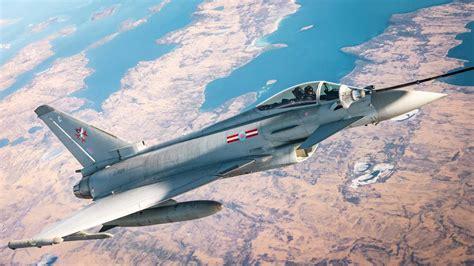
The Royal Air Force (RAF) continues to maintain one of Europe’s most capable and technologically advanced combat aviation forces. Although the United Kingdom operates a relatively modest number of fighter aircraft compared to larger air forces, the RAF maximizes effectiveness by concentrating its frontline squadrons at strategically important bases across Britain and key overseas territories.
Powered primarily by the Eurofighter Typhoon FGR4 and the Lockheed Martin F-35B Lightning II, the RAF’s fighter force provides continuous homeland air defense, fulfills NATO commitments, supports expeditionary operations, and maintains a global rapid-response capability. As Britain prepares to introduce the F-35A Lightning II for its future NATO nuclear mission, these air stations will become even more significant.
Rather than spreading fighter aircraft evenly throughout the country, the RAF operates several major hubs that combine operational squadrons, training units, engineering facilities, maintenance infrastructure, and rapid deployment capabilities. Together, these installations form the backbone of British air power in 2026.
After examining permanent aircraft allocations, squadron structures, operational responsibilities, and strategic importance, these are the five largest Royal Air Force bases by number of fighter jets in 2026.
After decades of modernization following the Cold War, today’s RAF fighter force is smaller but considerably more capable. Advanced sensors, long-range weapons, stealth technology, and multinational interoperability allow these bases to project military power far beyond British airspace while remaining prepared for immediate homeland defense.
5. RAF Mount Pleasant – Britain’s Permanent Fighter Outpost in the South Atlantic
Located on East Falkland, RAF Mount Pleasant maintains the smallest permanent RAF fighter deployment on this list, but its strategic value greatly exceeds its size.
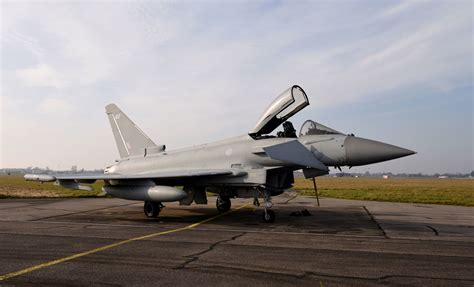
The station houses 1435 Flight, permanently equipped with four Eurofighter Typhoon FGR4 fighters responsible for protecting the Falkland Islands and Britain’s South Atlantic territories. Established shortly after the 1982 Falklands conflict, RAF Mount Pleasant became operational in 1985 to ensure continuous British military presence in the region.
Although only four fighters are stationed there, these aircraft remain fully combat-ready around the clock. Their primary mission is maintaining air sovereignty, providing rapid interception capability, and deterring potential military threats.
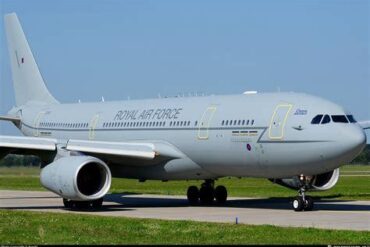
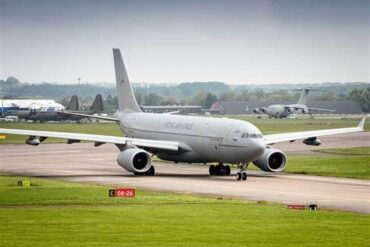
Supporting the Typhoon detachment is an impressive collection of enabling aircraft. An Airbus Voyager KC2/KC3 provides aerial refueling and strategic transport, while an Airbus A400M Atlas C1 performs tactical airlift, logistics, maritime surveillance, and search-and-rescue missions.
The base has earned the nickname “Death Star” among personnel because of its unusually long enclosed corridor that shields occupants from the powerful winds that regularly sweep across the islands.
Despite hosting the RAF’s smallest fighter force, RAF Mount Pleasant remains one of Britain’s most strategically important overseas military installations.
4. RAF Akrotiri – Britain’s Frontline Fighter Base in the Middle East
Situated within the British Sovereign Base Areas on Cyprus, RAF Akrotiri has become one of the RAF’s busiest overseas operating locations.
Unlike UK-based fighter stations, aircraft numbers here fluctuate according to operational requirements. During routine periods, approximately 15 to 25 fighter aircraft may be present, although deployments increase significantly during periods of regional instability.
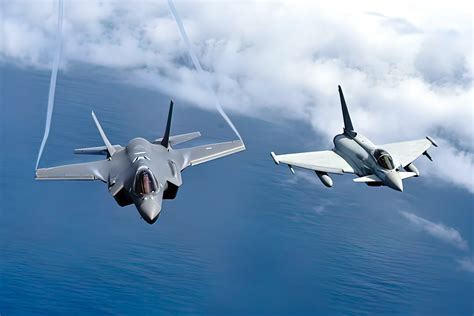
The base normally hosts a detachment of Eurofighter Typhoon FGR4s, supported by rotating deployments of F-35B Lightning II stealth fighters from RAF Marham.
RAF Akrotiri serves as Britain’s primary air hub for operations across the Middle East. Aircraft stationed here regularly support Operation Shader, Britain’s long-running mission against extremist threats across Iraq and Syria, while also providing regional deterrence and reassurance to NATO allies.
Recent geopolitical tensions have highlighted the installation’s flexibility. Additional F-35Bs have periodically deployed from the United Kingdom to reinforce defensive capabilities while maintaining a rapid response posture throughout the Eastern Mediterranean.
The base also hosts an extensive support network beyond its fighter force. Voyager tankers sustain long-range operations through aerial refueling, while No. 84 Squadron operates helicopters dedicated to search-and-rescue and firefighting missions. Intelligence, surveillance, and reconnaissance assets—including American U-2 aircraft during Project Olive Harvest—further enhance the installation’s strategic significance.
RAF Akrotiri demonstrates how overseas bases enable the United Kingdom to project air power thousands of miles beyond Europe without relying exclusively on temporary deployments.
3. RAF Marham – Home of Britain’s Stealth Fighter Fleet
Located in Norfolk, RAF Marham has undergone one of the most dramatic transformations in modern RAF history.
Originally established during the First World War before becoming a major bomber station, Marham evolved through multiple generations of aircraft, including V-bombers, aerial refueling tankers, and the Panavia Tornado. Today, it represents the center of Britain’s fifth-generation combat aviation capability.
RAF Marham is home to the UK’s operational F-35 Lightning Force, jointly operated by the Royal Air Force and the Royal Navy.
More than 30 fighter aircraft are typically based here, although numbers fluctuate because of production deliveries, overseas deployments, maintenance cycles, and training requirements.
Its resident units include:
- 617 Squadron (“The Dambusters”)
- 809 Naval Air Squadron
- 207 Squadron, responsible for F-35 operational conversion training
Earlier in 2026, additional F-35Bs expanded the fleet, further increasing operational capability.
The station has also been selected to host Britain’s future fleet of 12 F-35A Lightning II aircraft. Unlike the short takeoff and vertical landing F-35B, the conventional F-35A will support the UK’s participation in NATO’s nuclear deterrence mission.
To prepare for this technological leap, RAF Marham completed Project Anvil, a modernization program worth approximately £250 million. New stealth maintenance hangars, advanced logistics systems, secure mission-planning facilities, and specialized engineering infrastructure transformed the station into one of Europe’s premier fifth-generation fighter bases.
More than 3,600 military personnel, civil servants, and contractors now work at RAF Marham, supporting one of the most technically sophisticated aircraft fleets in the world.
2. RAF Lossiemouth – Scotland’s Fighter Fortress
On Scotland’s Moray coast sits RAF Lossiemouth, arguably Britain’s busiest operational fighter base.
Housing over 50 permanent military aircraft, Lossiemouth combines frontline fighters, maritime patrol aircraft, airborne early warning platforms, and regular NATO detachments into one highly integrated installation.
Its fighter component consists of four frontline Eurofighter Typhoon squadrons:
- No. 1 Squadron
- No. 2 Squadron
- No. 6 Squadron
- No. 9 Squadron
Together these aircraft provide Quick Reaction Alert (North), remaining on constant readiness to intercept unidentified aircraft approaching British airspace.
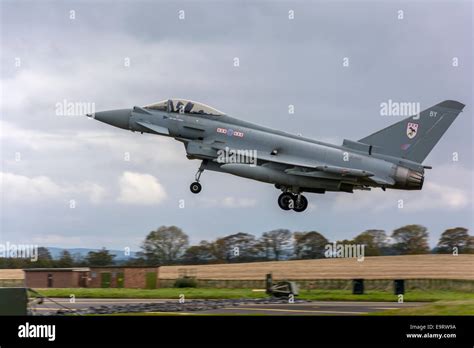
Lossiemouth’s northern location makes it especially important for monitoring activity across the North Atlantic and the strategically vital Greenland-Iceland-United Kingdom (GIUK) Gap. Russian military aircraft operating near NATO airspace are frequently intercepted by Typhoons launched from this base.
Beyond fighter operations, RAF Lossiemouth has become Britain’s center for maritime surveillance.
The installation hosts the entire fleet of nine Boeing P-8A Poseidon MRA1 maritime patrol aircraft, dramatically strengthening Britain’s anti-submarine warfare and long-range reconnaissance capabilities.
Adding further importance, the RAF’s new Boeing E-7 Wedgetail airborne early warning aircraft are gradually entering service from Lossiemouth, with No. 8 Squadron expected to expand operations throughout 2026.
The station also regularly hosts visiting allied aircraft, including U.S. Navy P-8s, F-15 Eagles, F-35s, and multinational participants during major NATO exercises such as Exercise Point Blank, reinforcing interoperability among allied air forces.
1. RAF Coningsby – The RAF’s Largest Fighter Base in 2026
No RAF station concentrates more fighter aircraft than RAF Coningsby in Lincolnshire.
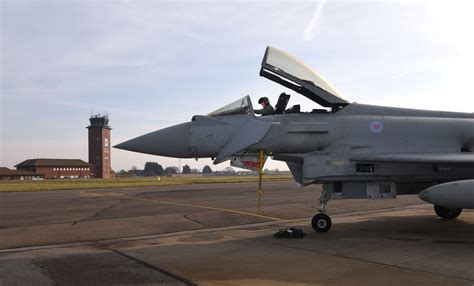
With more than 60 fighter jets, Coningsby stands as Britain’s premier Typhoon operating base and one of Europe’s largest fighter installations.
The station fulfills multiple missions simultaneously, serving as an operational combat base, training center, evaluation facility, and Quick Reaction Alert station for southern Britain.
Five Typhoon squadrons operate from Coningsby:
- No. 3 Squadron
- No. 11 Squadron
- No. 12 Squadron
- No. 29 Squadron (Operational Conversion Unit)
- No. 41 Test and Evaluation Squadron
This combination of frontline, training, and testing responsibilities makes Coningsby unique within the RAF.
Aircraft stationed here defend southern UK airspace around the clock while simultaneously preparing new Typhoon pilots and evaluating upgrades that will eventually enter frontline service.
In early 2026, the British government announced a £205 million Typhoon support package, reinforcing the long-term future of the aircraft fleet based primarily at Coningsby. The investment supports maintenance, upgrades, engineering, and operational readiness as the Typhoon continues serving as the RAF’s principal air superiority fighter.
Coningsby also preserves Britain’s aviation heritage through the Battle of Britain Memorial Flight.
Based permanently at the station are several historic aircraft maintained in flying condition, including:
- One Avro Lancaster
- Six Supermarine Spitfires
- Two Hawker Hurricanes
- One Douglas Dakota
- Two de Havilland Chipmunks
The base’s history stretches back to 1940, when it operated as a Bomber Command station during the Second World War. Aircraft departed Coningsby during the famous Thousand Bomber Raid over Cologne, while the legendary 617 Squadron, later known as the “Dambusters,” also served here during the war.
Throughout the Cold War, Coningsby welcomed successive generations of RAF combat aircraft, including the Canberra, Phantom FGR2, and Panavia Tornado before eventually becoming the heart of Britain’s Eurofighter Typhoon force.
Today, although the F-35 introduces stealth capabilities into RAF service, the Typhoon remains Britain’s primary air defense platform, ensuring RAF Coningsby continues occupying the leading position among the country’s fighter bases.
Why These Five Bases Form the Backbone of British Air Power
The distribution of RAF fighter aircraft reflects a carefully balanced strategy rather than simple geography. Coningsby and Lossiemouth provide uninterrupted Quick Reaction Alert coverage across southern and northern Britain, ensuring rapid interception capability anywhere around UK airspace. Marham delivers advanced fifth-generation stealth operations while preparing for the introduction of the F-35A nuclear mission. Akrotiri gives Britain an immediately available expeditionary air base in the Eastern Mediterranean, and Mount Pleasant guarantees permanent sovereignty protection thousands of miles from the British mainland.
Together, these installations enable the Royal Air Force to defend national airspace, contribute to NATO collective security, support overseas military operations, and respond rapidly to emerging crises across multiple regions. Although the RAF operates fewer fighters than during previous decades, the concentration of advanced aircraft, highly trained personnel, sophisticated infrastructure, and integrated allied cooperation ensures these five bases remain among the most strategically significant military aviation hubs in Europe throughout 2026.
Frequently Asked Questions
Which RAF base has the most fighter jets in 2026?
RAF Coningsby is the largest fighter base, operating more than 60 Eurofighter Typhoon aircraft across frontline, training, and test squadrons.
Where are Britain’s F-35 fighters based?
Britain’s F-35B Lightning II fleet is primarily based at RAF Marham in Norfolk, which also will host the future F-35A fleet.
Which RAF base protects northern UK airspace?
RAF Lossiemouth provides Quick Reaction Alert (North), with Typhoon fighters ready to intercept unidentified aircraft approaching the United Kingdom.
Why is RAF Akrotiri strategically important?
RAF Akrotiri allows Britain to rapidly deploy combat aircraft across the Middle East and Eastern Mediterranean while supporting long-term expeditionary operations and NATO missions.
Does the RAF permanently station fighter jets overseas?
Yes. The RAF permanently stations Eurofighter Typhoon FGR4 aircraft at RAF Mount Pleasant in the Falkland Islands and regularly maintains operational fighter detachments at RAF Akrotiri in Cyprus.