The question of whether the Boeing C-17 Globemaster III surpasses the Lockheed C-5M Super Galaxy in size and capability sparks considerable interest among aviation enthusiasts and military strategists alike. While both aircraft stand as titanic symbols of American airlift dominance, a close examination reveals a clear victor in sheer size, payload capacity, and strategic airlift capabilities.
Unveiling the Giants of Air Mobility
When comparing these two behemoths of the skies, we must begin by placing them within the broader operational context of the United States Air Force’s Air Mobility Command (AMC). This specialized command structure is responsible for ensuring that the U.S. Armed Forces can project power across the globe swiftly and efficiently. The C-5M Super Galaxy and the C-17 Globemaster III are the two cornerstone platforms of this effort, each fulfilling crucial yet distinct roles within the logistics ecosystem.
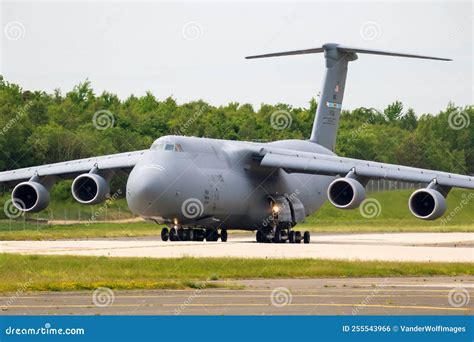
The C-5M Super Galaxy holds the title as the largest military aircraft in the U.S. inventory. Its massive frame dwarfs most other aircraft, military or civilian. Introduced in the late 1960s and updated over time, the C-5M was designed for strategic airlift—carrying immense loads across intercontinental distances. In contrast, the C-17 Globemaster III, which entered service in the 1990s, was built with versatility in mind: the ability to land on short, austere runways while still transporting significant cargo loads.
Size and Payload: The Super Galaxy’s Overwhelming Advantage
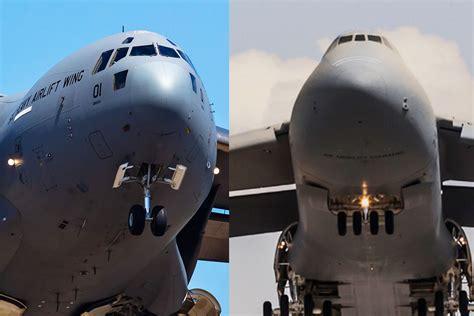
In direct dimensions, the C-5M Super Galaxy outmatches the C-17 Globemaster III in almost every measurable category. The C-5 stretches a staggering 247.1 feet (75.3 meters) in length with a wingspan of 222.9 feet (67.9 meters). The C-17, though undeniably large, is comparatively compact at 174 feet (53 meters) in length and a wingspan of 169.8 feet (51.7 meters).
The story becomes even more compelling when we assess cargo capacity. The C-5M boasts a maximum payload capacity of 281,001 pounds (127,460 kilograms)—nearly double the C-17’s limit of 170,900 pounds (77,519 kilograms). This allows the Super Galaxy to transport outsized cargo such as multiple helicopters, tanks, or entire Patriot missile batteries with relative ease.
Evolution and Mission Profiles
The origin stories of these aircraft help illustrate their fundamental differences. The C-5 Galaxy was born from Cold War urgency, designed to enable massive, inter-theater mobility during an era when the U.S. sought to extend its logistical reach during conflicts like the Vietnam War. The result was an aircraft capable of transporting battalion-sized forces and their gear directly to foreign theaters of operation.
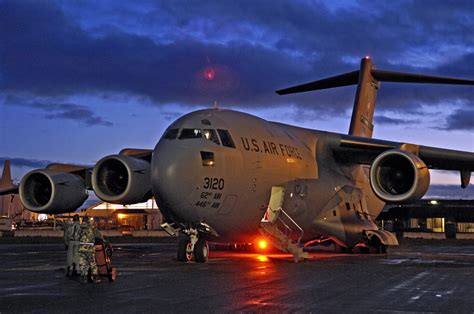
On the other hand, the C-17 Globemaster III was conceived decades later with the benefit of technological evolution and lessons learned. Designed initially by McDonnell Douglas and now built by Boeing, the C-17 excels at rapid strategic and tactical mobility. It is optimized for more flexible missions—able to land on remote, unimproved runways just 3,500 feet long and perform combat drops of personnel or equipment under fire.
Technological Muscle and Performance
Despite its age, the C-5M Super Galaxy has seen multiple upgrades, including the Reliability Enhancement and Re-engining Program (RERP), which transformed its aging systems and introduced the powerful General Electric F138-GE-100 engines, each producing 51,250 pounds of thrust. These allow the C-5M to cruise at 518 mph (833.5 km/h) and climb to altitudes of 41,000 feet (12,496 meters)—a feat for such a massive aircraft.
The C-17 isn’t far behind. Its four Pratt & Whitney F117-PW-100 engines each generate 40,440 pounds of thrust, enabling it to match the C-5’s cruising speed and operate at a service ceiling of 45,000 feet (13,716 meters). More impressive is its ability to carry heavy payloads into tight landing zones, a capability the C-5 simply cannot replicate due to its size and infrastructure needs.
Operational Versatility and Global Reach
The C-5M remains predominantly a strategic asset, ferrying large quantities of military hardware across oceans and continents. It features both a nose-lifting capability and rear-loading ramp, allowing for simultaneous loading and unloading, a rare and time-saving trait. The aircraft’s cavernous interior has even been used for humanitarian missions, such as Operation Babylift during the Vietnam War or disaster relief efforts in Rwanda and Antarctica.
Meanwhile, the C-17 thrives in high-tempo tactical environments. During Operation Allied Force in Kosovo, the Globemaster III handled nearly half of all strategic airlift missions. It has become the go-to airframe for presidential logistics, transporting Marine One helicopters, presidential limousines, and even at times the President himself.
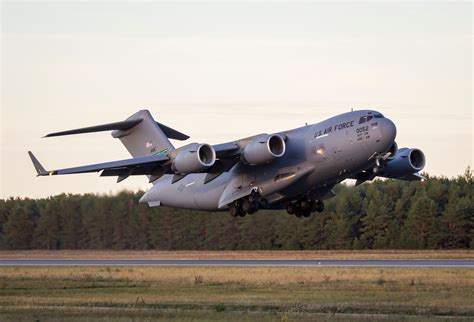
Its ruggedness, advanced avionics, and ability to support air drop missions make the C-17 indispensable for operations in hostile environments or locations lacking developed airfields. It represents the apex of agile airlift strategy, bridging the gap between theater-level and frontline support.
Fleet Composition and Global Operators
While the C-5M Super Galaxy remains exclusive to the United States Air Force, the C-17 enjoys international appeal. It is operated by nine other nations, including the United Kingdom, Australia, Canada, Qatar, and the UAE, as well as by NATO’s strategic airlift consortium. This international footprint not only validates the aircraft’s capabilities but enhances interoperability in coalition missions.
Despite the production of the C-5 ceasing in 1989, the USAF still operates around 52 C-5M aircraft, with roughly half deemed mission-ready at any given time due to aging components and logistical challenges—referred to colloquially as ‘vanishing vendor syndrome.’ Conversely, while the final C-17 was produced in 2015, its modern design ensures continued reliability and ease of maintenance.
Strategic Synergy: Complementary Strengths
Understanding that bigger does not always mean better, it is important to appreciate how these two aircraft complement one another rather than compete. The C-5M’s unmatched lift capacity makes it ideal for large-scale deployments and high-volume missions, while the C-17’s tactical agility allows it to support troops closer to the action, even when traditional runways are unavailable.
When deployed together, these aircraft enable the U.S. military’s global force projection model, often referred to as ‘rapid global mobility.’ The C-5 delivers bulk equipment to major hubs, and the C-17 distributes that gear to remote bases, operational units, or into combat zones directly.
Global Comparisons: Few Rivals Exist
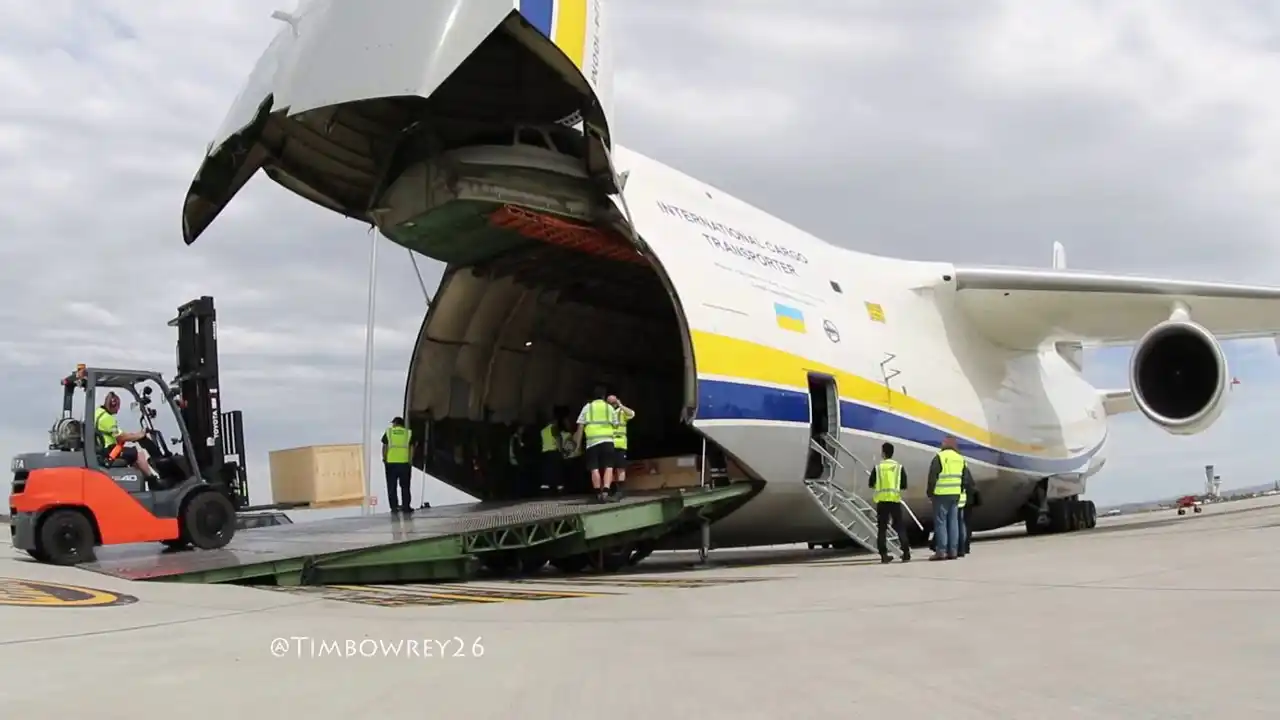
Outside of U.S. aircraft, only a few foreign-built transports compare to either of these giants. The Antonov An-124 Ruslan, operated by Russia, can rival the C-5 in size and payload, though it lacks similar range and operational readiness. The An-225 Mriya, once the world’s largest aircraft, exceeded even the C-5 in size but was destroyed during the war in Ukraine. China’s Y-20, while visually similar to the C-17, remains limited by its nascent engine technology and smaller operational scale.
The Airbus A400M, though widely used by NATO countries, is a turboprop aircraft with smaller payload capabilities—hardly a direct competitor to either the C-17 or C-5.
Final Verdict: The C-5M Is Bigger, But The C-17 Is Bold
So, is the C-17 Globemaster III bigger than the C-5M Super Galaxy? The answer is unequivocally no. The C-5M is not only longer, taller, and heavier, but it can also carry significantly more cargo than the C-17. It remains the undisputed king of airlift capacity in the U.S. Air Force fleet.
However, in terms of flexibility, versatility, and mission adaptability, the C-17 is a masterpiece of modern engineering. It complements the C-5 in every strategic scenario, ensuring that no corner of the globe is unreachable, and no mission is too demanding.
Ultimately, these two aircraft together form the backbone of America’s airborne logistics might, and their synergy continues to shape the future of global air mobility operations.