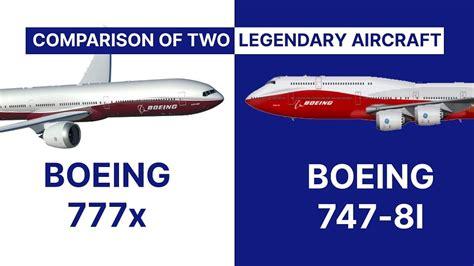
When comparing two of the most iconic widebody aircraft ever produced—the Boeing 777X and the Boeing 747—the question of which one is larger has no straightforward answer. While both jets dominate the skies with monumental dimensions and impressive capabilities, the distinction between them lies in the specifics. These aircraft represent two different eras and philosophies in aviation design: the four-engine behemoth of the past versus the fuel-efficient, twin-engine juggernaut of the future.
The Boeing 747: The Reign of the Jumbo Jet
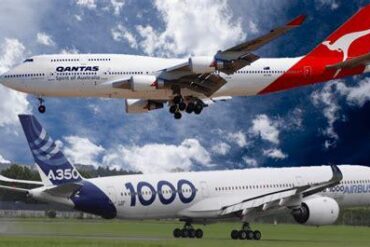
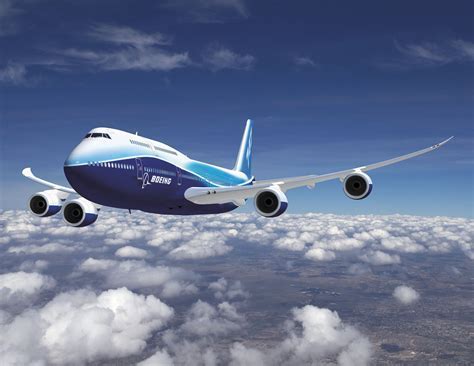
The Boeing 747, introduced in 1970, revolutionized international air travel with its double-deck design, immense range, and high passenger capacity. Its distinctive hump-backed fuselage and four-engine layout made it instantly recognizable and well-suited for ultra-long-haul operations. With over 1,500 units built, including both passenger and freighter variants, the 747 has been a dominant figure in global aviation for decades.
The most recent and advanced version of this legendary aircraft, the Boeing 747-8, stretches 250 feet and 2 inches in length and boasts a wingspan of 224 feet and 7 inches. It can carry up to 467 passengers in a three-class configuration and has a maximum takeoff weight (MTOW) of approximately 987,000 pounds. The 747-8 also incorporates General Electric GEnx-2B67 engines, providing not only power but improved fuel efficiency over earlier 747 generations.
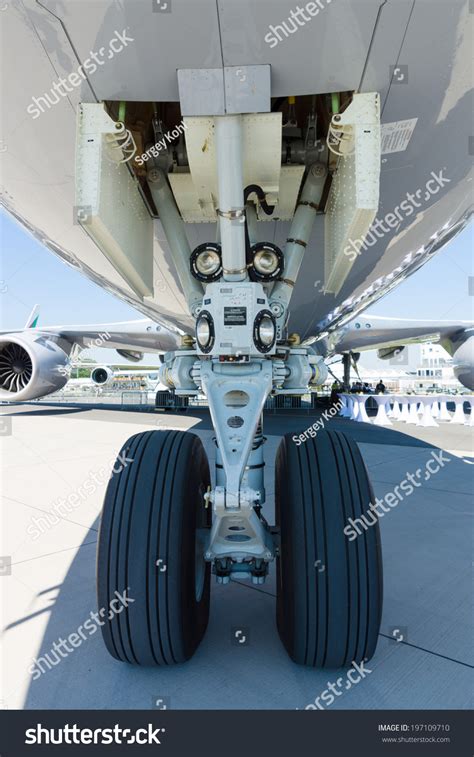
From a cargo perspective, the 747-8F freight variant can haul an astonishing 292,400 pounds of payload, making it the most capable freighter Boeing has ever built. Despite its remarkable achievements, the high operational costs and fuel burn associated with four engines have led airlines to gradually phase the aircraft out in favor of more efficient alternatives.
The Boeing 777X: The Next-Generation Giant
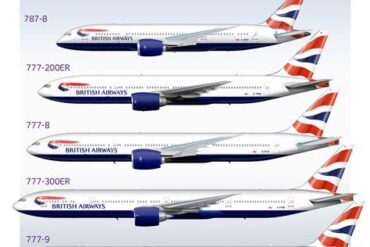
Enter the Boeing 777X, a next-generation derivative of the highly successful 777 series, designed to offer unprecedented fuel efficiency, technological advancements, and significant size enhancements. The flagship model, the 777-9, is set to become the largest twin-engine jet in commercial aviation history.
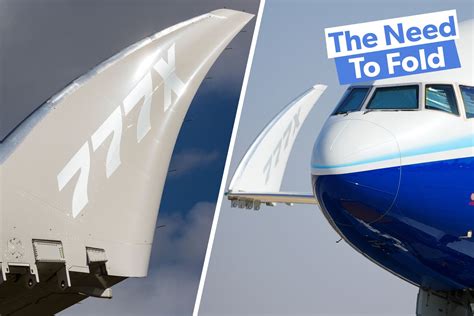
At 251 feet and 9 inches, the Boeing 777-9 surpasses the 747-8 in length, making it the longest commercial aircraft ever built. Its foldable wingtips expand its wingspan to 235 feet and 5 inches, roughly 10 feet wider than the 747-8. The use of carbon-fiber reinforced polymer in the wings and GE9X engines—the most powerful commercial engines ever developed—highlight Boeing’s shift toward high-tech materials and environmental sustainability.
In a typical three-class configuration, the 777-9 seats around 426 passengers, slightly fewer than the 747-8. However, it compensates for this with significantly improved fuel economics and a range of 7,285 nautical miles, making it suitable for ultra-long routes. Its sister model, the 777-8, is smaller but has an even longer range of up to 8,730 nautical miles.
Head-to-Head: Key Specifications
While each aircraft is a marvel in its own right, the following technical specs help highlight their unique strengths:
- Length:
- Boeing 747-8: 250 ft 2 in
- Boeing 777-9: 251 ft 9 in
- Wingspan:
- Boeing 747-8: 224 ft 7 in
- Boeing 777-9: 235 ft 5 in
- Passenger Capacity:
- Boeing 747-8: Up to 467 (3-class)
- Boeing 777-9: Around 426 (3-class)
- Maximum Takeoff Weight (MTOW):
- Boeing 747-8: ~987,000 lbs
- Boeing 777-9: ~775,000 lbs
- Range:
- Boeing 747-8: 7,790 nautical miles
- Boeing 777-9: 7,285 nautical miles
- Boeing 777-8: 8,730 nautical miles
- Cargo Capacity (Freighter Version):
- 747-8F: 292,400 lbs
- 777-8F: 247,000 lbs
Measuring Size: A Matter of Perspective
Declaring a definitive winner in the size department requires clarity on what “size” really means. If fuselage length and wingspan are the measuring sticks, then the Boeing 777X takes the crown. Its use of space-age materials and ultra-long wing design give it an aerodynamic and structural edge.
However, if passenger capacity, freight payload, or operational weight are the criteria, then the Boeing 747-8 remains the heavyweight champion. With its ability to transport more people and cargo—albeit at higher operating costs—the 747 still holds a unique position in aviation history.
Operational Economics and Market Relevance
One of the defining characteristics separating these aircraft is their economic efficiency. Airlines today are laser-focused on minimizing fuel consumption, and the 777X is built for that purpose. With only two engines and a 10-15% lower fuel burn per seat than its predecessor, the 777-300ER, the 777X is well-positioned to serve high-demand routes with fewer emissions and lower cost per seat.
In contrast, the 747-8’s four-engine configuration—though powerful—makes it less appealing in today’s environmentally conscious market. This is one of the reasons why production of the 747 came to a halt in 2022 after more than five decades.
Future Outlook: Farewell and Forward
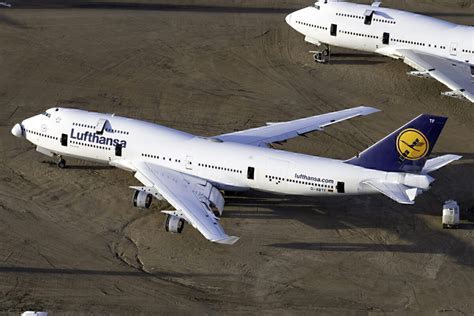
The Boeing 747 is approaching the twilight of its operational life. Many major carriers, including British Airways, Lufthansa, and Korean Air, have retired or announced retirement plans for their 747 fleets. Freighter variants will continue for a while due to their unmatched cargo capability, but their numbers are expected to dwindle over the coming years.
On the other hand, the Boeing 777X represents the future of Boeing’s widebody strategy. With over 500 orders placed and first deliveries expected in 2026, the aircraft is poised to become a central player in long-haul aviation for decades to come. Lufthansa will be the launch customer, and other global airlines such as Emirates and Qatar Airways have placed significant orders.
Conclusion: Two Giants, Different Legacies
The battle between the Boeing 777X and the Boeing 747 isn’t about which one is better—they serve different purposes in different eras. The 747 opened the world, democratizing air travel and setting the gold standard for transcontinental operations for half a century. The 777X is a response to modern-day needs—environmentally conscious, cost-effective, and technologically superior.
In terms of sheer physical dimensions, the Boeing 777X wins. But when it comes to historical significance and passenger-carrying muscle, the Boeing 747 still casts a long shadow. Each deserves its place in the aviation hall of fame. One is a glorious legacy. The other, a high-tech future soaring on the horizon.