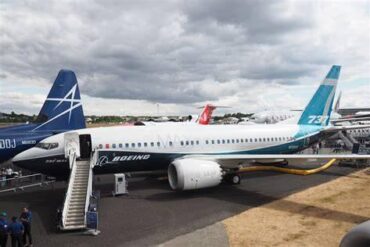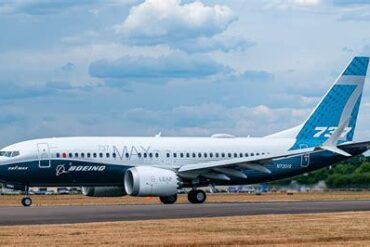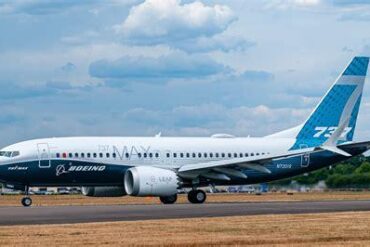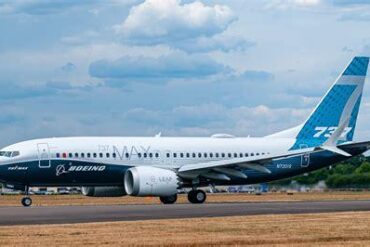
The Boeing 737 MAX is the latest iteration of Boeing’s iconic 737 series, marking the company’s commitment to creating more efficient, cost-effective airliners in an increasingly competitive market. Introduced in 2017, the MAX represents a significant leap forward, incorporating advanced technological enhancements, improved fuel efficiency, and refined aerodynamics. Despite the aircraft’s innovative features, its journey has been far from smooth, with a series of high-profile crashes and a global grounding that have marred its reputation. This article will explore the evolution of the 737 MAX, the challenges it faced, its recovery, and its place in the future of commercial aviation.
Introduction to the Boeing 737 MAX Series
The Boeing 737 MAX is part of Boeing’s fourth-generation narrow-body airliner family, succeeding the 737 Next Generation (NG) models. The MAX series consists of four primary variants: MAX 7, MAX 8, MAX 9, and MAX 10. Each of these models is designed to meet specific market demands, offering seating capacities ranging from 138 to 204 passengers. The aircraft’s range extends between 3,300 and 3,850 nautical miles, making it suitable for both short and medium-haul routes.
One of the most prominent features of the 737 MAX is its CFM LEAP-1B engines. These engines are more fuel-efficient compared to the previous generation, reducing fuel consumption by approximately 14% per seat. This reduction not only lowers operational costs for airlines but also contributes to a reduction in carbon emissions, aligning with global sustainability goals in aviation. In addition to the new engines, the MAX series includes aerodynamic improvements such as split-tip winglets that further enhance fuel efficiency.
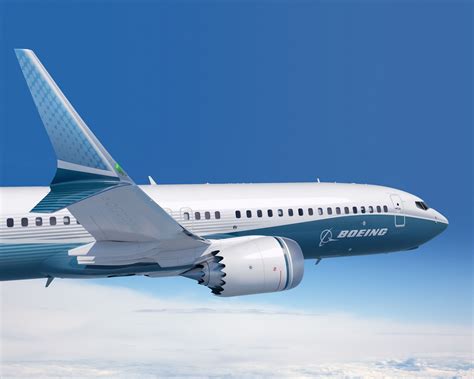
The MAX and its Competitors
The 737 MAX was developed to compete directly with the Airbus A320neo, the most formidable rival in the single-aisle market. The A320neo, also an advanced, fuel-efficient version of the A320, was introduced in response to Boeing’s 737 MAX, and both aircraft have dominated the commercial aviation market in terms of orders and deliveries. The MAX series, with its technological innovations, was designed to offer airlines superior operating economics while keeping within the familiar design and operational characteristics of the 737 family. This makes it easier for pilots and maintenance crews to transition to the new model.
In terms of performance, the 737 MAX outperforms its competitors in certain areas. It has a slightly higher range and can carry more passengers on certain models, particularly the MAX 10, which offers the highest capacity of all the MAX variants. However, the A320neo family remains a strong competitor, with its own suite of fuel-efficient features and a more extensive customer base.
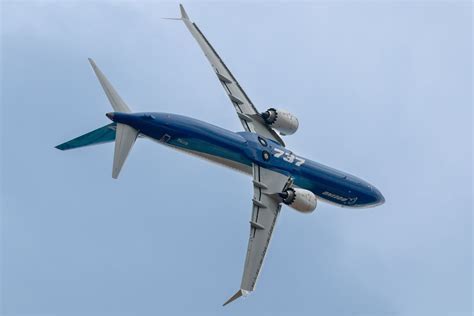
Challenges and the Global Grounding of the Boeing 737 MAX
Despite its promising design and technological advances, the Boeing 737 MAX faced significant challenges that led to its global grounding between March 2019 and November 2020. These challenges were primarily associated with two fatal crashes: Lion Air Flight 610 in October 2018 and Ethiopian Airlines Flight 302 in March 2019. Both accidents involved the MAX 8 variant and were linked to a flaw in the aircraft’s Maneuvering Characteristics Augmentation System (MCAS).
MCAS was designed to prevent the aircraft from stalling by automatically adjusting the angle of attack of the aircraft’s nose. However, the system malfunctioned after receiving faulty data from a single angle-of-attack sensor, causing the aircraft’s nose to be pushed downward repeatedly. Pilots were not adequately trained on the system, and they were unable to override it in time, leading to the crashes.
The global grounding of the MAX fleet was a direct result of these incidents. It was the first time in modern aviation history that a commercial aircraft was grounded globally following fatal crashes. Boeing faced immense legal, financial, and reputational consequences. The company was forced to halt deliveries, conduct an extensive review of its design and software, and improve pilot training protocols.
Boeing’s Response and the Path to Recovery
In the wake of the grounding, Boeing took significant steps to address the flaws in the 737 MAX’s design and recertify the aircraft for flight. The company made extensive modifications to the MCAS software, including reducing its authority and ensuring that it would only activate based on input from two independent sensors, rather than a single one. Boeing also overhauled its pilot training programs, ensuring that crews would receive comprehensive training on how to handle MCAS malfunctions, should they occur.
After nearly two years of intense scrutiny, testing, and software updates, the 737 MAX was cleared to return to service in November 2020 by the Federal Aviation Administration (FAA). Other international aviation regulators, including the European Union Aviation Safety Agency (EASA), followed suit and granted the aircraft clearance to fly once again. This marked the beginning of the 737 MAX’s recovery.
Despite the clearance, Boeing’s recovery efforts have been met with challenges. Certification delays for the MAX 7 and MAX 10 variants continue to impact the company’s production ramp-up. Additionally, there have been concerns about quality control issues. For instance, in January 2024, a quality issue was identified involving an incident on Alaska Airlines Flight 1282, which raised further concerns about the manufacturing process. These issues have delayed deliveries and forced Boeing to take a more cautious approach in its production of the MAX series.
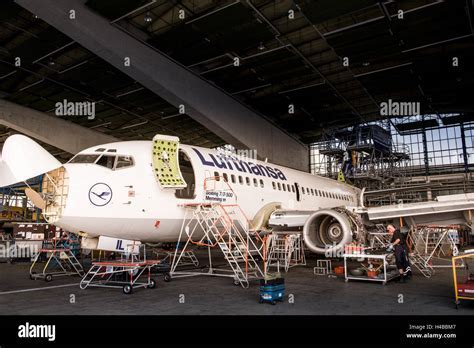
Current Status and Future Outlook for the Boeing 737 MAX
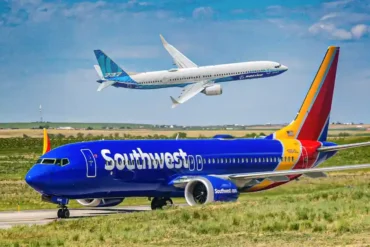
As of March 2025, Boeing has delivered 1,784 737 MAX aircraft and has 4,761 orders for the model, making it one of the most successful commercial aircraft in terms of orders. The aircraft is now in service with numerous airlines worldwide, including major carriers such as Southwest Airlines, American Airlines, Flydubai, and Ryanair.
Despite the initial setbacks, the 737 MAX’s market recovery has been robust. The aircraft continues to be a popular choice for airlines looking to modernize their fleets and improve operational efficiency. The MAX 8 remains the most widely adopted variant, with airlines valuing its balance of capacity, range, and fuel efficiency.
Looking forward, Boeing faces ongoing competition from Airbus and other aircraft manufacturers. However, the 737 MAX’s future remains bright, especially as airlines continue to seek fuel-efficient, environmentally friendly solutions for their fleets. Boeing’s efforts to streamline production, improve quality control, and introduce new variants like the MAX 10 will play a crucial role in securing the aircraft’s long-term position in the market.
Conclusion: The Legacy of the 737 MAX
The Boeing 737 MAX story is one of innovation, challenge, and recovery. While the aircraft faced significant setbacks early in its production, it has emerged as a powerful tool for airlines worldwide, offering reduced operating costs, enhanced efficiency, and improved environmental performance. Boeing’s ability to address the issues surrounding the MAX and the aircraft’s eventual return to service has allowed it to maintain its position as a leader in the commercial aviation industry.
As the aviation industry continues to recover from the impacts of the COVID-19 pandemic and move towards a more sustainable future, the 737 MAX will likely remain at the forefront of Boeing’s efforts to meet the demands of modern air travel.