Thailand is stepping up efforts to revive tourism as a dramatic plunge in foreign arrivals takes a deepening toll on the economy. The competition for visitors heats up across the region, coupled with US import tariffs that could curb spending. With visitor numbers already down over 5% during the first half of the year, authorities and industry leaders are steering through urgent measures such as instant VAT (value-added tax) refunds, off-airport retail duty-free zones, and shopping campaigns designed to encourage spending, attract high-value tourists, and keep pace with regional rivals like China and Vietnam.
The push into the second half of 2025 is riddled with challenges given Thailand’s heavy reliance on its tourism industry as part of its national economic mix. A sharp decline of 5.62% in international tourist arrivals during the first half of the year has raised serious concerns among government officials and tourism industry stakeholders. As Thailand finds itself drawn deeper into regional rivalry, contending with a shifting Chinese market and potential import tariffs from the United States, the urgency to revitalize tourism and explore new income sources has never been greater.

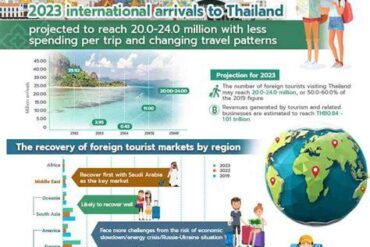
Between January 1 and July 13, 2025, Thailand welcomed 17,754,055 international visitors, a figure that reflects the mounting pressures on an economy grappling with broader global uncertainties and domestic fiscal limitations. Although international arrivals have declined, the Tourism Authority of Thailand (TAT) remains committed to its ambitious target of attracting no fewer than 35.5 million foreign visitors in 2025, aiming to match last year’s performance. Foreign tourism revenue is projected at 1.77 trillion Baht, while domestic tourism is expected to generate 1.1 trillion Baht through 205 million trips. Altogether, this brings the total projected tourism revenue for 2025 to 2.87 trillion Baht—still falling short of the original 3 trillion Baht goal.
Growth Outlook Weighed Down by Global and Regional Factors
The Bank of Thailand (BOT), in its July 9 economic assessment, projects a moderate 3.5% average growth in foreign tourist arrivals for 2025 and 2026. This projection lags behind the estimated global tourism growth rate of 5%, highlighting the intensified competition Thailand faces from regional destinations such as Vietnam, Japan, and China. Neighboring countries have rolled out enticing incentives to lure travelers. For instance, China has introduced a 13% VAT refund for foreign shoppers—a bold move to revive its tourism economy. In contrast, Thailand’s current approach, although proactive, has yet to yield sufficient results to offset visitor losses.
Reviving Tourism with Policy Innovations
To counter the decline and stimulate spending, the Thai Retailers Association (TRA) has proposed launching a bold nationwide campaign—“Thailand Shopping Paradise.” This initiative seeks to attract high-value travelers by transforming retail experiences and offering financial incentives to boost spending. Central to this proposal is a fast-tracked trial allowing immediate 7% VAT refunds at designated retail outlets. Tourists spending at least 3,000 Baht would benefit from on-the-spot tax refunds, a move expected to improve cash flow and stimulate shopping activity in tourist-heavy areas like Bangkok. The TRA has set an ambitious target of 7% growth in tourism-related spending for 2026. Achieving this will depend on swift government action and seamless execution of these incentive-driven schemes.
Enhancing Retail Competitiveness
To elevate Thailand’s competitiveness in the regional shopping tourism landscape, the TRA has also suggested reducing import tariffs on popular consumer products. Items such as fashion apparel, cosmetics, and perfumes currently face duties as high as 20–30%. Lowering these tariffs would not only encourage spending by affluent tourists but also disincentivize purchases from unregulated grey markets. In tandem, the TRA proposes creating duty-free zones in high-traffic tourist destinations like Phuket. This initiative aims to drive immediate spending while fostering long-term brand loyalty, prompting repeat visits.
Domestic Integration: A Nationwide Shopping Experience
A key pillar of the proposed revitalization strategy involves leveraging nationwide retail networks to create a festival-like shopping experience. Modeled after successful initiatives like Singapore’s “Great Singapore Sale,” Thailand could see synchronized promotions involving malls, hotels, restaurants, and small businesses. Such integrated efforts would help create a vibrant tourism ecosystem where retail and hospitality sectors are closely aligned, supporting sustained visitor engagement and local economic development.
The Chinese Market: Signs of Recovery but Challenges Remain
The Chinese tourism segment, once a major revenue generator, continues its slow recovery. Daily arrivals from China have improved, now exceeding 10,000 compared to 7,000–8,000 earlier in the year. However, these figures still fall significantly short of the pre-pandemic peak of 30,000 daily Chinese tourists. Restoring confidence among Chinese travelers remains a critical task, as safety concerns that emerged earlier in 2025 continue to affect perceptions. While the BOT sees signs of stabilization, stakeholders believe it will take time and targeted campaigns to rebuild trust and reach previous performance levels.
Visa Policy Reevaluation for Sustainable Security
Thailand currently grants visa-free stays of up to 60 days for tourists, business visitors, and short-term workers from 93 countries or territories. While this broad visa exemption aims to boost inbound travel, the industry has called for a re-evaluation. Many stakeholders argue that a uniform 60-day visa is unnecessary and even counterproductive from a security and economic management perspective. Most arrivals originate from just 30–40 key countries, and tailoring visa stay durations based on travel behavior, average length of stay, and market risk could better align with national priorities.
External Pressures: Trade Policy and Economic Headwinds
An emerging external challenge is the forthcoming imposition of US import duties, posing a potential risk to Thailand’s economic and trade stability. Set to take effect on August 1, 2025, the tariffs include a 36% rate on certain goods from Thailand. The outcome of ongoing negotiations between Thailand and US trade representatives will be critical in shaping the country’s export viability and, indirectly, its tourism positioning. Higher import costs could reduce Thailand’s competitiveness, not only in trade but also in attracting international shoppers. These tariffs could affect product availability, increase retail prices, and potentially deter foreign spending. The industry is closely monitoring these developments, as the results will directly influence Thailand’s appeal in the global tourism economy.
Consumer Sentiment and the Cost-of-Living Crisis
Beyond geopolitics and regional rivalries, global economic conditions also pose challenges. A growing cost-of-living crisis across many countries has reduced discretionary spending, resulting in fewer people willing or able to travel internationally. Even those who do travel are becoming more price-sensitive, favoring destinations that offer better value for money. Thailand must therefore focus not only on attracting high-spending tourists but also on offering value-driven experiences. Improving infrastructure, ensuring safety, and enhancing service quality are all part of this equation.
Regulatory Measures to Support Fair Trade
Efforts are also underway to address long-standing structural issues in the domestic market. Authorities are clamping down on “nominee” businesses—entities illegally operated by foreigners under Thai front names, particularly in high-margin sectors like restaurants, hotels, and supermarkets. At the same time, stricter controls on low-quality imported goods are being implemented to protect local businesses. These regulatory moves are already yielding positive outcomes and are expected to contribute to a fairer and more transparent marketplace that supports local small and medium enterprises (SMEs).
Turning Crisis into Opportunity
Thailand’s tourism industry is under pressure, but its current woes could serve as a catalyst for more profound structural change. The drive for reforms in retail, visas, trade negotiations, and localized shopping campaigns hints at a multi-pronged approach aimed at reviving growth in the short term while ensuring long-term resilience. If these measures are executed effectively and promptly, Thailand not only stands to bounce back but could emerge as a more formidable regional tourism and retail superpower. With a forward-looking approach, Thailand possesses the means to transcend its current challenges, gaining a competitive edge in an increasingly shifting global travel environment.