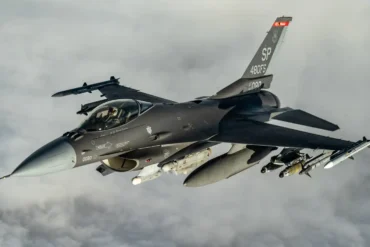
The F-16 Fighting Falcon, one of the most versatile multirole fighters in modern aviation history, has undergone significant modifications over its decades of service. One of the most crucial subsystems ensuring its operational reliability is the landing gear system. Designed to withstand extreme forces during takeoff and landing, the F-16’s landing gear has historically faced challenges related to structural integrity, maintenance efficiency, and long-term durability. To address these concerns, a series of engineering innovations and maintenance strategies have been implemented, resulting in significant improvements in reliability and performance.
Challenges in the F-16 Landing Gear System
Structural Aging and Fatigue
During the early 1990s, the F-16 landing gear frequently suffered from unexpected collapses and mechanical failures, raising serious concerns about its long-term viability. Detailed analysis identified the following primary causes:
- Material Degradation: Continuous exposure to high-stress operations led to fatigue cracks, stress corrosion, and progressive material wear.
- Frequent Overhaul Needs: The rate of component failures increased, leading to an unsustainable 35% rework rate for critical parts.
- Limited Detection Methods: Conventional inspection techniques could only identify surface corrosion but failed to detect subsurface stress fractures, increasing the likelihood of undetected failures.
Maintenance and Operational Constraints
The intensive maintenance requirements of the original landing gear system further exacerbated operational inefficiencies:
- Extended Maintenance Cycles: A single aircraft required an increased 40% additional man-hours for landing gear upkeep.
- Unplanned Aircraft Downtime: Delays in parts availability and unexpected failure modes resulted in aircraft being grounded for prolonged periods.
- Complex Repair Procedures: The necessity for specialized tools and trained personnel limited field-level repair capabilities.
To address these issues, the U.S. Air Force initiated comprehensive short-term and long-term modernization programs, targeting enhanced durability, modularity, and ease of maintenance.
Short-Term Emergency Measures (2002)
To counteract the immediate crisis, the Time Compliance Technical Order (TCTO) directive was introduced in 2002, implementing critical short-term solutions:
- Enhanced Inspection Protocols: Mandatory biannual dimensional tolerance checks were enforced for landing gear bushings to detect early wear patterns.
- Accelerated Parts Replacement Strategy: Pre-positioned forward-deployed spare part inventories reduced Mission Impaired Capability Awaiting Parts (MICAP) downtime.
- Corrosion-Resistant Coatings: The adoption of ALODINE protective coatings increased component lifespan by 30%, significantly reducing the frequency of premature replacements.
These interim measures provided immediate operational relief, but a more robust long-term solution was necessary to ensure sustained mission readiness.
Long-Term Solutions: The Ship-Set Replacement Program (2003)
Recognizing the need for a more comprehensive overhaul, the U.S. Air Force launched the Ship-Set Replacement Program in April 2003. This initiative introduced significant technological advancements:
Modular Landing Gear Design
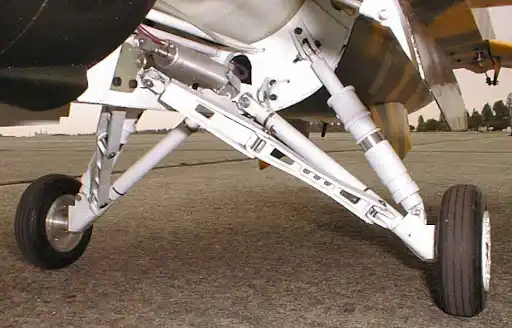
To streamline maintenance and replacement, the entire landing gear system was reengineered into a modular configuration, divided into three major components:
- Main Landing Gear Assembly
- Nose Landing Gear System
- Hydraulic Actuation System
By integrating quick-disconnect mechanisms, this modular approach enabled entire sections to be swapped out in significantly reduced timeframes, increasing aircraft availability.
Lifecycle-Based Overhaul Intervals
Instead of relying on failure-driven maintenance, the program introduced a predictive maintenance cycle, requiring complete system overhauls every 8,000 flight hours or 10 years. This proactive approach extended operational longevity while minimizing unexpected breakdowns.
Advanced Impact Testing
A state-of-the-art landing gear test facility was established at Hill Air Force Base, enabling simulation of extreme landing conditions, including:
- 9G impact force landings
- High-speed carrier deck touchpoints
- Rough terrain operations
This test program helped refine material choices, hydraulic actuation responses, and shock absorption technologies, ensuring real-world reliability enhancements.
Innovations in Maintenance and Repair
Cross-Functional Maintenance Teams
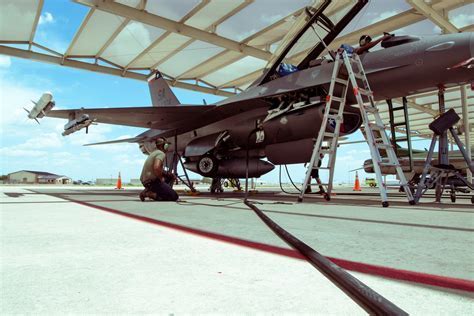
A new integrated maintenance approach combined efforts from technicians, engineers, and project managers, achieving:
- 60% reduction in failure diagnosis time
- Faster turnaround for in-field repairs
- Streamlined part procurement and logistics
This cross-functional model improved overall maintenance efficiency, reducing downtime across F-16 squadrons worldwide.
Digital Twin Technology
The integration of digital twin modeling allowed engineers to create real-time simulations of landing gear stress cycles, helping predict component degradation based on:
- Sensor feedback from operational aircraft
- Historical performance trends
- Environmental exposure factors
By leveraging AI-driven predictive analytics, maintenance teams could anticipate failures before they occurred, preventing costly in-service breakdowns.
Battlefield-Ready Rapid Repair Kits
To enhance field-level repair capabilities, a lightweight 2.3kg repair toolkit was developed, allowing on-site bushing replacements without specialized equipment. This innovation ensured that combat-deployed aircraft could sustain prolonged operations with minimal logistical burden.
Future Challenges and Continued Monitoring
Despite the success of modernization efforts, the F-16’s extended operational lifespan until 2048 introduces new challenges:
- Increased Structural Loads: New weapons payload configurations add stress beyond the original design parameters.
- Enhanced Operational Durability Needs: Increased mission requirements necessitate further material and structural advancements.
- Next-Generation Upgrades: As part of F-16 Viper modernization, new composite-based landing gear systems are under consideration to further reduce weight and enhance impact resistance.
The U.S. Air Force continues to assess and refine landing gear performance in high-intensity combat scenarios, ensuring that the F-16 remains a capable fighter well into the 21st century.
FAQ
1. How often is the F-16 landing gear overhauled?
The F-16 landing gear system undergoes a full overhaul every 8,000 flight hours or 10 years, as per the Ship-Set Replacement Program implemented in 2003.
2. What are the main causes of landing gear failure in F-16 aircraft?
The primary causes include stress corrosion, material fatigue, undetected subsurface fractures, and excessive wear due to high-impact landings.
3. What improvements have been made to the F-16 landing gear since 2002?
Major improvements include modular landing gear design, enhanced corrosion-resistant coatings, AI-driven predictive maintenance, rapid battlefield repair kits, and digital twin modeling for lifecycle predictions.