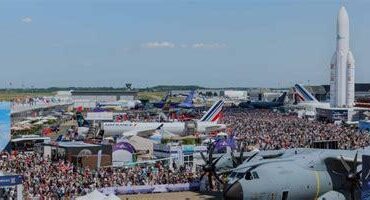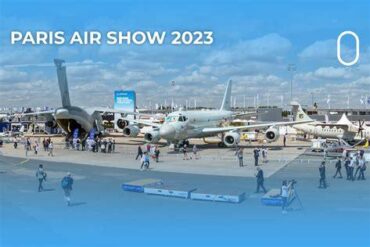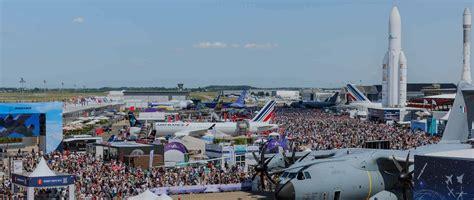
The Paris Air Show 2025 has emerged as a pivotal platform, showcasing some of the most revolutionary developments in the aviation and aerospace sectors. The innovations presented during this prestigious event are set to redefine air travel, air combat, and urban mobility for years to come, reflecting a transformative shift in how we approach aviation.
Airbus and Boeing’s Future Forecasts for Air Travel
At the forefront of this year’s show were Airbus and Boeing, two titans of the aerospace industry, each sharing ambitious forecasts and plans for the future of air travel growth. Airbus unveiled its Global Market Forecast (GMF), predicting that airlines worldwide will require 43,420 new aircraft over the next two decades to accommodate an ever-growing demand for air travel. Despite potential uncertainties in the global economic landscape—such as tariffs and fluctuations in passenger traffic—Airbus remains optimistic, projecting an annual growth rate of 3.6% in air travel until 2044. This growth is largely attributed to a burgeoning global middle class, expected to reach 1.5 billion people, particularly in emerging markets such as India and China. Out of the total aircraft demand, approximately 34,250 are expected to be single-aisle jets, with the remaining 9,170 comprising wide-body aircraft. Notably, 44% of these new deliveries (around 18,930) will serve as replacements for older aircraft currently in service.
In a similar vein, Boeing revealed its projections, estimating the delivery of 43,600 new aircraft by 2044, slightly outpacing Airbus’s figures. Boeing emphasized the resilience of the airline industry, which has endured numerous shocks over the past two decades—from financial crises to geopolitical tensions—yet has seen demand for air travel triple since the turn of the century. The company’s data suggests a continued expansion of the global airline fleet, particularly among single-aisle jets, which now constitute 66% of the global fleet, up from 55% in 2004. By 2044, single-aisle aircraft are anticipated to account for 72% of the global fleet. Furthermore, Boeing highlighted that low-cost carriers (LCCs) in emerging markets are likely to match the fleet sizes of established economies like the US and Europe within the next twenty years, with the highest demand for new aircraft projected from China, North America, and South/Southeast Asia.
Saab’s AI-Powered Air Combat Trials
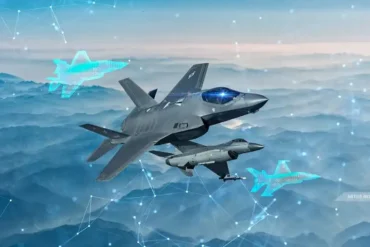
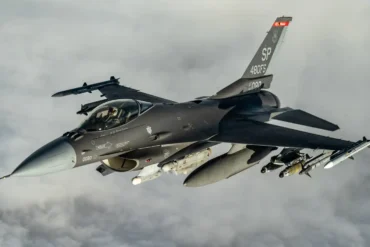
A remarkable breakthrough was also achieved by Saab, which successfully trialed an AI agent integrated into its Gripen E fighter aircraft. In collaboration with Helsing, a startup specializing in software solutions and unmanned vehicles, Saab conducted trials where the AI, named Centaur, guided pilots through beyond-visual-range (BVR) air-to-air combat scenarios. Centaur provided real-time recommendations on optimal missile firing times and strategic insights during dogfights, marking a significant evolution in combat aviation. This partnership signifies a pivotal shift towards AI-human collaboration, enhancing decision-making speed and effectiveness in high-stakes environments. The trials, conducted in May and June 2025, showcased Centaur’s ability to bolster pilot capabilities, guiding aircraft in combat scenarios while offering tactical advice in real-time. Saab aims to expand Centaur’s applications to air-to-ground combat, underscoring the potential to enhance both offensive and defensive operations in modern warfare.
Urban Air Mobility: Eve Air Mobility and the Future of Cities
One of the most eagerly anticipated presentations at the Paris Air Show was Eve Air Mobility’s vision for the future of urban air mobility (UAM). As urban congestion escalates globally, especially in metropolises like São Paulo, Eve forecasts that urban aerial transport will become essential in alleviating the strain on existing urban transport systems. Over the next two decades, the UAM sector is projected to generate $280 billion in passenger revenue and create opportunities for the sale of 30,000 aircraft. Eve’s eVTOL (electric Vertical Takeoff and Landing) aircraft will cater to various needs, including point-to-point urban transport, airport shuttles, and medical flights. São Paulo, recognized for its advanced aerial mobility market, is slated to launch Eve’s eVTOL services in 2027. The forecast emphasizes the urgent need for innovative transport solutions, driven by predictions that over 2 billion people will reside in cities by 2050. However, challenges remain for UAM’s widespread adoption, including the necessity for rigorous safety standards, a supportive regulatory framework, and advancements in battery technology to facilitate longer-range flights.
Innovative Aerospace Developments at the Show
The Paris Air Show also featured a host of cutting-edge technologies. Among these was VoltAero’s latest design for the hybrid-electric Cassio 330. This aircraft has undergone significant structural modifications to meet contemporary certification requirements, transitioning from a twin-boom design to a T-tail with twin rear engines, in alignment with new aviation standards. Designed for regional air mobility, the Cassio 330 aims to revolutionize short-haul travel through its hybrid-electric propulsion system.
Additionally, Rolls-Royce introduced a groundbreaking Durability Enhancement Package (DEP) for its Trent 1000 engines. This initiative is set to significantly extend the time between overhauls by improving engine cooling, enhancing combustion systems, and upgrading electronic controls. The DEP is expected to double the operational life of these engines, thus reducing maintenance costs and improving fuel efficiency. Following successful tests on the Trent 7000 engine, this innovative technology is now being applied to the Trent 1000.
ARMAC Aerosave and Constellium’s Aluminium Recycling Breakthrough
In a notable environmental advancement, ARMAC Aerosave and Constellium have pioneered a method for recycling aluminum from end-of-life aircraft into new, high-performance materials suitable for future aerospace applications. This innovative process significantly reduces energy consumption and CO₂ emissions, marking a critical step toward establishing a circular economy within the aerospace industry. Such breakthroughs are vital in addressing the environmental impact of aviation, aligning with global sustainability goals.
The Global Impact of These Innovations
The innovations unveiled at the Paris Air Show signify a remarkable evolution within the aerospace industry, propelled by technological advancements in artificial intelligence, sustainable aviation, and urban mobility. From AI-enhanced air combat to the future of air travel via hybrid-electric aircraft and the promising realm of urban air mobility, the sector is poised for substantial growth and innovation in the coming decades. The delivery forecasts from Boeing and Airbus underscore the escalating demand for air travel, particularly in burgeoning markets. Meanwhile, Saab’s AI breakthroughs and Eve’s urban mobility vision illustrate how new technologies can transform both air combat and transportation. Additionally, advancements in aerospace materials and engine efficiency are setting new benchmarks for sustainability within the industry. As these developments unfold, the aviation and aeronautics sectors are well-equipped to tackle future challenges, emphasizing sustainability, efficiency, and safety. The Paris Air Show 2025 has undeniably heralded a new era in aviation.