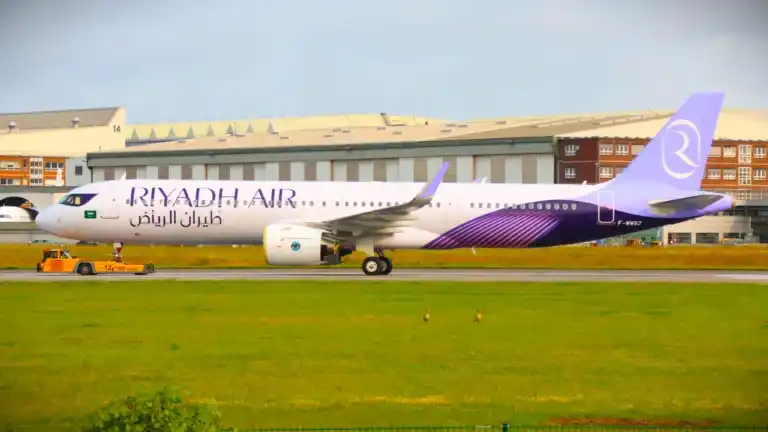
Riyadh Air’s debut at the Paris Air Show 2025 was not just a showstopper—it was a masterclass in aviation branding, geopolitical signaling, and high-altitude ambition. In a dazzling reveal, the airline unveiled a stunning Airbus A321XLR in its signature livery, turning heads and igniting conversations across the aerospace industry. This wasn’t merely an aesthetic display; it was a strategic announcement to the world: Saudi Arabia’s aviation sector has entered a new era, and Riyadh Air is leading the charge.
A Bold Statement on a Global Stage
The Paris Air Show, long revered as the most prestigious event in aerospace, became the launchpad for Riyadh Air’s first major public appearance. While many debuting airlines opt for soft local launches or controlled media events, Riyadh Air chose a global spotlight, leveraging one of the most scrutinized stages in commercial aviation to present its ambitions.
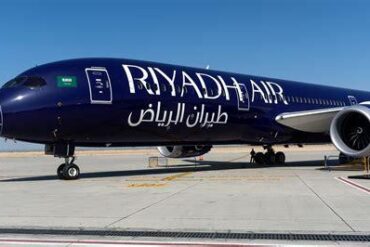
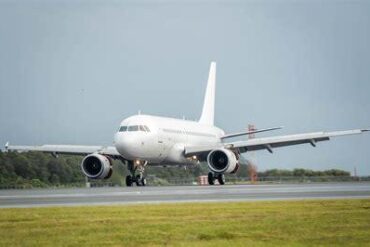
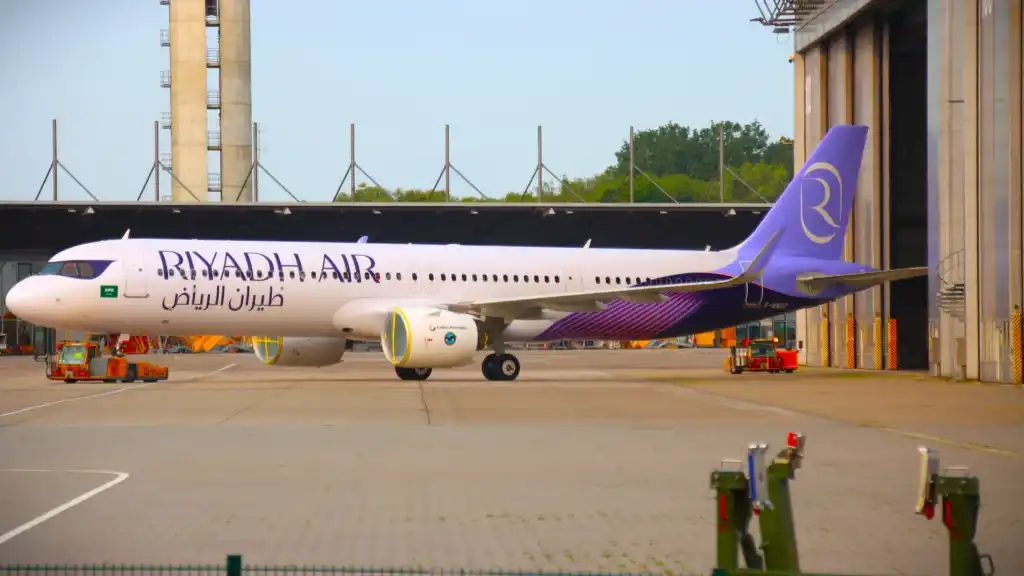
Parked at Le Bourget Airport (LBG), the A321XLR wore a pearl-white and royal purple paint scheme, accented by a modern, stylized circled “R” on the tail—a sleek insignia as memorable as it is symbolic. The aircraft, registered as F-WWBZ, is technically an Airbus testbed, not part of Riyadh Air’s operational fleet. Yet, that distinction is inconsequential. What matters is perception, and perception was firmly under Riyadh Air’s control.
Why the A321XLR Was the Perfect Choice
The Airbus A321XLR isn’t just a visually impressive aircraft. It represents a leap forward in range and efficiency for single-aisle jets. With the capability to fly up to 4,700 nautical miles, it enables airlines to connect city pairs that were previously uneconomical or unreachable without widebodies. For Saudi Arabia, positioning itself as a global hub under Vision 2030, this aircraft is a tactical asset.
Riyadh Air aligning its brand with the A321XLR platform sends a clear message: it’s planning a network built for point-to-point long-haul travel, bypassing the traditional hub-and-spoke limitations. While this specific aircraft won’t serve passengers, its branding effect is invaluable.
Livery as Language: What the Design Says
Riyadh Air’s livery isn’t a superficial flourish—it’s a carefully calibrated identity system. The pearl-white base suggests clarity, modernity, and purity of vision. Royal purple and lilac gradients evoke heritage, luxury, and boldness, reflecting both Saudi culture and global design cues. The circled “R” is not just a letter but a seal of intent, created to be instantly recognizable at international airports.
Unlike legacy carriers with decades of iterative branding, Riyadh Air has launched with a clean, contemporary design, clearly targeted at the premium international traveler. It aims to stand apart in both form and function.
More Than Marketing: Strategic Timing and Placement
Revealing the livery before the airline’s first flight is both risky and brilliant. It sets expectations but also creates buzz and curiosity. The Paris Air Show’s timing—June 16 to 22—was ideal. Global media, aviation analysts, airline executives, and aircraft manufacturers converge here, ensuring maximum visibility.
Riyadh Air didn’t just show up—it dominated visual narratives. From drone footage to ground-level photography, the aircraft stood out against traditional liveries with its bold, high-contrast palette and striking form. Aviation influencers, media outlets, and airline competitors took notice.
Saudi Arabia’s Vision 2030 in the Skies
The Riyadh Air livery reveal is more than a marketing play—it is a visual extension of Vision 2030, Saudi Arabia’s sweeping transformation agenda. Under this initiative, the Kingdom aims to turn Riyadh into a top-10 global aviation hub, supported by infrastructure mega-projects like the King Salman International Airport and aggressive expansion in tourism and logistics.
Riyadh Air’s public identity is now synonymous with that national goal. By choosing an Airbus A321XLR, the airline aligns itself with efficiency, connectivity, and sustainability, supporting Saudi Arabia’s larger environmental and economic reform objectives.
What This Means for the Airline Landscape
The Middle East is already home to airline powerhouses like Emirates, Qatar Airways, and Etihad. However, Riyadh Air enters with a unique proposition: it’s not aiming to duplicate their models but to innovate within a new framework of flexibility, point-to-point strategy, and digitally enhanced passenger experience.
Its branding campaign sets the tone. By visually asserting itself before operational launch, Riyadh Air has taken a brand-first approach. This is uncommon in aviation, where reputation is typically built on service and routes. But it’s also necessary in 2025’s hyper-connected, visual-first consumer ecosystem.
Airbus and Riyadh Air: A Subtle Partnership?
Though no official confirmation was made about future fleet orders at the event, the presence of the Riyadh Air livery on an Airbus test aircraft is a powerful hint. Airbus doesn’t wrap its jets lightly. This indicates mutual interest, if not early-stage agreements.
The A321XLR is ideal for Riyadh Air’s goals. Its long-range, single-aisle capability makes it perfect for connecting secondary cities in Europe, Asia, and Africa with Riyadh as a central node. Expect official announcements to follow in the months ahead, possibly involving a mixed fleet strategy including both narrowbody and widebody jets.
Industry Reaction: Anticipation and Buzz
Following the reveal, aviation forums, social media platforms, and aviation news sites lit up with praise and speculation. Analysts were quick to note the calculated precision behind Riyadh Air’s appearance. With no commercial flights launched yet, the airline already commands a strong visual identity and brand narrative, both of which are essential in building long-term customer loyalty.
Aviation journalist Michael Greene tweeted: “Riyadh Air just set the bar for pre-launch branding. That A321XLR reveal wasn’t just about paint—it was about power.” Others echoed similar sentiments, marking Riyadh Air as one of the most watched new entrants in the global aviation market.
Looking Ahead: From Preview to Performance
As the world digests this unforgettable debut, the next phase begins. Riyadh Air is expected to begin commercial operations in 2025, with major announcements around routes, fleet composition, and passenger experience likely coming soon.
Hiring campaigns are already underway, targeting both regional talent and global aviation veterans. The airline is also rumored to be exploring technology partnerships aimed at delivering a next-gen passenger journey—from AI-enhanced booking systems to fully immersive inflight entertainment.
The aircraft livery reveal may have lasted minutes—but its impact will linger for years. Riyadh Air has made its intentions clear: it’s not just flying into a crowded market, it’s redefining what it means to launch an airline in the 21st century.
Conclusion: A New Power Has Taken Flight
In the annals of aviation history, few airlines have managed to own a moment before launching a single flight. Riyadh Air, with its dazzling A321XLR livery reveal at the Paris Air Show 2025, has done just that.
It’s a brand steeped in symbolism, ambition, and forward-looking strategy. More than just a visual spectacle, the aircraft showcased a country’s vision, an airline’s ethos, and a global industry’s future.
As Saudi Arabia’s skies open and infrastructure rises, Riyadh Air is ready not just to participate—but to lead.
The sky, quite clearly, is no longer the limit.