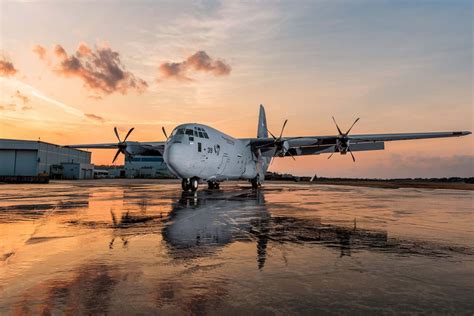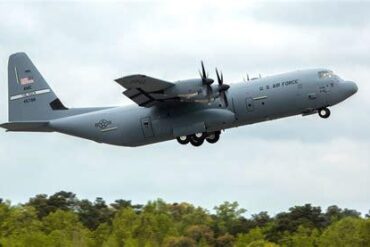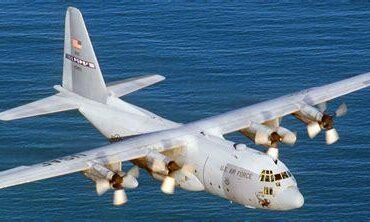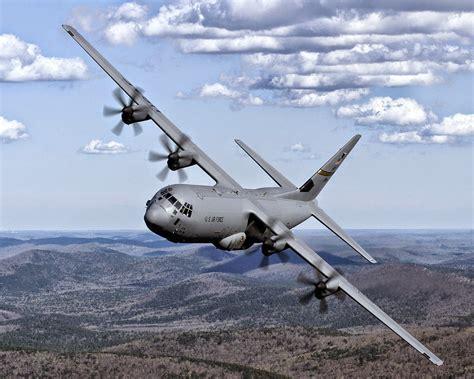
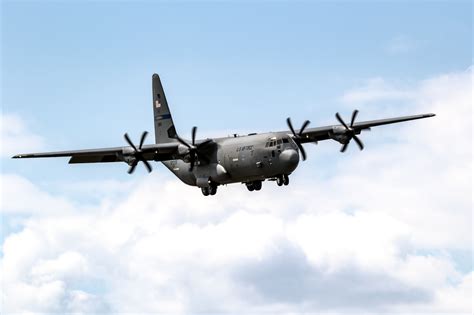
Lockheed Martin has unveiled a historic leap forward in the tactical airlift domain with the latest performance validation of the C-130J Super Hercules. Already recognized as one of the most battle-hardened, versatile transport aircraft in the world, the C-130J has now emerged from an exhaustive structural testing campaign with results that surpass even the most optimistic engineering projections. This marks a defining moment for military aviation — not just in terms of lifespan, but also in the future viability of fixed-wing transport under high-stress, real-world conditions.
The centerpiece of this achievement lies in the aircraft’s wing structure, which withstood 125% of its maximum design load without failure. This isn’t a marginal upgrade or an incremental gain. What Lockheed Martin has proven through this test is a nearly 40% increase in the expected service life of the C-130J’s wings — a result that could ripple through global airlift logistics and force readiness for decades.
A Structural Engineering Breakthrough in Tactical Aviation
At the heart of the C-130J’s longevity is its Enhanced Service Life (ESL) center wing box, first introduced into production in 2009. The center wing box is the critical structure that connects the aircraft’s wings to its fuselage and absorbs the immense stresses of flight, especially during low-altitude, heavy-load operations.
Initially designed to increase the Super Hercules’ service life beyond the previous standard of 45,000 Equivalent Flight Hours (EFH), the ESL aimed to double that number. But the recent results blew even that conservative estimate out of the water. After years of methodical testing under extreme conditions, the new validated wing life has reached 122,500 EFH — nearly triple the original baseline and well beyond the 90,000-hour projection that was already viewed as ambitious.
Inside the Rigorous Wing Durability Test (WDT)
This performance validation didn’t happen in a vacuum. The Wing Durability Test (WDT) was conducted over several years and was jointly funded by the U.S. Air Force and the Royal Canadian Air Force, with a clear objective: push the C-130J wing structure beyond its design limits and measure its real-world survivability.
To simulate decades of operational wear and tear, the test rig included:
- A C-130 ESL center wing box
- Two outer wing sections
- A center fuselage segment
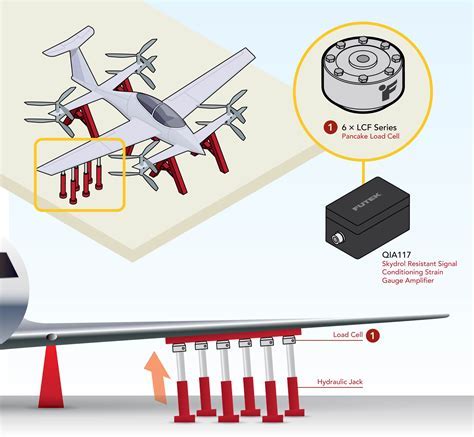
The structure was mounted in a custom-built testing apparatus designed to apply dynamic loads that mimicked actual flight stress profiles — from high-g turns and heavy load takeoffs to rapid descents and short-field landings. Over time, the wings were repeatedly flexed and stressed to simulate the brutal demands of tactical missions.
What the results showed was stunning. Not only did the structure survive the equivalent of 125% of the aircraft’s intended maximum design load, but it also maintained structural integrity throughout. That kind of performance under pressure is extremely rare in aerospace validation and speaks to the engineering robustness of Lockheed Martin’s ESL wing design.
Strategic and Economic Impacts for Global Operators
Beyond the engineering marvel, the implications of this test are deeply strategic. With more than 560 C-130Js delivered to 28 operators across 23 countries, including major air forces like those of the United States, India, Canada, and the UK, the Super Hercules remains a cornerstone of global tactical mobility.
By extending the wing life from a previous average of 45,000–90,000 EFH to 122,500 EFH, Lockheed Martin is effectively offering:
- Lower lifecycle costs for military operators
- Reduced need for costly mid-life structural overhauls
- Greater aircraft availability and mission readiness
- Longer platform relevance before next-generation replacements are required
For budget-constrained defense ministries and logistics planners, this validated extension can mean billions saved over the lifecycle of a fleet. In high-op-tempo regions, where missions don’t wait for depot maintenance, that durability translates directly into more sorties, more reach, and more resilience.
Built to Withstand the Harshest Environments
The C-130J’s relevance is defined not only by how long it can fly, but by where and how it operates. Whether in Arctic resupply missions, desert combat insertions, mountain air drops, or humanitarian relief under duress, the Super Hercules is engineered for multi-role flexibility.
Lockheed Martin’s performance validation confirms that the aircraft’s critical structures are not merely adequate, but exceptional, even under the duress of irregular flight patterns, unpaved runways, and heavy-lift requirements. This allows operators to confidently deploy the C-130J to hostile and austere environments without the structural fatigue fears associated with earlier-generation airlifters.
Industry Endorsement and Leadership Comments
Rod McLean, Vice President and General Manager of Lockheed Martin’s Air Mobility & Maritime Missions division, emphasized the historic nature of this development. “With this groundbreaking test result, we’re redefining the boundaries of what’s possible for the C-130J Super Hercules,” he stated. “Already proven in challenging operational environments, the structural durability test validated the C-130J as the standard for exceptional reliability, safety, and excellence in any environment. It is built to deliver performance and built to last.”
This declaration isn’t hyperbole. With over 3 million cumulative flight hours logged by the global Super Hercules fleet, including extensive combat and humanitarian operations, the aircraft’s record is virtually unmatched in tactical aviation.
Reinforcing Global Confidence in the Super Hercules Platform
While the durability test was initiated by North American defense partners, its implications extend far beyond U.S. and Canadian borders. Air forces in Europe, Asia, the Middle East, and Oceania have integrated the C-130J into their operations due to its proven track record, high payload-to-weight ratio, and reliability in high-tempo missions.
With the newly validated performance results, nations that have invested in the Super Hercules now possess an airframe that:
- Delivers more flying hours per dollar spent
- Reduces logistical downtime
- Boosts fleet availability
- Enhances interoperability and mission planning confidence across coalition forces
This becomes especially significant for NATO allies and other joint operation coalitions, where synchronized maintenance and readiness windows determine regional effectiveness.
Future-Proofing Tactical Aviation for the 21st Century
Lockheed Martin’s C-130J has never merely been about hardware. It’s a platform that has consistently evolved to meet emerging threats and mission profiles — from special operations variants like the MC-130J Commando II, to the KC-130J aerial refueler, and even the LM-100J commercial freighter.
With the wing durability results now firmly in hand, the foundation is set for a longer roadmap of innovation and modification. Extended service life means more justification for avionics upgrades, defensive system enhancements, and mission-specific kit modifications — all without needing to procure a new airframe.
This is an aircraft designed for longevity and transformation, a rare feat in today’s procurement-heavy military landscape where planned obsolescence and rapid tech cycles dominate the conversation.
Conclusion: A Legacy Reinforced, A Future Secured
The C-130J Super Hercules has never lacked respect among its peers in tactical aviation. But with this latest structural validation, Lockheed Martin has moved the needle beyond respect — into territory occupied only by legends. This is not simply about stronger wings. It’s about unmatched mission assurance, cost-effective longevity, and global confidence in a platform that continues to evolve, adapt, and endure.
In a defense environment increasingly driven by data, durability, and strategic versatility, the C-130J Super Hercules has just reasserted its position at the apex. With a validated wing life of 122,500 Equivalent Flight Hours, it doesn’t just fly farther — it flies longer, harder, and smarter than ever before.