The successful first flight test of Lockheed Martin’s Next-Generation Short-Range Interceptor marks a decisive step in reshaping how the U.S. Army confronts low-altitude aerial threats. Conducted on January 13, 2026, at White Sands Missile Range in New Mexico, the test moves the NGSRI program from conceptual development into operational reality, validating years of accelerated design work aimed at countering the rapidly evolving threat environment dominated by drones, cruise missiles, and low-flying aircraft. This milestone is not merely a technical achievement; it reflects a broader transformation in U.S. military priorities, where speed of innovation, modularity, and networked combat capabilities are redefining short-range air defense.
The modern battlefield has made clear that traditional air defense paradigms are no longer sufficient. Conflicts over the past decade have demonstrated how inexpensive unmanned aerial systems, loitering munitions, and low-altitude cruise missiles can overwhelm legacy defenses designed primarily for manned aircraft. Against this backdrop, the NGSRI program was conceived to replace the aging FIM-92 Stinger with a system built from the ground up for a digitally networked, drone-saturated battlespace. The first flight test confirms that this vision is moving beyond theory, proving that critical subsystems can function together in real-world conditions and laying the groundwork for a new generation of portable air defense.
From Concept to Controlled Flight in Record Time
The January 2026 flight test represents a rare example of compressed defense acquisition timelines translating into tangible results. Less than 26 months after the U.S. Army awarded the development contract in September 2023, the NGSRI interceptor achieved controlled flight, validating its launch, guidance, and control systems in a live environment. At White Sands, the missile safely transitioned from launch to stable flight, confirming that the aerodynamic design, propulsion, and digital flight controls performed as intended.
This pace is significant in an era when the Pentagon is increasingly demanding faster delivery of critical capabilities. Lockheed Martin completed a controlled flight test series in under six months, underscoring a programmatic focus on rapid iteration rather than prolonged laboratory validation. The approach reflects a shift toward “test early, test often” methodologies, where real-world data informs successive design refinements and accelerates the path to operational readiness.
The White Sands campaign is only the first step in a broader test program designed to progressively expand the interceptor’s performance envelope. Future tests will explore range limits, maneuverability, seeker performance against diverse targets, and integration with multiple launch platforms. Yet even at this early stage, the successful flight signals that the core architecture of NGSRI is sound, giving the Army confidence that its investment is yielding practical results.
A Modular Interceptor Designed for the 21st-Century Battlefield
At the heart of NGSRI’s design philosophy is modularity. Unlike legacy systems that were tightly coupled to specific launchers and support equipment, NGSRI was engineered from the outset to operate across a wide range of platforms and mission profiles. The system combines a Command Launch Assembly (CLA) with an all-up-round missile based on the Quadstar interceptor, forming a “ready round” that can be carried and fired by an individual soldier or integrated onto vehicle-mounted SHORAD systems.
One of the most consequential design choices is the integration of the Identification Friend or Foe antenna directly into the launcher housing. By eliminating the need for external IFF modules, NGSRI reduces system complexity, shortens setup time, and improves reliability in austere conditions. The missile also dispenses with the traditional battery cooling unit required by the Stinger, replacing it with a more streamlined thermal management approach that relies on standard rechargeable Army batteries. This change alone has major implications for logistics, maintenance, and operational availability.
The CLA’s fully digital interface further distinguishes NGSRI from its predecessor. Gunners no longer need to apply superelevation or manual lead calculations; instead, modern fire-control logic handles these functions automatically. This reduces cognitive load during high-stress engagements, allowing soldiers to focus on target confirmation and engagement decisions rather than mechanical procedures. The result is a system that is not only more capable but also more forgiving in the hands of less experienced operators, an important consideration as air defense responsibilities are pushed down to smaller units.
Addressing the Drone and Cruise Missile Challenge
The proliferation of drones has fundamentally altered the threat landscape. Small, low-cost unmanned systems can now conduct reconnaissance, deliver precision munitions, or act as decoys to saturate defenses. Traditional short-range air defense systems, optimized for helicopters and fast jets, often struggle to detect, identify, and engage such targets efficiently. NGSRI was explicitly designed to address this gap.
The interceptor is optimized to defeat a spectrum of threats, from slow-moving quadcopters to fast, maneuvering cruise-missile-like targets. Lockheed Martin indicates that in many scenarios NGSRI more than doubles the engagement range of the legacy Stinger, while also extending positive target identification distances by a factor of two to three. Earlier identification is critical in drone-heavy environments, where distinguishing hostile systems from friendly or neutral aerial objects can be challenging.
Advanced guidance algorithms, combined with improvements in fuze design and warhead effectiveness, are intended to ensure lethality against small, agile targets. These enhancements are particularly important against loitering munitions, which often present minimal radar and infrared signatures and can execute evasive maneuvers in the terminal phase. By pairing extended range with improved seeker performance, NGSRI aims to engage threats earlier and with a higher probability of kill, reducing the burden on other layers of air defense.
Digital Integration and Open-Systems Architecture
One of the defining characteristics of NGSRI is its open-systems architecture. Rather than functioning as a standalone weapon, the interceptor is designed to operate as part of a networked Integrated Air and Missile Defense ecosystem. This approach reflects lessons learned from recent conflicts, where the ability to share sensor data and cue shooters across multiple domains has proven decisive.
NGSRI’s digital fire control and software-defined interfaces allow it to receive target cues from external sensors, including vehicle-mounted radars, passive detection systems, and potentially higher-echelon assets. Over time, this architecture could support advanced engagement modes such as lock-on-after-launch or collaborative targeting, where multiple interceptors coordinate to defeat complex threats.
Artificial intelligence and machine learning play a growing role in this ecosystem. While details remain limited, Lockheed Martin has indicated that advanced software will assist with threat classification and engagement decision support, helping operators prioritize targets in cluttered airspaces. Importantly, these capabilities are designed to be upgradeable through software updates rather than requiring hardware redesigns, ensuring that NGSRI can evolve as threats change.
Compatibility and the Path to Fielding
A key requirement for NGSRI has been compatibility with existing launch infrastructure. The interceptor is engineered to work seamlessly with current U.S. Army and Marine Corps launchers, including the four-pack Stinger Vehicle Universal Launcher, the Standard Vehicle Mounted Launcher, and the two-pack air-to-air launcher. This design choice minimizes disruption to existing units, allowing a gradual transition from Stinger to NGSRI without wholesale replacement of platforms.
In its soldier-portable configuration, NGSRI retains the familiar form factor of man-portable air defense systems while offering substantially enhanced performance. On vehicles, the same missile can be fielded in greater numbers, providing denser coverage for maneuver units, command posts, and critical infrastructure. The architecture also leaves open the possibility of future air-launched applications, reinforcing the concept of a common interceptor family rather than multiple platform-specific missiles.
Developmental testing is planned to continue through 2026, with Low-Rate Initial Production projected around 2028, subject to Army decisions and competitive outcomes. If this timeline holds, NGSRI could begin entering operational units within the decade, coinciding with the broader reconstitution and expansion of U.S. Army short-range air defense formations.
Lessons from Legacy Systems and Why Change Was Necessary
The FIM-92 Stinger has served the U.S. military and its allies for decades, proving its effectiveness against helicopters and low-flying aircraft. However, its analog interfaces, limited networking capabilities, and logistics-intensive support requirements reflect the technological constraints of its era. In a battlespace defined by rapid information flow and distributed sensors, these limitations have become increasingly apparent.
Legacy SHORAD systems were not designed to operate as nodes in a digital network. They rely heavily on organic sensors and visual identification, making them less effective against small, low-signature threats operating in complex environments. Maintenance burdens, including specialized cooling units and aging components, further complicate sustained operations.
NGSRI addresses these shortcomings directly. By embracing digital fire control, open interfaces, and standardized power sources, it aligns short-range air defense with the broader modernization of U.S. ground forces. The result is a system that can be more easily integrated into combined-arms operations, where air defense is no longer a niche capability but a foundational element of force protection.
Strategic Implications for the U.S. Army and Allies
The successful first flight test has implications that extend beyond the technical realm. Strategically, it confirms that the Army’s approximately $312 million prototype investment is producing tangible progress toward a next-generation capability. The emphasis on a common, modular interceptor supports a shift away from fragmented missile inventories toward unified solutions that can be adapted across echelons and missions.
For the U.S. Army, this approach promises simplified training pipelines, reduced spares inventories, and lower lifecycle costs. As SHORAD units are reestablished and expanded, a modern, adaptable interceptor like NGSRI can be fielded widely without imposing excessive logistical burdens. The ability to offer the system at a competitive price point further enhances its attractiveness in an era of constrained defense budgets.
Allied forces stand to benefit as well. A U.S.-standard interceptor with open interfaces and clear growth margins offers a pathway for multinational interoperability. Allies seeking to modernize their own short-range air defenses could adopt NGSRI and integrate it into existing or emerging air defense networks, sharing supply chains and benefiting from economies of scale.
Operational Impact on Future Battlefields
If NGSRI enters service as envisioned, it could significantly alter how air defense is distributed across combat formations. A longer-range, digitally cued, soldier-portable interceptor enables small units to defend themselves against aerial threats without relying exclusively on higher-echelon assets. This decentralization is particularly important in dispersed operations, where units may operate beyond the protective umbrella of traditional air defenses.
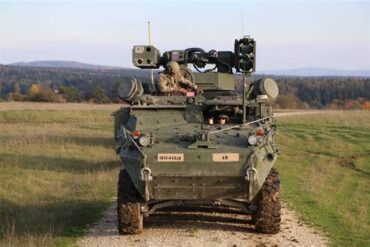
On vehicles, NGSRI-equipped launchers can provide mobile, responsive coverage for maneuver forces, protecting them against drones and low-flying missiles during advances or withdrawals. In rear areas, the same system can safeguard logistics hubs, command centers, and critical infrastructure, addressing vulnerabilities that have been exploited in recent conflicts.
The interceptor’s ability to integrate into broader Integrated Air and Missile Defense architectures further amplifies its impact. By acting as a node in a distributed kill web, NGSRI-equipped units can receive cues from distant sensors and engage threats they might not otherwise detect. This networked approach enhances resilience, ensuring that the loss or degradation of individual sensors does not cripple the overall defense.
Industrial Significance and Lockheed Martin’s Broader Portfolio
From an industrial perspective, the NGSRI program showcases Lockheed Martin’s ability to align with evolving Pentagon acquisition priorities. Delivering a flight-tested interceptor in just over two years demonstrates a capacity for rapid development without sacrificing rigor, a balance that has often eluded large defense programs.
The company emphasizes that NGSRI is designed for manufacturability and affordability, leveraging standardized components and streamlined production processes. This focus supports rapid scaling if the Army decides to accelerate procurement, while also making the system more accessible to international customers.
NGSRI fits within Lockheed Martin’s broader portfolio of all-domain mission solutions, reinforcing its role as a leading provider of integrated air and missile defense capabilities. By extending its expertise from strategic missile defense down to the tactical, soldier-level domain, the company positions itself to address the full spectrum of aerial threats facing modern militaries.
A Milestone with Far-Reaching Consequences
The first successful flight of the Next-Generation Short-Range Interceptor at White Sands Missile Range is more than a program milestone; it is an early indicator of how short-range air defense is being reimagined for the 21st century. Built around modularity, digital integration, and rapid upgradeability, NGSRI reflects a deliberate move away from static, single-mission designs toward adaptable systems that can evolve alongside emerging threats.
As testing continues and the program moves toward production decisions later in the decade, the interceptor’s performance will be scrutinized closely. Yet even at this stage, the successful flight validates the Army’s modernization strategy and underscores the importance of investing in capabilities that protect soldiers and critical assets from the increasingly complex aerial threats of modern warfare.
In an era where the skies above the battlefield are more contested than ever, NGSRI represents a decisive step toward restoring balance, ensuring that ground forces are not only aware of what flies overhead but are equipped to defeat it swiftly, accurately, and with confidence.