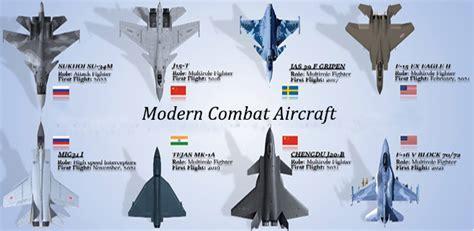
The question of whether Lockheed Martin or Airbus produces more military aircraft sounds simple on the surface, but it quickly unfolds into a layered debate about industrial focus, aircraft categories, production philosophy, and geopolitical strategy. These two aerospace giants operate in the same sky yet follow radically different flight paths. One is deeply rooted in defense-first thinking, the other balances military ambition with overwhelming commercial dominance. Counting airframes alone tells only part of the story. Understanding what is built, why it is built, and how it is delivered reveals a far sharper picture.
At first glance, Airbus appears omnipresent. Its commercial jets dominate global air travel, its helicopters serve armies and emergency services worldwide, and its transports and tankers underpin European airpower. Lockheed Martin, by contrast, feels more selective, more surgical. Its name is inseparable from the most advanced combat aircraft ever fielded, and its production lines are tuned for capability rather than volume. When military aviation is measured not just in numbers but in strategic weight, the comparison becomes fascinatingly uneven.
This article cuts through surface-level metrics and marketing narratives to examine production reality. It explores helicopters, fighters, transports, tankers, and future systems, revealing why Lockheed Martin remains the larger military aircraft producer overall, even as Airbus quietly dominates specific niches and positions itself for a very different future.
Defense DNA vs. Commercial Gravity
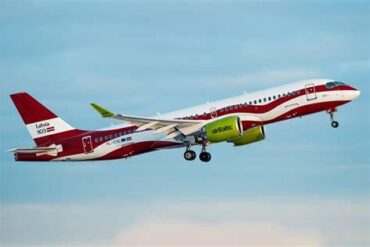
Airbus is, at its core, a commercial aerospace colossus with a substantial but secondary defense arm. Roughly 70–75% of Airbus revenue flows from commercial airliners, with defense and space contributing a far smaller share. Even when military helicopters are included, defense-related activity accounts for roughly one quarter of Airbus’ total business. This structure shapes everything Airbus builds: production cadence, cost discipline, and export strategy are all influenced by commercial manufacturing logic.
Lockheed Martin sits at the opposite extreme. Around 96% of its revenue is defense-related, with the United States government alone accounting for nearly three-quarters of total sales. Lockheed does not balance defense against commercial aviation; defense is the business. This allows it to pursue aircraft that are extraordinarily expensive, technologically dense, and politically sensitive, aircraft that would be commercially irrational but militarily indispensable.
The contrast matters because production volume cannot be separated from production intent. Airbus often builds military aircraft derived from commercial platforms or designed for multinational compromise. Lockheed builds aircraft designed to dominate specific mission sets, even if that means smaller fleets at far higher unit cost. This difference echoes throughout every category of military aviation.
Helicopters: Airbus Leads in Numbers, Lockheed in Value
In raw helicopter output, Airbus Helicopters is the undisputed heavyweight of the Western world. Annual deliveries regularly exceed 350 helicopters, spanning civil, parapublic, and military customers. Even a conservative estimate suggests 150 or more of these are military variants, feeding armed forces across Europe, Asia, the Middle East, and Latin America. Airbus helicopters are everywhere, from light utility roles to heavy naval operations, and more than 2,600 military Airbus helicopters are currently in service worldwide.
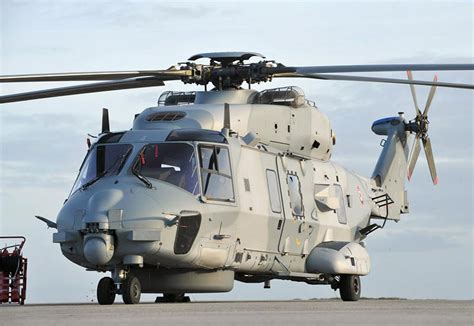
Lockheed Martin’s helicopter presence flows almost entirely through Sikorsky, whose output is far smaller in unit terms, averaging around 80 military helicopters per year. Yet these aircraft occupy a very different economic and operational tier. The MH-60R Seahawk, CH-53K King Stallion, and VH-92 presidential helicopter are among the most expensive and mission-critical rotary-wing platforms in existence. Each airframe integrates advanced sensors, avionics, survivability systems, and sustainment contracts that dramatically inflate lifetime value.
The result is a paradox. Airbus almost certainly delivers more military helicopters by count, but Lockheed likely generates equal or greater revenue from fewer airframes. This reflects a recurring pattern in the broader comparison: Airbus scales outward, Lockheed scales upward.
Fighter Aircraft: Lockheed Martin’s Uncontested Stronghold
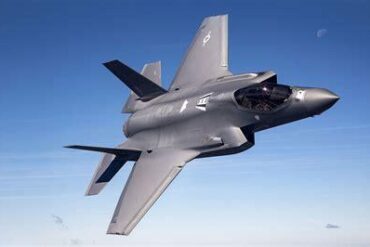
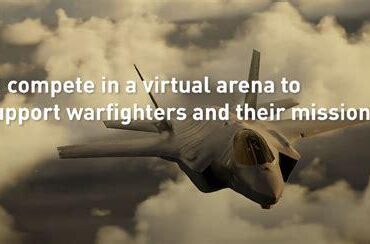
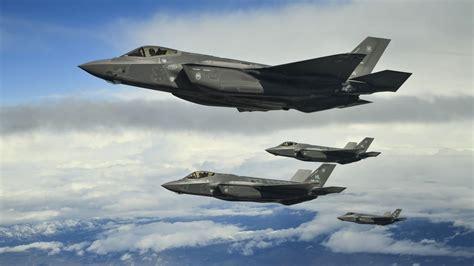
If helicopters are a nuanced contest, fighter jets are not. This is where Lockheed Martin’s dominance becomes overwhelming. The F-35 Lightning II alone reshapes the global fighter landscape. In 2025, Lockheed delivered 191 F-35s, a number that exceeded the combined output of all Western non-Chinese fighter programs. Production rebounded sharply after earlier software delays, and the program is stabilizing toward a sustained annual rate of 156+ aircraft.
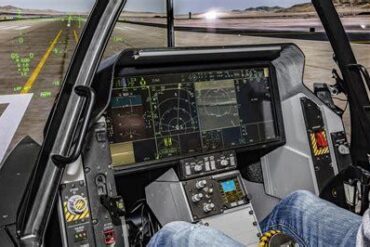
Each F-35 is not merely a fighter but a networked combat system, integrating stealth, sensor fusion, electronic warfare, and coalition interoperability. More than 1,000 F-35s have now been delivered globally, embedding Lockheed Martin at the center of NATO and allied airpower for decades to come.
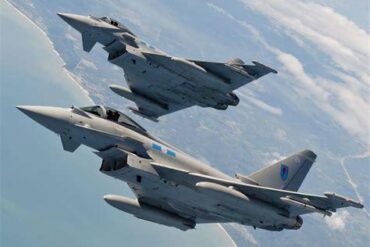
Airbus’ fighter involvement is limited to its 46% industrial share of the Eurofighter Typhoon, a fourth-generation platform nearing the limits of its production life. Annual deliveries typically range between 10 and 20 aircraft, meaning Airbus’ direct contribution is fewer than ten fighters per year. While new European orders may sustain the line into the early 2030s, the scale is simply not comparable.
Add to this Lockheed’s ongoing F-16 Fighting Falcon production, still delivering aircraft to export customers, and the gap widens further. In fighter aviation, Lockheed Martin does not merely produce more aircraft; it defines the category.
Transports and Tankers: Different Aircraft, Different Philosophies
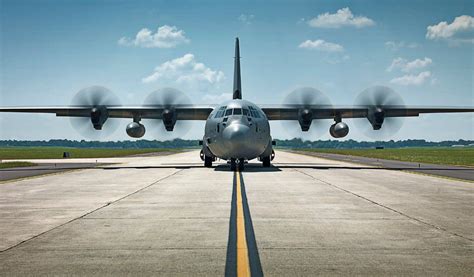
Military transport aircraft reveal how divergent design philosophies complicate direct comparisons. Airbus’ A400M Atlas is a strategic-tactical hybrid, larger and more capable than the C-130J Super Hercules, yet far less numerous. Airbus delivers single-digit A400Ms annually, and total production has reached roughly 130 aircraft. The Atlas excels at outsized cargo and long-range operations but remains confined largely to European operators.
Lockheed’s C-130J, by contrast, is the evolutionary endpoint of one of the most successful military aircraft families in history. Annual deliveries hover in the low teens, modest on paper but cumulatively vast. More than 590 C-130Js are in service, supported by decades of logistics infrastructure and multinational familiarity. Its adaptability, from special operations to humanitarian relief, ensures steady demand even in a crowded market.
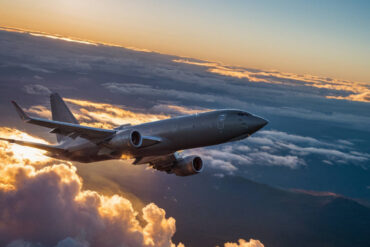
In aerial refueling, Airbus fields the A330 MRTT, arguably the most capable export tanker available. Deliveries remain low, but its global footprint is growing. Lockheed has no direct equivalent, underscoring a recurring theme: Airbus’ military aircraft portfolio often complements, rather than mirrors, Lockheed’s.
Production Numbers vs. Strategic Mass
Counting military aircraft purely by annual deliveries can mislead. Airbus likely ships more total military airframes when helicopters are fully counted. Lockheed, however, produces more combat aircraft of decisive strategic value, particularly fighters and high-end rotorcraft. A single F-35 represents more military capability, cost, and industrial effort than several light utility helicopters combined.
This distinction matters because modern air forces prioritize capability density over fleet size. Lockheed’s production is optimized for this reality. Airbus, shaped by its commercial heritage, excels at scalable platforms that can be adapted across missions and budgets. Both approaches are rational. They simply serve different strategic cultures.
Sixth-Generation Fighters: Uncertainty for Both Giants
Neither manufacturer currently enjoys a clear advantage in the looming sixth-generation fighter era. Lockheed Martin, despite its fifth-generation triumphs, lost the US Air Force’s F-47 program to Boeing and has been excluded from the US Navy’s next-generation fighter competition. Its future fighter relevance now hinges almost entirely on sustaining and upgrading the F-35.
Airbus participates in Europe’s FCAS program, but internal disputes threaten its viability. Should FCAS falter, Airbus may be forced to realign with alternative programs or accept a diminished role in crewed fighter production. The irony is striking: both giants, despite their pedigree, face uncertainty at the very frontier of manned combat aviation.
The Drone-Centric Future of Military Aviation
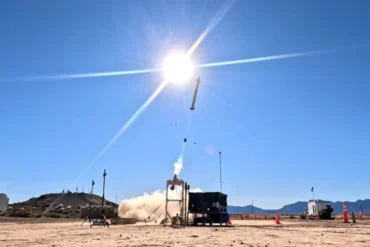
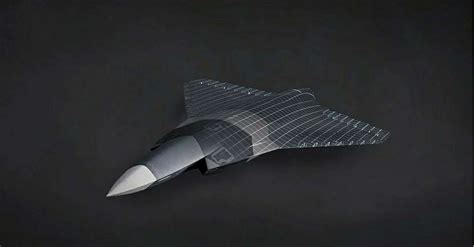
Where the future tilts decisively is toward uncrewed combat aerial vehicles. Airbus is aggressively positioning itself here, unveiling loyal wingman concepts and partnering on advanced drone platforms for European customers. Lockheed, though initially losing ground in early US programs, continues to refine high-end autonomous combat systems like Vectis, aiming to integrate drones seamlessly with crewed fighters.
Drone production will likely favor higher volumes and lower unit costs, conditions that align more closely with Airbus’ industrial strengths. If UCAVs become the dominant form of military aircraft production, the balance between these two manufacturers could shift dramatically.
Final Verdict: Who Produces More Military Aircraft?
Measured purely by unit count, Airbus likely delivers more military airframes each year, driven by helicopter output. Measured by combat aircraft, technological depth, and strategic impact, Lockheed Martin is clearly the larger military aircraft producer. Its dominance in fighters, high-end helicopters, and mission-critical transports outweighs Airbus’ numerical advantage.
Yet the story is not static. Airbus is expanding its defense footprint, Europe is rearming, and the center of gravity in military aviation is drifting toward uncrewed systems. Lockheed leads today, decisively and unmistakably, but the next chapter of military aircraft production may reward a very different kind of industrial power.