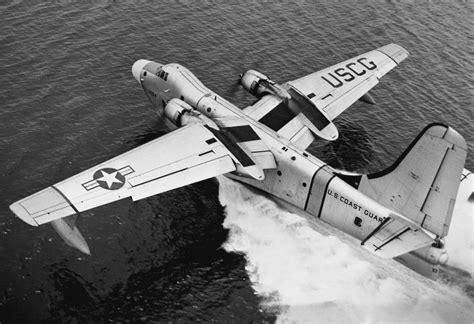
The modern aerospace world often begins its story with stealth fighters, hypersonic missiles, and satellite networks. Companies like Lockheed Martin, famous for aircraft such as the F-35 Lightning II, are now synonymous with cutting-edge military technology. Yet long before radar-evading jets and intercontinental missiles dominated defense headlines, the companies that eventually formed Lockheed Martin were building something far more experimental: fragile, handmade aircraft crafted during the dawn of aviation itself.
In the early 20th century, aviation existed somewhere between science experiment and daredevil spectacle. Engineers worked without established aeronautical textbooks, and many aircraft designs were built in garages, barns, or improvised workshops. Glenn L. Martin, along with brothers Allan and Malcolm Lockheed, belonged to a small group of pioneers who believed human flight could evolve from novelty into a global transportation revolution.
The companies they founded—the Glenn L. Martin Company and the Alco Hydro-Aeroplane Company, which later became Lockheed Aircraft Company—emerged only nine years after the Wright brothers’ historic flight at Kitty Hawk in 1903. Their earliest aircraft were not stealth fighters or bombers. They were seaplanes, biplanes, and experimental flying boats that struggled against gravity and mechanical uncertainty, laying the technological groundwork for the aerospace empire that would follow.
Glenn L. Martin and the Risk-Filled Birth of American Aviation
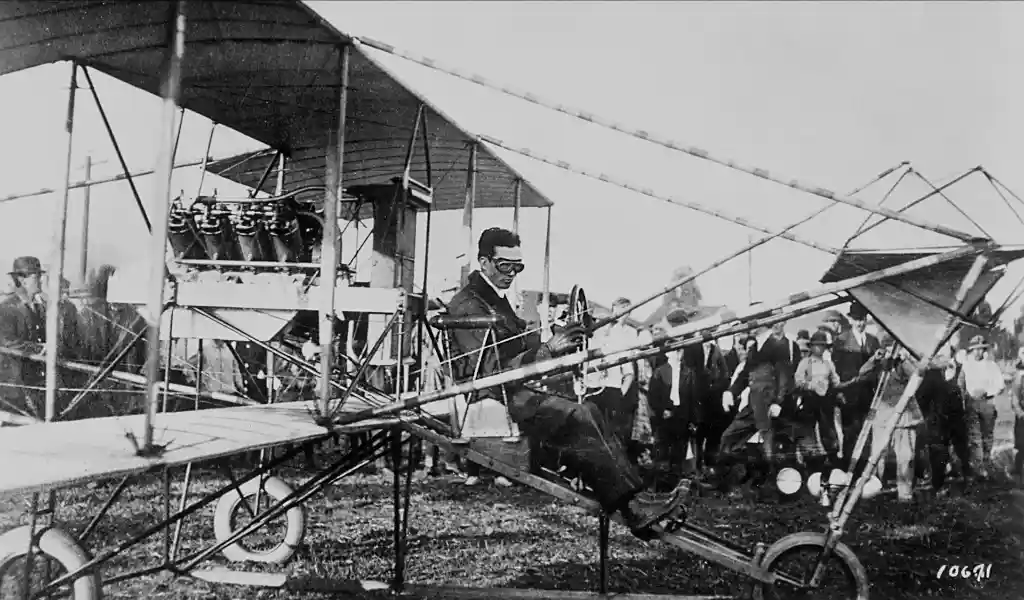
Glenn Luther Martin’s path into aviation looked more like a laboratory accident than a carefully planned engineering career. In July 1907, he attempted to fly a single-wing aircraft he had designed and assembled inside a rented church. The aircraft stalled almost immediately. When Martin attempted to restart it by spinning the propeller manually, the machine lunged forward unexpectedly. He barely escaped serious injury, while the aircraft itself was destroyed.
The near-disaster did not end his fascination with flight. Instead, it strengthened it. By August 1909, Martin had successfully flown another aircraft, and within just a few years he gained recognition as one of the emerging innovators in American aviation. At a time when pilots were still experimenting with control surfaces and engine placement, Martin displayed both engineering curiosity and remarkable personal courage.
By 1912, he founded the Glenn L. Martin Company in Los Angeles, formally entering the young aircraft manufacturing industry. His early machines were relatively simple biplanes, but they quickly evolved into more ambitious designs.
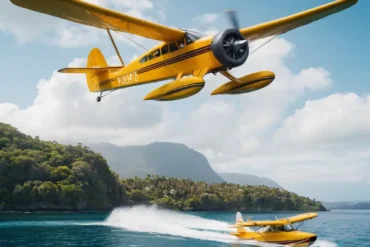
One of Martin’s most influential innovations was transforming a conventional aircraft into a hydroplane, an aircraft capable of taking off and landing on water. By attaching a single pontoon beneath the fuselage of the Martin Model 12, he created a machine that could operate far beyond traditional airfields, which were scarce and poorly developed at the time.
In a bold demonstration flight, Martin piloted the aircraft 34 miles from the California mainland to Catalina Island and back, achieving two world records: the longest hydroplane flight and the longest round-trip flight over open water. The journey also included another milestone—one of the earliest aerial mail deliveries, proving aircraft could serve practical transportation roles.
Flying Boats That Opened the Pacific
As aviation matured through the 1920s and early 1930s, Martin expanded his company’s ambitions dramatically. In 1929, he purchased 1,260 acres near Baltimore, Maryland, establishing a massive manufacturing complex that would become one of the most important aircraft production centers in the United States.
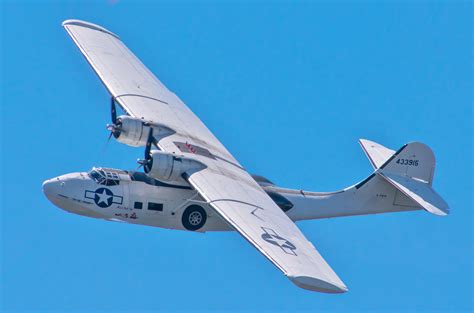
During the early 1930s, long-distance commercial aviation was still constrained by limited aircraft range and a lack of reliable runways across the Pacific. Airlines needed aircraft capable of landing on open water, where harbors could substitute for runways. This requirement led Pan American Airways (Pan Am) to request proposals for large transoceanic flying boats capable of crossing the Pacific Ocean.
Only two companies responded: Martin and Sikorsky Aircraft.
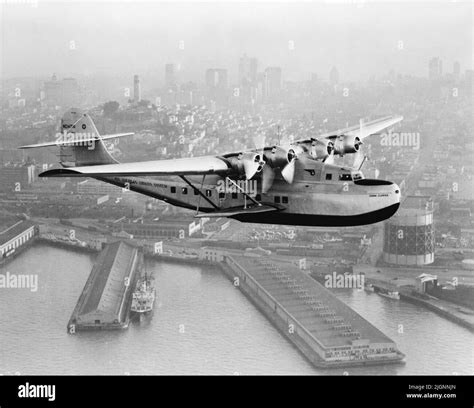
Martin ultimately secured the contract with the Martin M-130, a massive flying boat designed specifically for long-range passenger routes. Introduced in 1935, these aircraft—known individually as the China Clipper, Philippine Clipper, and Hawaii Clipper—became icons of early global air travel.
These aircraft were engineering marvels of their era. With enormous wingspans and multiple radial engines, the flying boats could transport passengers across vast stretches of ocean, linking continents at speeds unimaginable just decades earlier.
The Baltimore facility that built these aircraft later became a cornerstone of the American wartime aviation industry. At the height of World War II, the plant employed more than 50,000 workers and produced over 11,000 aircraft, supplying bombers and patrol planes critical to Allied operations.
Martin’s technological influence did not stop with aircraft. By 1962, the company—then operating as Martin Marietta—developed the Titan I intercontinental ballistic missile, one of the United States’ first operational multistage nuclear missile systems.
The Lockheed Brothers and the Rise of Seaplane Innovation
While Glenn Martin was advancing aviation in Southern California, another pair of innovators worked quietly in Northern California. Allan and Malcolm Lockheed, whose surname was originally spelled “Loughead,” founded the Alco Hydro-Aeroplane Company in 1912 from a modest garage near the San Francisco waterfront.
Their focus from the start was clear: seaplanes.
Water offered a convenient runway when paved airstrips were nearly nonexistent. By designing aircraft capable of operating from bays and harbors, the Lockheed brothers could bypass the infrastructure problem that limited early aviation.
Allan Lockheed’s first flight experience came in 1910, when he piloted a Curtiss pusher biplane powered by a 30-horsepower engine. Despite having no prior flying experience, he successfully completed the flight before a crowd gathered at a Chicago baseball field to witness the spectacle.
The experience ignited a determination to build aircraft of his own.
After experimenting with several prototypes, the brothers finally succeeded with their seventh design—the Model G seaplane. Built with funding from the Alco Cab Company, the aircraft featured a sled-shaped pontoon beneath the fuselage and seating for two passengers.
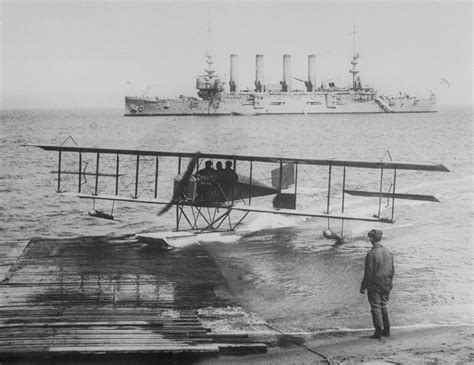
On June 15, 1913, Allan Lockheed flew the Model G across San Francisco Bay, completing three successful test flights. The aircraft reached 50 miles per hour and climbed to approximately 300 feet, modest numbers today but extraordinary achievements at the time.
A World’s Fair That Launched Lockheed
The Model G gained national attention two years later at the 1915 Panama–Pacific International Exposition, a massive world’s fair held in San Francisco. Aviation demonstrations were among the most popular attractions, and the Lockheed brothers seized the opportunity.
During the event, they flew approximately 600 paying passengers, each purchasing a 10-minute flight for $10—a substantial sum at the time. For many attendees, it was their first experience leaving the ground in an aircraft.
The demonstration proved not only the reliability of the aircraft but also the public’s growing fascination with aviation. By the end of the exposition, the Lockheeds had earned around $4,000 in profit, enough to formally establish the Lockheed Aircraft Manufacturing Company.
The brothers soon went on to design one of the largest seaplanes built in the United States, signaling the company’s transition from experimental workshop to serious aviation manufacturer.
The Foundation of a Future Aerospace Giant
The technological paths of Glenn L. Martin and the Lockheed brothers began separately but eventually converged. Decades of aircraft innovation—from seaplanes and flying boats to bombers, missiles, and spacecraft—transformed their companies into pillars of the American aerospace industry.
In 1995, the two corporate lineages officially merged when Lockheed Corporation and Martin Marietta combined to form Lockheed Martin, creating one of the world’s largest defense contractors.
The stealth fighters and advanced missile systems that define the company today stand atop a surprisingly humble foundation: wooden aircraft frames, pontoons skimming across coastal waters, and engineers daring enough to test machines that sometimes barely stayed airborne.
Those early hydro-aeroplanes and flying boats did more than pioneer flight. They proved that aviation could evolve from risky experimentation into the backbone of modern aerospace power.