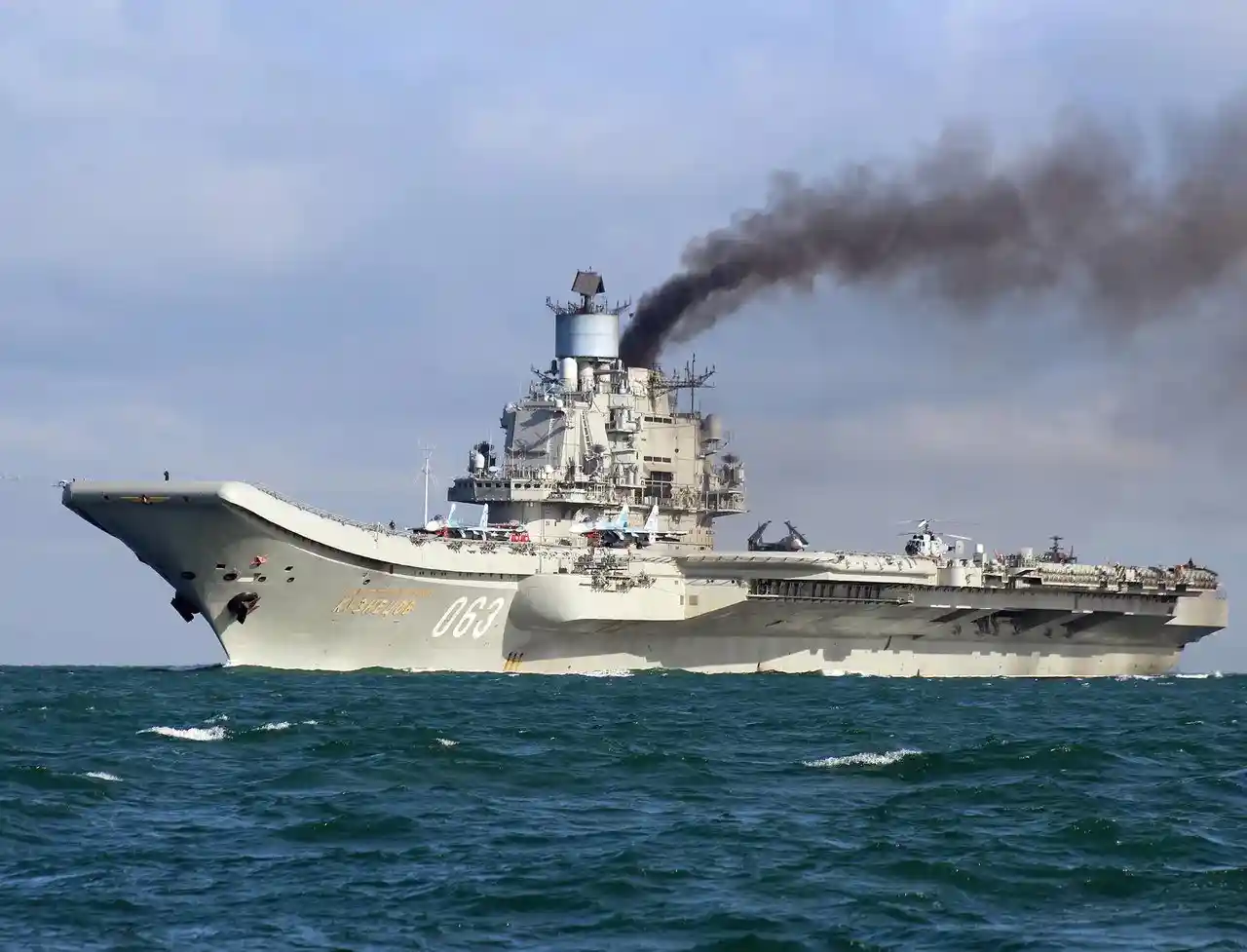
After nearly a decade of costly delays, disasters, and debate, Russia is preparing to scrap its only aircraft carrier, the troubled Admiral Kuznetsov. This dramatic move would leave Moscow as the only military superpower on Earth without a functional aircraft carrier, triggering widespread debate about the future of naval warfare and Russia’s diminished maritime status.
The End of a Soviet Legacy
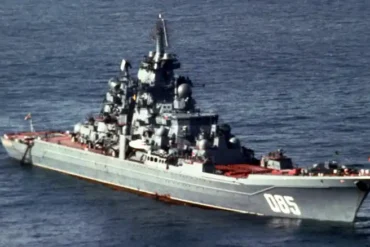
Commissioned in 1990 and inherited from the Soviet Union, the Admiral Kuznetsov has long been a symbol of Russian naval ambitions. Launched from the Black Sea Shipyard in Mykolaiv (now part of Ukraine), the vessel represented Soviet engineering prowess during the Cold War’s waning years. Following the Soviet collapse, it became the Russian Navy’s flagship and only carrier-capable warship.
Throughout its service, the Kuznetsov took part in major military operations, including combat missions off Syria’s coast in 2016, where it launched over 400 sorties. But the symbolic potency of these missions was often overshadowed by the ship’s plagued mechanical record, maintenance difficulties, and repeated incidents at sea and in dock.
A Catalog of Failures: Why the Kuznetsov Became ‘Cursed’
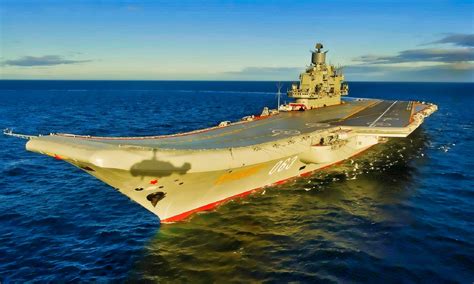
Since entering drydock in 2018, the ship has earned the nickname “the cursed carrier”—and not without reason. It has suffered catastrophic accidents that some military analysts describe as emblematic of the structural and technological decline of Russia’s naval shipbuilding industry.
In October 2018, the massive floating drydock PD-50 sank beneath the ship during repairs, puncturing a massive hole in the Kuznetsov’s deck. Just over a year later, a fire erupted during welding operations, killing two workers and injuring fourteen others. In 2022, yet another fire broke out aboard the ship, raising fresh doubts about the efficacy of its modernization process.
These tragic episodes weren’t merely unfortunate—they exposed the systemic limitations of Russia’s naval infrastructure and its inability to maintain such a complex warship. As modernization dragged on, even optimistic estimates pushed the carrier’s return date from 2022 to 2024, and then to 2025. With continued delays, ballooning costs, and new Western sanctions imposed after the invasion of Ukraine, the Kremlin’s patience appears to have finally run out.
Official Decision Pending, But Sentiment Clear
According to Russian outlet Izvestia, high-level deliberations within the Russian Ministry of Defense and United Shipbuilding Corporation have placed the ship’s overhaul in abeyance. The final decision on decommissioning the vessel is imminent. But sources suggest the outcome is all but sealed.
Former Pacific Fleet commander Admiral Sergei Avakyants has gone on record denouncing aircraft carriers as “obsolete”, arguing they are too vulnerable to modern precision weapons and do not serve Russia’s strategic needs. In his view, robotic and unmanned systems represent the future of naval warfare—not aging behemoths like the Kuznetsov.
“If a decision is made not to continue the repairs, the only thing left to do is to take the Admiral Kuznetsov, cut it up for scrap metal, and dispose of it,” Avakyants declared.
Strategic Critics Disagree: Is Russia Making a Mistake?
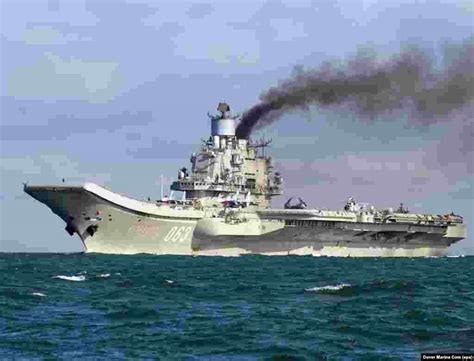
Not everyone in Russia’s naval community agrees. Vice Admiral Vladimir Pepelyaev, in his book Aircraft Carrier, argues that carriers are indispensable for projecting power across vast oceans—especially for a nation like Russia with ambitions in the Arctic, Pacific, and Mediterranean theaters. He joins a chorus of global experts who still see aircraft carriers as vital for modern blue-water navies.
The United States Indo-Pacific Command (USINDOPACOM) Commander Admiral S. J. Paparo has repeatedly emphasized that carriers remain central to multi-domain warfare. He describes them as “mobile, maritime air bases” capable of operating without permission from foreign governments—a tactical advantage few assets can replicate.
Russia’s Naval Future: Big Ambitions, Limited Resources
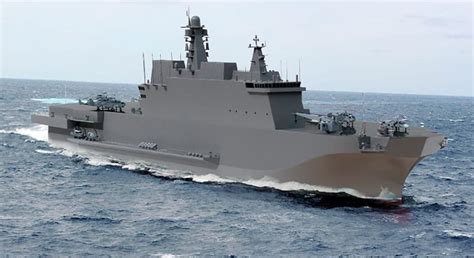
Despite the decision to abandon the Kuznetsov, Russia isn’t giving up entirely on building large warships. Construction is underway on the Project 23900 Ivan Rogov-class amphibious assault ships—the largest surface combatants built in Russia in over 30 years. These vessels could potentially serve as platforms for vertical takeoff aircraft or drones, offering a more flexible alternative to traditional carriers.
Rear Admiral Mikhail Chekmasov recently stated that Russia’s long-term naval doctrine still envisions carrier capabilities. Policy documents like the “Fundamentals of State Policy in the Field of Naval Activities Until 2030” specifically call for aircraft carriers in the Northern and Pacific Fleets. However, progress has been slow, and details about the so-called “unmanned carrier” projects remain scarce.
With the war in Ukraine draining financial and industrial resources, many analysts believe Russia may shelve carrier development until at least 2050.
Global Contrast: While Russia Retreats, Others Advance
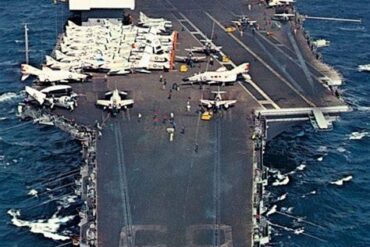
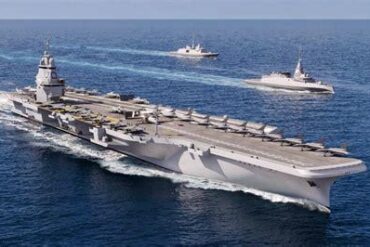
As Russia moves away from traditional carriers, other powers are charging full speed ahead. The United States Navy continues to expand its Ford-class supercarriers, packed with cutting-edge technology and electromagnetic catapults. Meanwhile, China’s third aircraft carrier, the Fujian, recently entered sea trials and is designed to match American carriers in size and capability.
India is pressing forward with its second indigenous carrier to succeed the INS Vikramaditya, while Japan has retrofitted two Izumo-class helicopter destroyers to operate F-35B jets, blurring the line between carrier and destroyer.
These developments starkly contrast Russia’s situation. For a nation that once competed with the United States for maritime dominance, losing its only carrier without a clear replacement signals a strategic retreat, not just a tactical recalibration.
Geopolitical Implications: A Superpower Without a Flattop
Russia’s shift away from carrier aviation could reshape its role in global maritime affairs. Without a carrier, Russia loses a critical instrument for long-range force projection, crisis response, and prestige-building. It hampers the Kremlin’s ability to operate in distant waters without relying on foreign bases—a crucial factor in modern naval diplomacy.
In the wake of Moskva’s sinking in 2022, the Kuznetsov’s decommissioning further reduces Russia’s ability to present a credible naval deterrent. While submarines and missile cruisers can still inflict damage, the soft power, presence, and versatility of an aircraft carrier remain unmatched.
This decision may also embolden adversaries. Without a carrier, Russian forces operating in the Mediterranean or Indian Ocean face increased vulnerability and operational complexity. The absence of organic air support makes amphibious or expeditionary operations riskier and limits Russia’s response options in rapidly evolving theaters.
From Icon to Scrap: The Last Chapter for Admiral Kuznetsov
What began as a Cold War marvel may now end in a scrapyard, a sobering end to a vessel that once symbolized Soviet pride and Russian persistence. The Admiral Kuznetsov was more than just a warship—it was a floating representation of Russia’s aspiration to remain a global naval power.
Its fall into obsolescence reflects the broader tensions between ambition and capability, prestige and practicality. As the geopolitical landscape evolves and naval warfare enters a new era of autonomy, precision, and distributed lethality, the age of massive, conventional carriers is being tested.
But while others adapt by modernizing their carrier fleets, Russia’s retreat leaves a vacuum in its naval doctrine. Whether it can fill that vacuum with next-generation solutions remains to be seen. For now, the Admiral Kuznetsov’s legacy is sealed—as the cursed ship that marked the end of Russia’s aircraft carrier era.