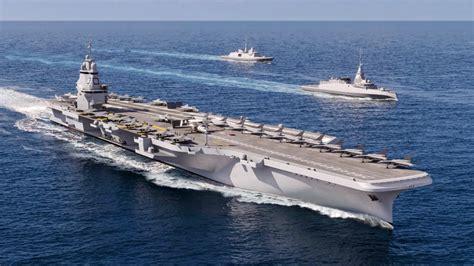
As the global strategic landscape grows more volatile, Europe’s naval capabilities are entering a transformative phase, marked by an assertive race between France and Turkey to develop next-generation supercarriers. Far from relics of the Cold War, these aircraft carriers represent not only symbols of prestige and military might but also crucial instruments of power projection in contested waters. With the French Porte-Avions Nouvelle Génération (PA-NG) and Turkey’s Mili Ucak Gemisi (MUGEM) programs pushing boundaries, Europe is witnessing an unprecedented maritime reawakening.
Turkey’s Naval Leap: Inside the MUGEM Program
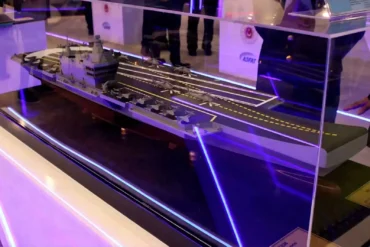
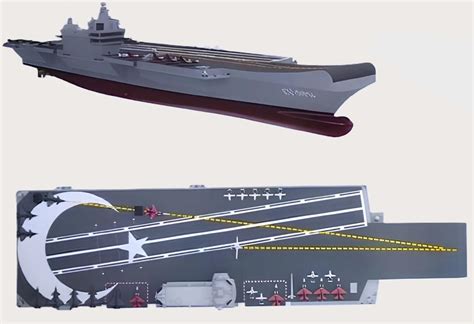
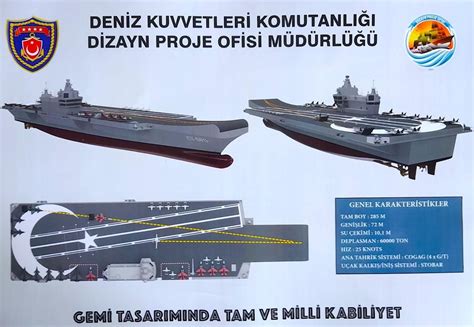
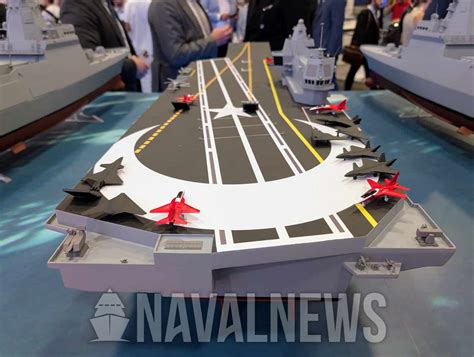
On the bustling shipyards of Istanbul, Turkish President Recep Tayyip Erdogan announced a watershed moment in Turkey’s maritime aspirations—the construction of MUGEM, the country’s first true aircraft carrier. Positioned as the “elder sibling” of the TCG Anadolu, MUGEM is no longer just a vision. With its hull length increased to 300 meters—surpassing earlier designs of 285 meters—it is poised to become the largest Turkish warship ever built.
The increase in length is not just cosmetic. It provides a broader flight deck and expanded operational capability, impacting everything from aircraft launch mechanisms to deck logistics. MUGEM’s anticipated displacement of 60,000–70,000 tons places it in the same class as Britain’s Queen Elizabeth-class, marking a massive departure from Turkey’s traditionally modest naval doctrine. It remains smaller than behemoths like the USS Gerald R. Ford or China’s Fujian, but is still undeniably a supercarrier by global standards.
The project was formally revealed during Erdogan’s visit to the Istanbul Naval Shipyard Design Project Office in February 2024. By April, Turkish naval officials offered a glimpse into the technological sophistication of the carrier. A multi-dimensional optimization tool was used to shape the hull, ensuring enhanced seakeeping, maneuverability, and stability. The bow design, apart from reducing fuel consumption by 1.5%, significantly lowers underwater noise, a key feature for operational stealth.
Flight Capabilities: From STOVL to Electromagnetic Aspirations
Initially, MUGEM was conceptualized with a ski-jump ramp, reflecting Turkey’s early ambition to host F-35B STOVL fighters. However, after Ankara’s ejection from the F-35 program in 2019 due to the S-400 missile deal with Russia, the plan evolved. The updated MUGEM blueprint includes a domestically developed catapult system, signaling a shift toward conventional takeoff and arrestor gear.
Turkey’s ambitions here are technologically bold but risky. No domestic precedent exists for EMALS-style catapult development, and even China, with vast industrial resources, faced significant hurdles while building the Type 003 Fujian. Nonetheless, the MUGEM will reportedly host three runways—two for takeoff and one for recovery—along with an advanced hangar and deck storage to accommodate around 50 aircraft, including UAVs and manned fighters.
Turkey’s aviation deck is expected to host:
- Naval variants of the Hurjet light combat aircraft.
- The ANKA-III unmanned combat aircraft.
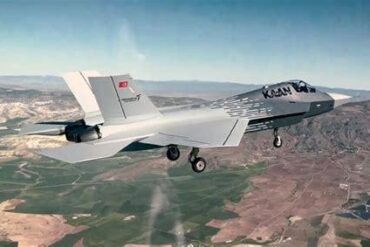
- The Bayraktar KIZILELMA stealth drone.
- The Bayraktar TB-3, an armed UCAV designed for carrier ops.
However, most of these platforms remain in developmental or testing phases, casting a shadow over MUGEM’s full operational timeline.
Defensive Armament and Strategic Reach
Beyond air power, MUGEM’s arsenal is formidable. Armed with:
- Four Gökdeniz CIWS (Close-In Weapon Systems).
- A 32-cell MIDLAS Vertical Launch System (VLS).
- Six Aselsan STOP 25mm remote weapon stations, the vessel will be capable of fending off both asymmetric threats and more conventional aerial and missile attacks.
Strategically, MUGEM represents more than just a warship. It’s a declaration that Turkey intends to evolve from a coastal naval force to a true blue-water navy. This move has implications for Mediterranean geopolitics, where tensions with Greece, Cyprus, and regional powers over maritime boundaries and energy reserves remain high. Additionally, the carrier could serve as a key tool in Turkey’s defense diplomacy across Africa, the Middle East, and the Black Sea.
France’s PA-NG: Europe’s Biggest Warship in the Making
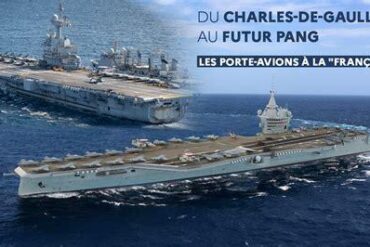
Across the continent, France is preparing to retire the Charles de Gaulle, its nuclear-powered flagship, in favor of a more formidable successor. French President Emmanuel Macron announced the greenlighting of Porte-Avions Nouvelle Génération (PA-NG), slated for deployment by 2038.
This new leviathan will weigh approximately 78,000 tons and stretch 310 meters in length, outclassing any European warship built to date. Designed with two next-generation K22 nuclear reactors, each generating over 220 MW, PA-NG promises sustained high-speed deployment and near-unlimited endurance at sea.
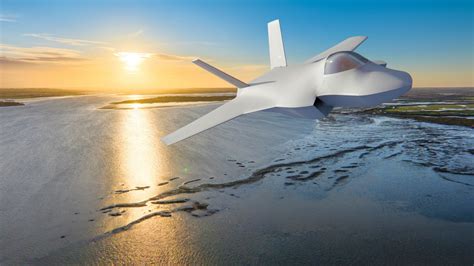
PA-NG will integrate EMALS (Electromagnetic Aircraft Launch System) catapults, modeled after US Navy advancements, allowing for rapid, low-maintenance aircraft launches. The French deck is expected to host:
- 30–40 next-generation fighter aircraft (Rafale-M and future FCAS variants).
- E-2D Advanced Hawkeye AWACS aircraft.
- A variety of unmanned combat aerial vehicles (UCAVs).
Nuclear Edge and Geostrategic Utility
One of PA-NG’s greatest assets lies in its nuclear propulsion. Unlike conventionally powered carriers, it can operate independently of fuel resupply for years, making it ideal for prolonged operations in the Indo-Pacific or Middle Eastern theatres—regions where France maintains substantial overseas interests and military outposts.
This autonomy aligns with France’s broader ambitions: to remain a relevant military force globally, to fulfill its NATO obligations, and to protect territorial holdings like New Caledonia, French Guiana, and Réunion.
The strategic design also incorporates advanced signature reduction, sensor integration, and battle management systems, ensuring the carrier can function as a central hub in joint-all domain operations, even under A2/AD (Anti-Access/Area Denial) threats posed by peer adversaries like China and Russia.
Carrier Relevance in the Age of Hypersonics and Drones
The return of big carriers has not come without critics. Several military theorists warn that modern anti-ship weapons—including hypersonic glide vehicles, ballistic anti-ship missiles, and long-range ISR networks—have dramatically increased the vulnerability of such large assets.
The leaked Pentagon assessments and reports by Chinese think tanks suggest that next-gen missiles can disable carriers within minutes, questioning the logic of investing billions into floating targets. This sentiment is further amplified by the global shift toward autonomous platforms, swarming drones, and cyber-centric warfare.
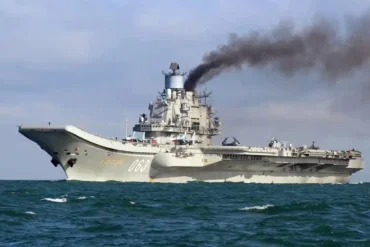
However, not all agree with this narrative. Russian Vice Admiral Vladimir Pepelyaev, in his seminal work “Aircraft Carrier,” argued that carriers remain irreplaceable for any true maritime power. Similarly, Admiral S. J. Paparo of USINDOPACOM emphasized the enduring utility of aircraft carriers:
“These mighty, mobile, maritime air bases offer a unique combination of versatility and force, enabling the nation to project air power across the globe without the constraints of basing rights and geopolitical borders.”
The carrier’s unmatched ability to operate in international waters, free of host-nation approval, allows it to respond to crises within hours, enforce no-fly zones, or deliver precision strikes—capabilities that drones or land-based fighters alone cannot yet fully replicate.
Europe’s Supercarrier Future: Strategic Convergence or Parallel Paths?
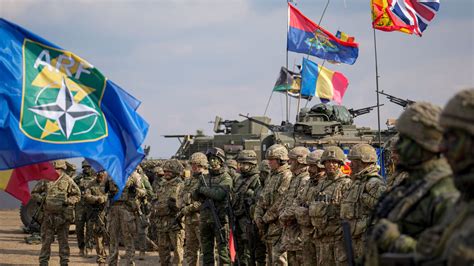
While both France and Turkey are constructing carriers, their paths converge only symbolically. France’s PA-NG is firmly embedded in NATO doctrine, with interoperability and global expeditionary force projection at its core. Turkey’s MUGEM, however, is born of strategic autonomy and regional assertiveness. It seeks to elevate Ankara from a coastal navy to a power capable of protecting its interests well beyond the Bosphorus.
Nevertheless, both programs affirm a rebuttal to the notion that carriers are obsolete. They underscore a shared belief that dominance at sea still requires a floating runway—a platform capable of rapid, sustained air operations, without reliance on host nations.
As the decade unfolds, the success of PANG and MUGEM will likely reshape the naval posture of Europe, recalibrate regional balances, and signal to adversaries that Europe’s sea power is not to be underestimated. The aircraft carrier race is not a relic of 20th-century warfare—it is the frontline of 21st-century strategic competition.